
When your roof isn’t suitable for solar — or when you want to maximize production without roof constraints — ground-mounted solar is a compelling alternative. Ground-mounted systems typically cost 10–25% more per watt than equivalent rooftop systems but offer significant advantages: optimal orientation, easier maintenance, no roof penetrations, and scalability. This guide compares both options on every key dimension to help you decide.
What Is Ground-Mounted Solar?
Ground-mounted solar panels are installed on a structural racking system anchored in the ground, typically in your yard or a field. Unlike rooftop installations that adapt to your existing roof’s orientation and pitch, ground mounts are purpose-built for the optimal angle and direction for maximum solar production at your location.
There are two main types of ground-mounted systems:
Fixed ground mounts: Stationary frames (typically steel or aluminum) set at a fixed optimal tilt angle (usually equal to your location’s latitude — around 30–40° for most of the US). These are the most common type for residential installations, simpler to build, and lower cost than tracking systems.
Single-axis tracking ground mounts: The panel array slowly rotates on a horizontal axis throughout the day, following the sun from east to west. Single-axis trackers increase annual output by 20–30% compared to equivalent fixed ground mounts, at a cost premium of $0.10–$0.25/W. They’re more common in commercial and utility-scale solar but are available for residential installations.
Dual-axis tracking: Tracks both east-west and north-south movement throughout the day and year. Produces 30–45% more than fixed mounts but costs significantly more and is generally reserved for utility-scale applications or research settings.
Cost Comparison: Ground Mount vs. Rooftop
Ground-mounted systems cost more than equivalent rooftop systems primarily because of foundation work and racking costs:
Rooftop solar: $2.50–$3.50/W installed (national average 2026)
8 kW system: $20,000–$28,000
Fixed ground mount: $2.80–$4.00/W installed
8 kW system: $22,400–$32,000
Single-axis tracking ground mount: $3.20–$4.50/W installed
8 kW system: $25,600–$36,000
The additional cost comes from:
Concrete footings or helical piles anchoring the rack structure ($1,000–$3,000 for an 8 kW system), longer wire runs from the array to your home’s electrical panel (cost depends on distance — $500–$3,000 per 100 feet of trench and conduit), heavier structural racking since the structure must be self-supporting, and in some jurisdictions, additional permitting fees or setback requirements for ground-mounted structures.
The cost premium is often partially offset by higher production — a properly oriented and unshaded ground mount in an otherwise-shaded-roof situation can produce 15–30% more electricity than the same number of panels on a suboptimal roof section.
Production Comparison
A well-designed ground mount almost always outproduces an equivalent rooftop system because:
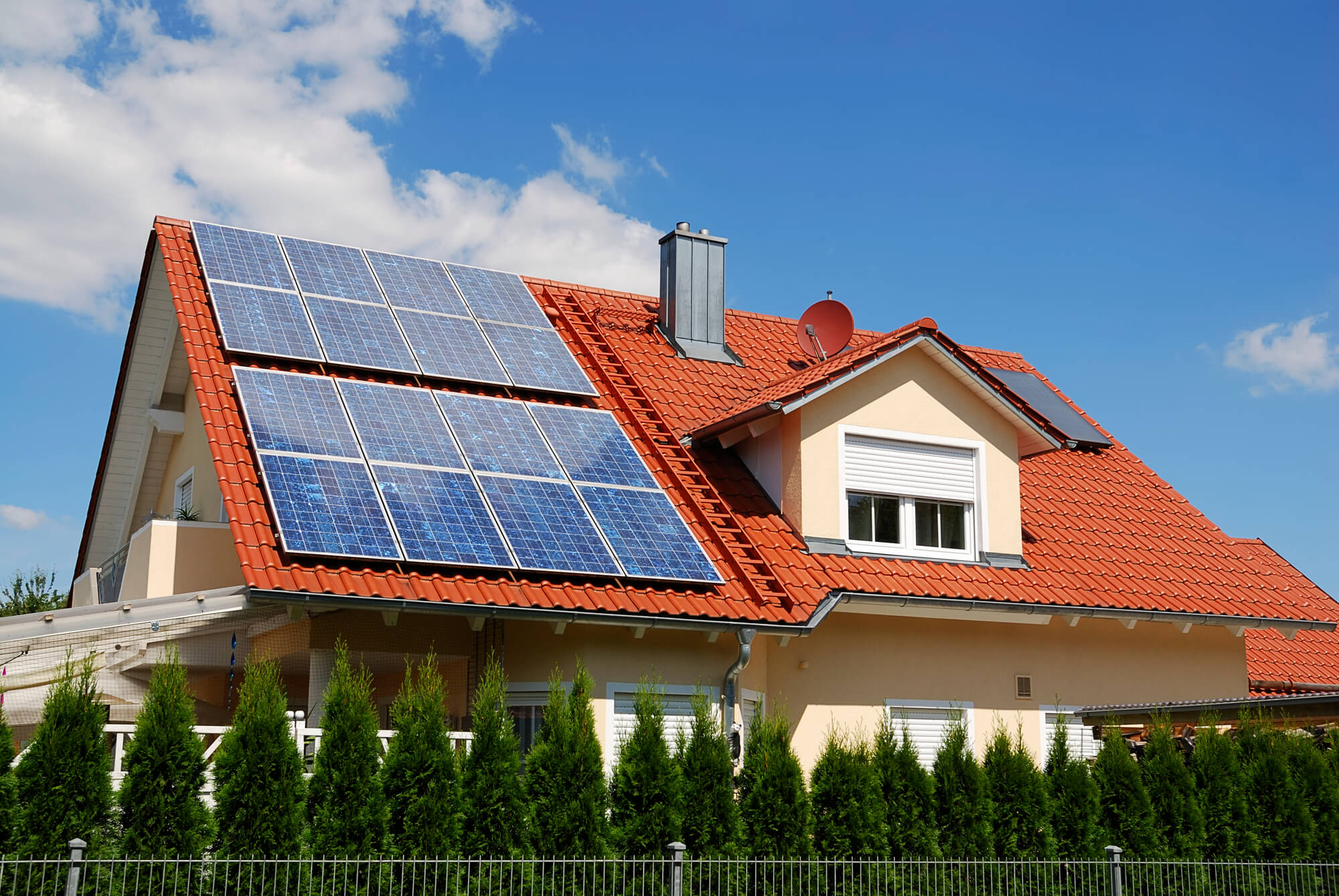
Optimal orientation: Ground mounts face true south (in the Northern Hemisphere) at the optimal tilt for your latitude. Rooftop systems are constrained by existing roof planes, which may face southeast, southwest, or even east or west rather than due south.
No shading constraints: Ground mounts are placed where shading is minimal. Rooftop systems must work around dormers, chimneys, vent pipes, and neighboring trees that may shadow roof sections.
Better cooling: Ground-mounted panels have air flowing underneath them, keeping cell temperatures lower. Solar panels lose efficiency at high temperatures (typically 0.35–0.50% per degree Celsius above 25°C). Ground-mounted panels run 5–10°C cooler than flush-mounted rooftop panels, which can improve annual production by 2–5%.
Scalability: Ground mounts can be expanded more easily — simply extend the racking and add panels without roof area constraints.
In practice, a 7 kW ground mount with optimal orientation and no shading might outperform a 9 kW rooftop system on a partially shaded, non-ideal roof. When comparing proposals, compare estimated annual kWh production, not just system size.
When to Choose Ground Mount Over Rooftop
Choose ground-mounted solar when:
Your roof faces north, or has limited south-facing sections. Your roof has significant shading from trees or neighboring structures that can’t be removed. Your roof is old (less than 10 years remaining life) and you’d need to remove panels for a re-roof — more disruptive on a roof mount than a ground mount. Your roof has complex geometry (multiple dormers, valleys, unusual pitch) that makes panel layout inefficient. You want to maximize production beyond what your roof area allows. You own significant land (rural property, large lot) where a ground array is practical. You have a flat roof where ground mounting provides better tilt without costly ballast systems.
Choose rooftop solar when:
Your roof is in good condition with 15+ years of remaining life, faces south or southwest, and has minimal shading. You have limited yard space or want to preserve your landscape. You want the lowest upfront cost with minimal visual impact. Local zoning limits ground-mounted structures in residential areas. Your HOA restricts ground-mounted systems but allows rooftop installations.
Permits and Zoning for Ground Mounts
Ground-mounted solar installations are subject to local zoning ordinances that vary widely by municipality. Key considerations:
Setback requirements: Most jurisdictions require ground-mounted structures to be set back from property lines — typically 5–25 feet from rear and side property lines. For large arrays, setback requirements can significantly limit where on your property the array can go.
Height limits: Some municipalities limit the height of ground-mounted structures in residential zones. A standard fixed ground mount reaches 6–10 feet in height at the top of the panels; tracking systems may reach 12+ feet.
HOA restrictions: Many HOAs allow rooftop solar under state solar rights laws but restrict ground-mounted arrays as “accessory structures” under different HOA covenants. Check your HOA rules specifically for ground-mounted structures.
Electrical permits: Like rooftop systems, ground mounts require electrical permits from the local authority having jurisdiction (AHJ). The buried conduit run from the array to the home adds complexity and cost to the permit/inspection process.

Maintenance Comparison
Ground mounts are easier to maintain: Panels are accessible at ground level for cleaning, inspection, and any repairs. No ladder or roof access required. Regular cleaning (removing dust, bird droppings, and pollen) takes minutes rather than the safety-conscious effort required for rooftop work.
Rooftop systems require professional access for maintenance: Cleaning, inspection, and inverter replacement on a rooftop system requires working at height. Many homeowners contract annual cleaning and inspection services at $150–$400/visit. Rooftop racking and flashing should be inspected every 3–5 years for corrosion, loosening, or roof penetration integrity.
Snow shedding: Steeply tilted ground mounts shed snow more effectively than low-pitch rooftop panels, maintaining winter production better in snow-prone climates.
Frequently Asked Questions
Is ground-mounted solar more efficient than rooftop?
In most cases, yes — when comparing individual panel performance. Ground mounts operate at lower temperatures (2–5% better output), can be oriented at the optimal tilt and azimuth (potentially 5–15% more output than a suboptimal roof), and aren’t constrained by shading from roof features. However, the relevant comparison is total system production: a properly designed rooftop system on a good south-facing roof with no shading can match a ground mount of equal capacity.
Can I put solar panels in my backyard?
Yes, subject to local zoning rules, setback requirements, and HOA restrictions. Most residential lots with substantial backyard space (50+ feet of south-facing exposure) can accommodate a ground-mounted array. An installer will assess your property’s solar access, check local codes, and design a system that works within any restrictions. Trench length from the array to your electrical panel affects cost — within 100 feet is generally manageable; longer runs add material cost.
Do ground-mounted solar panels qualify for the same incentives as rooftop?
Yes — state tax credits, net metering, and SREC programs treat ground-mounted residential solar the same as rooftop. Note that the Section 25D federal residential tax credit expired December 31, 2025 for both rooftop and ground-mounted owned systems. The Section 48E commercial credit remains available through 2027 for installers offering leases and PPAs, regardless of whether the system is roof or ground-mounted.
Summing Up
Ground-mounted solar is the better choice when your roof’s orientation, shading, age, or complexity makes it a poor candidate for solar — even at a 10–25% cost premium. For homes with good south-facing roof access and minimal shading, rooftop systems deliver equivalent performance at lower cost. The decision ultimately comes down to your specific property, and a thorough site assessment comparing expected production from both options will make the answer clear. For a free site assessment and proposal covering both options for your property, call (855) 427-0058 or visit us.solarpanelsnetwork.com.
Updated