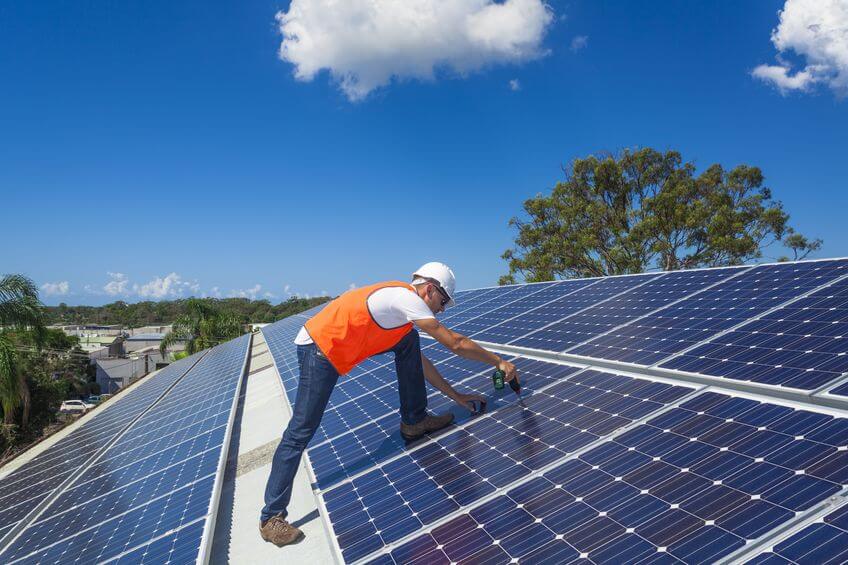
Solar panels don’t just rest on your roof — they’re anchored to it through a carefully engineered mounting system designed to handle decades of wind, rain, snow, and thermal expansion. The hardware involved is straightforward, but the details matter. An improperly installed system can void your roof warranty, leak water, or fail under wind load. Here’s how professional installations do it right.

The Three-Part Mounting System

Every rooftop solar installation uses the same basic structure: roof attachments that anchor into the building, mounting rails that run across the roof surface, and module clamps that hold the panels to the rails. The roof attachment is the most critical component — everything depends on how well it’s connected to the structural rafter below.

Asphalt Shingle Roofs (Most Common)

For asphalt shingle roofs — the most common type in the U.S. — installers use a flashed lag bolt system:

  1. The installer locates roof rafters using a stud finder or by measuring from known rafter positions.
  2. A pilot hole is drilled through the shingles and sheathing into the rafter.
  3. A stainless steel lag bolt (typically 5/16″ or 3/8″ diameter) is driven into the rafter. The bolt must penetrate at least 2.5 inches into the rafter to meet structural requirements.
  4. Flashing — a waterproof metal or polymer shield — slides under the shingles surrounding the penetration point, overlapping the hole to prevent water intrusion.
  5. The mounting foot attaches to the lag bolt on top of the flashing.
  6. Rails attach to the mounting feet, and panels clip to the rails with end and mid-clamps.

The flashing is critical. Without it, the hole in your roof is a water intrusion point. Quality installations use Code-compliant flashing from brands like QuickMount PV or IronRidge, not DIY workarounds. Every installer should apply roofing sealant inside the pilot hole before driving the lag bolt.

Standing Seam Metal Roofs

Standing seam metal roofs are one of the best surfaces for solar because no roof penetrations are required at all. S-5! clamps and similar products grip the raised seams of the metal panel using set screws, creating a strong, watertight connection point. Rails then attach to these clamps, and panels mount to the rails exactly as they would on any other roof type.

This no-penetration approach preserves the metal roof’s lifetime warranty, which can be 40–50 years on premium products. It’s one reason standing seam metal roofs are increasingly popular among homeowners planning to add solar.

Tile Roofs (Clay and Concrete)

Tile roofs require extra care. The tiles themselves are fragile and can crack under foot pressure or improper mounting. Installers typically remove individual tiles at mounting points, install flashed hooks or brackets on the roof deck below, then reinstall the tiles around the penetration point. Cracked tiles must be replaced during installation.

Some installers use tile replacement mounts — special hardware that substitutes for a tile section while providing a mounting point. The goal is always to maintain the watertight integrity of the tile system while providing a structural connection to the rafter.

Flat Roofs

Flat commercial roofs (and some residential low-slope roofs) use ballasted mounting systems that require no roof penetrations at all. The racking system is held down by the weight of concrete ballast blocks, calculated to resist wind uplift based on local wind speed requirements. Panels typically tilt at 5–15 degrees to shed water and optimize energy production.

Ballasted systems are faster to install and avoid warranty-voiding penetrations. The tradeoff is added structural load — an engineer should verify the roof can handle the combined weight of panels, racking, and ballast before installation.

New Penetration-Free Technologies (2026)

Several manufacturers are introducing adhesive and mechanical attachment systems that don’t require drilling. SolarStack and SolarStrap have developed systems using structural adhesives and heat-welded attachments to bond racking directly to roofing membranes. These are primarily targeting commercial flat roofs where drilling through waterproofing membranes is especially problematic, but residential applications are emerging.

The Structural Rule: Always Into the Rafter

Every code-compliant solar installation must anchor mounting feet into the structural rafter, not just the sheathing (the plywood layer beneath the shingles). Sheathing alone cannot resist wind uplift loads. In high-wind zones (much of Florida, the Gulf Coast, and coastal areas), local codes specify minimum embedment depths and hardware specifications. An installer who skips rafter location and drives lag bolts randomly into sheathing is creating a liability and a safety hazard.

Frequently Asked Questions

Will solar panel mounting damage my roof?

When done correctly, no. Professional installations with proper flashing and sealant create waterproof penetrations that last for decades. Studies have found that roofs with solar panels often sustain less weather damage over time because the panels shield the roof surface from UV and rain impact. Poor installations by unqualified contractors are the source of most roof damage complaints.

Do solar panels void my roof warranty?

They can, depending on your roofing manufacturer’s terms. Some manufacturers require that any penetrations be made by a licensed contractor and use specific flashing products to maintain the warranty. Others exclude all third-party penetrations. Check your roofing warranty before installation and ask your solar installer what documentation they provide to roofing manufacturers.

How many lag bolts does a typical installation use?

A typical residential installation uses one mounting foot roughly every 4 feet along each rail, with two rails per array. A 20-panel system might use 20–30 lag bolt penetration points. Each one is flashed individually.

Can panels be installed on any roof age?

Most installers recommend that your roof have at least 10 years of remaining life before adding solar. If your roof is within a few years of needing replacement, it’s more cost-effective to replace it first — removing and reinstalling solar panels costs $1,500–$3,000 on top of the roofing cost.

Is the mounting system covered by the solar panel warranty?

Racking manufacturers typically offer 10–25 year product warranties on hardware. Labor warranties from the installer (usually 5–10 years) cover installation defects including waterproofing. The solar panels themselves carry separate product and performance warranties from the panel manufacturer.

Summing Up

Solar panels are attached to roofs through a system of lag bolts, flashing, mounting rails, and clamps — all engineered to handle decades of weather while keeping the roof watertight. The key to a leak-free installation is proper flashing at every penetration point and lag bolts anchored into rafters rather than sheathing alone. Standing seam metal roofs and flat roofs have penetration-free options that are increasingly popular. Whatever your roof type, the quality of installation hardware and workmanship matters as much as the panels themselves.

To get a professional solar installation with proper roof mounting on your home, call Solar Panels Network USA at (855) 427-0058 for a free quote.

Updated