
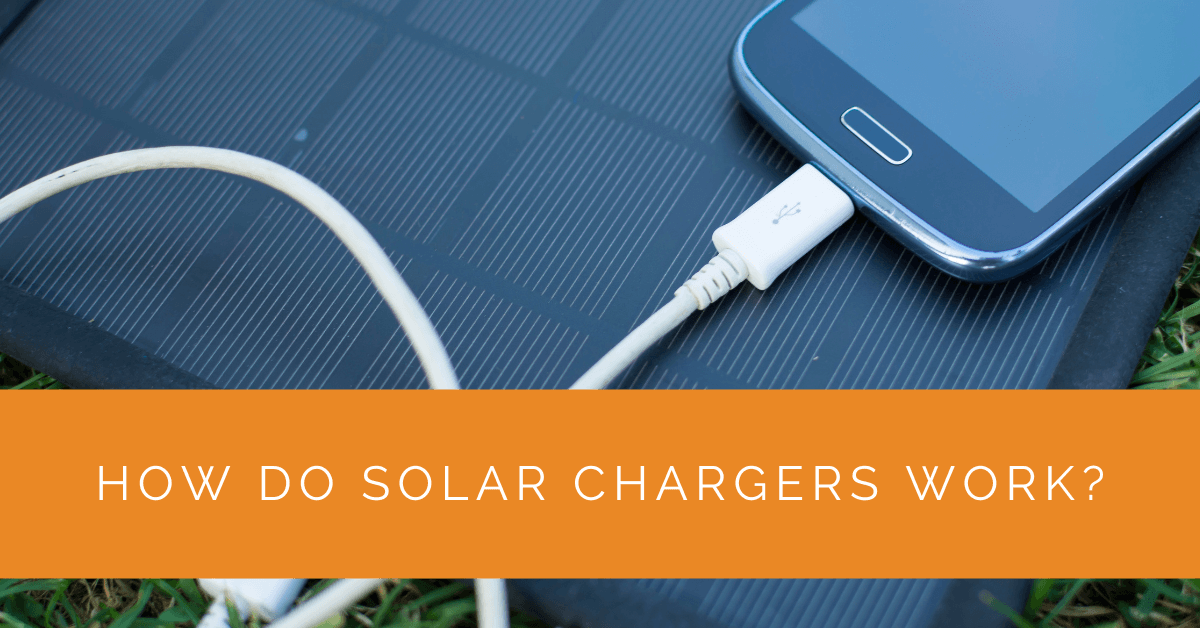
Solar chargers use small photovoltaic cells to convert sunlight into usable power for phones, batteries, and other devices, but their effectiveness depends heavily on panel quality and charge controller type. MPPT charge controllers capture significantly more usable power than PWM, especially with portable and variable-light setups.
How Solar Chargers Work
| Component | Function |
|---|---|
| Solar panel | Converts sunlight to DC electricity |
| Charge controller (MPPT/PWM) | Regulates voltage/current to battery safely |
| Battery (internal or connected) | Stores power for use when not in direct sun |
| Output port (USB/DC) | Delivers stored/direct power to your device |
The Photovoltaic Conversion Process
Sunlight striking the solar panel’s photovoltaic cells knocks electrons loose, generating a DC electrical current — this is the same basic process used in full-size rooftop solar panels, just at a smaller scale.
MPPT vs. PWM Charge Controllers
MPPT (Maximum Power Point Tracking) controllers continuously adjust to extract the most power from the panel under changing light conditions, while simpler PWM controllers are less efficient but cheaper — MPPT is worth the extra cost for portable/travel chargers.

Direct Charging vs. Battery Storage
Some solar chargers deliver power directly to a device only while in sun, while others include an internal battery to store energy for use after dark or during cloudy periods.
Factors Affecting Charging Speed
Panel wattage, sun intensity/angle, temperature, and cable/connector quality all affect how quickly a solar charger delivers usable power to your device.
Interested in solar for your whole home? Get a free quote: (855) 427-0058
Frequently Asked Questions
How do solar chargers convert sunlight to power?
Photovoltaic cells generate a DC current when sunlight strikes them.
Is MPPT better than PWM for solar chargers?
Yes — MPPT extracts more usable power, especially in variable light.
Can solar chargers work without direct sunlight?
Weakly — diffuse or indirect light charges much slower than direct sun.
Do solar chargers need a battery?
Not always — some charge devices directly, others store power in an internal battery.
What affects solar charger speed?
Panel wattage, sun angle/intensity, temperature, and connector quality.
Are portable solar chargers reliable for travel?
Yes, with realistic expectations — they’re slower than wall outlets but useful backup.
How long do solar chargers last?
Quality units can last many years with proper care and storage.
Summing Up
Solar chargers use the same core photovoltaic principle as rooftop systems, just at a portable scale. For home solar solutions, call (855) 427-0058 or visit us.solarpanelsnetwork.com.
Updated