
Solar panels turn sunlight into electricity — and the science behind how they do it is surprisingly cool once you understand what’s happening inside. This explanation uses simple analogies and clear language for students, young readers, and anyone who wants a straightforward answer without engineering jargon.

What Is Sunlight Made Of?
Sunlight isn’t just light you can see — it’s actually made up of tiny particles of energy called photons. You can think of photons as tiny invisible balls that the sun is constantly throwing in all directions at the speed of light. When sunlight hits your skin, photons hit you and warm you up. When sunlight hits a solar panel, something much more interesting happens.
What’s Inside a Solar Panel?
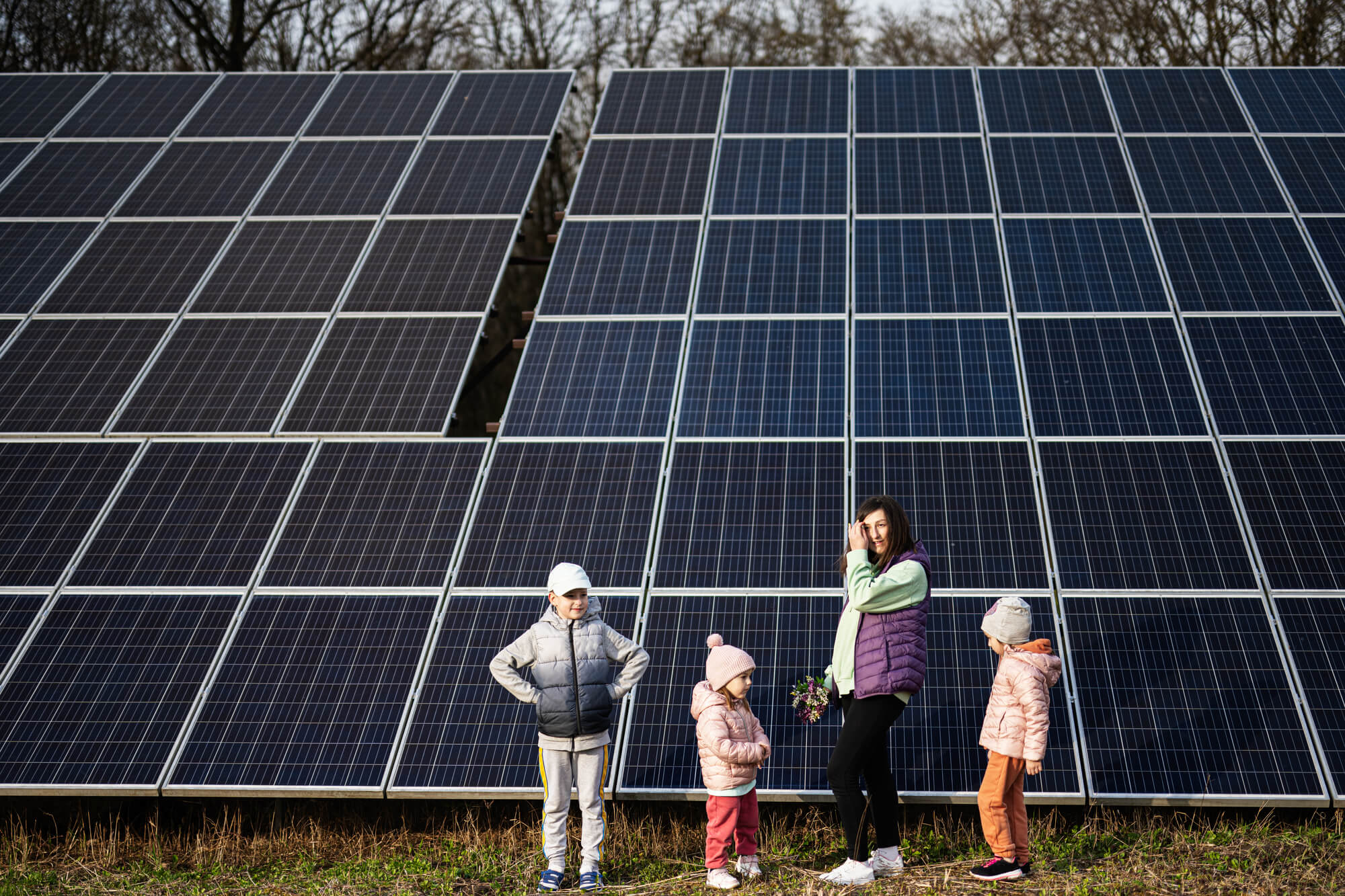
A solar panel is made of many small squares called solar cells — you can see them if you look closely at a solar panel (they look like a checkerboard or grid pattern). Most solar cells are made from silicon — the same material used to make computer chips and beach sand.
Silicon is a special kind of material called a semiconductor. A semiconductor is neither a great conductor (like metal wire, which electricity flows through easily) nor a great insulator (like rubber, which electricity can’t flow through). Silicon sits in the middle — it can be made to conduct electricity under the right conditions.
Inside each solar cell, there are two layers of specially treated silicon:
The top layer has extra electrons in it (electrons are tiny particles that carry electricity).
The bottom layer is missing electrons — it has “holes” where electrons could fit.
This two-layer setup creates an electric field between the layers — like a tiny internal battery waiting to be activated.
How Sunlight Creates Electricity
Here’s where the magic happens:
1. A photon hits the solar cell. A tiny packet of sunlight energy slams into the silicon material.
2. The photon knocks an electron loose. The energy from the photon kicks an electron free from its atom inside the silicon.
3. The electric field pushes the electron. The electric field (created by those two different silicon layers) pushes the freed electron in a specific direction — like a little invisible slide.
4. The electron flows through a wire. The electron travels out of the solar cell through a wire to wherever the electricity is needed — your lights, your TV, your phone charger.
5. The electron comes back. After the electron does its job (powering something), it comes back to the solar cell to start the process over again.
This flow of electrons through a wire is electricity. The more photons hitting the solar cell, the more electrons get knocked loose, and the more electricity is produced. That’s why solar panels make more electricity on a sunny day than a cloudy one!
From Solar Cell to Solar Panel to Your Home
A single solar cell only makes a tiny amount of electricity. Solar panel makers connect many cells together to make more power:
Cell → Panel → Array
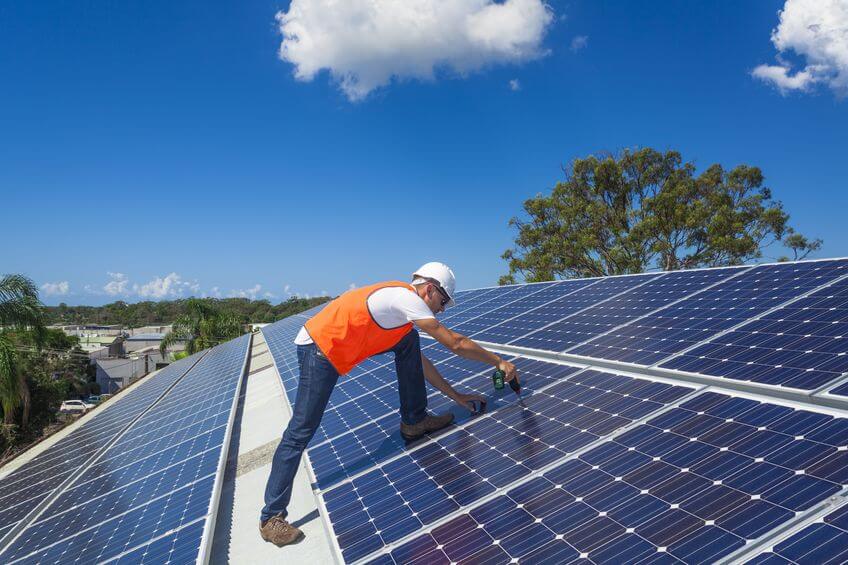
One cell makes a little electricity. About 60–72 cells are connected together to make one panel (the dark rectangular board you see on rooftops). Then several panels are connected together to make a solar array — like the rows and rows of panels you see on solar farms.
Solar panels make a type of electricity called DC (Direct Current) — electricity that only flows in one direction. But most home appliances and wall outlets use AC (Alternating Current) — electricity that switches direction 60 times per second. So solar systems need a special device called an inverter to change the solar panel’s DC electricity into usable AC electricity for your home.
What Happens to Extra Solar Energy?
On a sunny day, solar panels sometimes make more electricity than a home needs at that moment. There are two ways to handle the extra electricity:
Send it to the grid: The extra electricity travels through wires to the electric grid — the big network of power lines that connects all homes and buildings. The electric company keeps track of how much electricity you sent them and may give you credit on your bill. This system is called net metering.
Store it in a battery: Some homes have a solar battery (like the Tesla Powerwall) that stores extra daytime electricity so you can use it at night when the panels aren’t making power. It works like a giant rechargeable battery — the same idea as the battery in your phone or tablet, just much bigger.
Why Don’t All Houses Have Solar Panels?
Solar panels are a great idea, but there are some reasons not every house has them yet:
They cost money to buy and install: A solar panel system for a typical US home costs $15,000–$25,000 upfront, though it saves money on electricity bills for 25 years or more. The government has offered a special tax credit (a discount on taxes you owe) to help families pay for solar — though as of 2026, the main homeowner tax credit for solar has expired, meaning new buyers pay the full cost without this federal discount.
Not all roofs face the right direction: Solar panels work best on roofs that face south (in North America) and aren’t shaded by trees or other buildings. Some homes just don’t have a good roof for solar.
Some people rent their homes: If you don’t own your home, you usually can’t install solar panels — the landlord would need to make that decision.
Cool Solar Energy Facts
The photovoltaic effect (the process of turning light into electricity with silicon) was discovered in 1839 by a French physicist named Edmond Becquerel — when he was only 19 years old!
In 2026, the United States has about 239 gigawatts of solar power installed — enough to power tens of millions of homes.
The cost of solar panels has dropped more than 90% since 2010, making them far more affordable today than they used to be.
Solar panels work in cold and cloudy weather too — they just make less electricity than on a bright, sunny day. Some solar panels actually work better in cold temperatures because too much heat reduces their efficiency.
The International Space Station runs entirely on solar power — it has enormous solar panel wings that unfold in space to capture sunlight without any atmosphere getting in the way.
Frequently Asked Questions
How do solar panels make electricity simply?
Solar panels make electricity using a process called the photovoltaic effect. Here’s the simple version: sunlight is made of tiny energy packets called photons. When photons hit the special silicon material inside a solar cell, they knock electrons loose. Those electrons then flow through wires as electricity — the same electricity that powers lights, computers, and chargers. The more sunlight hits the panel, the more electrons get knocked loose, and the more electricity is made.
Can kids understand how solar panels work?
Absolutely. The key concept is that sunlight (made of tiny energy particles called photons) hits a special material (silicon) and knocks loose tiny particles of electricity (electrons). Those electrons flowing through wires is what we call electricity. The tricky parts — like why silicon has a built-in electric field that directs electrons — require understanding some basic chemistry and physics, but the core idea (sunlight in, electricity out) is accessible to most elementary school-age children.
What is the photovoltaic effect?
The photovoltaic effect is the scientific name for what happens in a solar cell — “photo” means light, and “voltaic” means electricity, so it literally means “light creates electricity.” Discovered in 1839, it’s the process where light energy (photons) hitting a semiconductor material (like silicon) knocks electrons free and pushes them in a direction that creates an electric current. Solar panels use this effect at scale — millions of silicon solar cells, each converting a tiny bit of sunlight into a tiny bit of electricity, adding up to enough to power homes and cities.
Why do solar panels need an inverter?
Solar panels produce DC electricity (Direct Current) — electrons that only flow in one direction, like in a battery. But home appliances and the electrical outlets in walls use AC electricity (Alternating Current) — electrons that switch direction 60 times per second. An inverter is the device that converts solar DC electricity into AC electricity that appliances can use. Without an inverter, you couldn’t plug a toaster into a solar panel — the types of electricity wouldn’t be compatible.
What time of day do solar panels produce the most electricity?
Solar panels produce the most electricity around solar noon — when the sun is highest in the sky and sunlight hits the panels most directly. In the early morning and late afternoon, the sun is lower in the sky and its light travels through more atmosphere before reaching the panels, so production is lower. Cloudy or rainy weather reduces production significantly, as less sunlight gets through. At night, solar panels produce no electricity at all — the sun isn’t shining, so there are no photons to knock electrons loose.
Summing Up
Solar panels work by using a scientific process called the photovoltaic effect: sunlight’s tiny energy packets (photons) knock electrons loose inside silicon solar cells, creating a flow of electricity through wires. Solar cells are grouped into panels, and panels are grouped into arrays to generate useful amounts of electricity. An inverter converts the solar electricity into the form homes use. Extra electricity can be stored in batteries or sent to the power grid. Solar energy is clean, renewable, and increasingly affordable — and understanding how it works starts with knowing what happens when a tiny ball of light hits a grain of sand.
Updated