
Solar panels themselves are among the most EMP-resistant pieces of equipment you own — but the electronics that make your system work are not. An electromagnetic pulse, whether from a nuclear detonation at altitude (HEMP), a powerful geomagnetic storm, or a close lightning strike, can destroy inverters, charge controllers, battery management systems, and monitoring equipment in seconds. Understanding which components are vulnerable — and what you can do about it — is the difference between a system that survives and one that becomes an expensive rooftop ornament.
This guide covers the realistic threat landscape, which solar components are actually at risk, and the practical steps you can take to protect a working system and preserve spare parts for recovery.
What Is an EMP and Why Does It Matter for Solar?
An electromagnetic pulse is a burst of energy across a broad frequency spectrum that induces damaging voltage spikes in electrical conductors. There are three main sources that solar owners worry about:
High-altitude EMP (HEMP): A nuclear weapon detonated 25–400 miles above the Earth generates three distinct pulse components. The E1 component (nanosecond-scale) destroys semiconductor junctions directly. The E2 component (microsecond scale) resembles a severe lightning strike. The E3 component (seconds to minutes) resembles a geomagnetic storm and induces currents in long conductors like power lines. A single weapon optimally positioned over the continental US could theoretically affect electronics across thousands of miles.
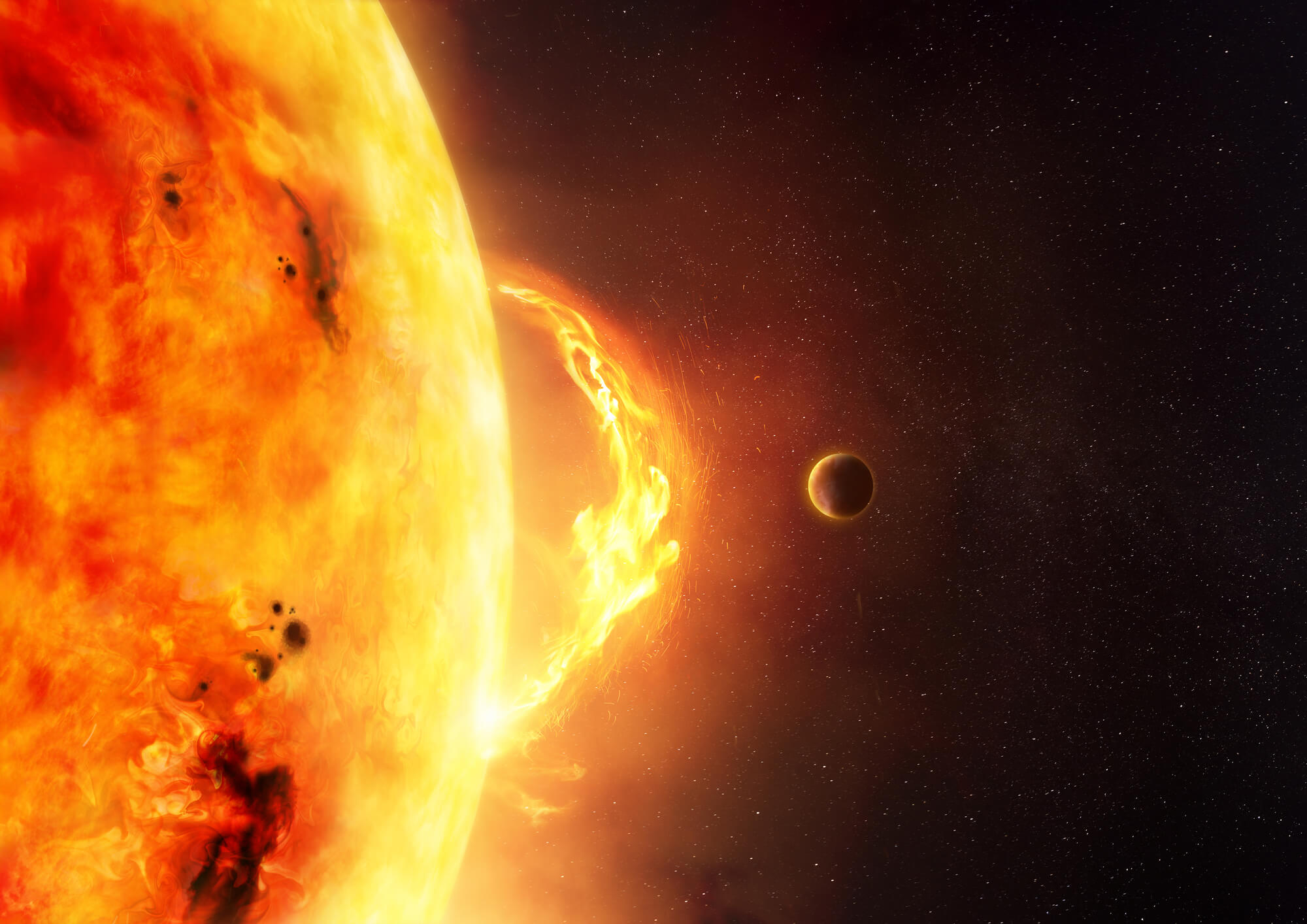
Coronal mass ejection (CME) / geomagnetic storm: Large solar eruptions can cause geomagnetic disturbances that induce voltage in long conductors. The 1989 Quebec blackout knocked out power for 9 hours; the 1859 Carrington Event would have destroyed much of today’s power grid. CMEs primarily threaten E3-type damage — long transmission lines and grid infrastructure — but severe events can damage grid-connected inverters through grid-induced surges.
Lightning EMP: A nearby lightning strike produces electromagnetic effects across a wide radius. This is the most common, most realistic threat for most homeowners, and the one where protection is most cost-effective and proven.
Which Solar Components Are Vulnerable?
Not all parts of your solar system face equal risk. Understanding the vulnerability of each component helps you prioritize protection.
Solar panels — low risk: Photovoltaic cells are simple semiconductor junctions with no active electronics, no microprocessors, and no communication circuitry. The cells themselves are largely immune to EMP. A very close, direct lightning strike can crack cells or damage bypass diodes, but a HEMP event at typical distances would likely leave panels functional. This is good news — panels are the most expensive and hardest-to-replace part of your system.
String inverters — high risk: Modern string inverters contain DSP processors, MOSFETs, IGBTs, communication modules (WiFi, Ethernet, RS485), and sensitive DC input circuitry. All of these are vulnerable to E1 pulse damage. A grid-tied string inverter is also connected to long conductors (grid wiring) that act as antennas for E3-type disturbances. Inverters are the most EMP-vulnerable component in a typical residential system.
Microinverters and power optimizers — high risk: These are deployed at each panel, meaning you could have dozens of vulnerable electronics exposed on the roof with no easy way to disconnect or shield them. A HEMP event could render all of them simultaneously inoperable.
MPPT charge controllers — high risk: Charge controllers contain sophisticated electronics for maximum power point tracking, battery management, and often Bluetooth/WiFi monitoring. These are semiconductor-rich and EMP-vulnerable.
Battery management systems (BMS) — high risk: LiFePO4 and lithium batteries rely on BMS electronics for cell balancing, protection cutoffs, and state-of-charge monitoring. The battery cells themselves store energy regardless of EMP, but a damaged BMS will prevent safe charging and discharging — effectively taking the battery offline even if the cells are fine.
Monitoring systems and communication modules — high risk: Enphase Envoy, SolarEdge monitoring, Sense energy monitors, and similar devices are consumer electronics with no hardening whatsoever.
Lead-acid batteries — lower risk: Flooded lead-acid and AGM batteries have minimal or no electronics in the battery itself (no BMS). They can continue operating as simple chemical storage after an EMP, making them more resilient in off-grid scenarios despite their other disadvantages.
Protection Strategy 1: Surge Protection Devices (SPDs)
Surge protection devices (also called transient voltage surge suppressors or TVSS) are the most practical, cost-effective protection for lightning EMP and CME-induced surges. They won’t stop a direct E1 HEMP pulse — nothing short of a Faraday cage will — but they address the most likely real-world threats.
For a solar system, install SPDs at three points:
DC input to inverter/charge controller: A Type 1 or Type 2 DC SPD rated for your array’s Voc (open-circuit voltage) and maximum short-circuit current. Products like the Midnite Solar MNSPD-300DC or Morningstar SurgeGuard are designed specifically for solar DC circuits. Install as close to the inverter/controller input as possible.
AC output of inverter: A Type 1 AC SPD at the AC disconnect or main panel protects inverter AC output circuitry and any connected loads from grid-side surges. Standard residential SPDs (Eaton CHSPT2ULTRA, Leviton 51120-1) work here.
Communications and monitoring: If your inverter uses an Ethernet connection or RS485 monitoring cable, install a data line SPD. Surge current can travel through comm lines just as easily as power lines.
SPDs are code-required in many jurisdictions under NEC 230.67 for service entrances. For solar-specific DC protection, they’re good practice regardless of local code.
Protection Strategy 2: Proper Grounding
Grounding doesn’t protect against E1 HEMP but it is essential for lightning protection and provides a safe dissipation path for induced surges. NEC Article 690 requires grounding of solar PV systems; improper grounding is one of the most common installation mistakes and increases vulnerability to lightning damage significantly.
Key grounding requirements for solar:
All metal racking and mounting hardware must be bonded to a grounding electrode system. The equipment grounding conductor (EGC) must run from the array through the combiner box to the inverter and service entrance. For systems in areas with high lightning incidence, a dedicated lightning protection system (lightning rods, down conductors, ground ring) can be added per NFPA 780, though this is separate from the NEC 690 PV grounding requirements.
If your installer didn’t properly ground your system, this is worth correcting regardless of EMP concerns — improper grounding creates fire risk and increases lightning damage probability.
Protection Strategy 3: Faraday Cages for Spare Components
A Faraday cage blocks E1 HEMP by providing a conductive enclosure that distributes the induced charge around the outside, shielding contents from the electromagnetic field. This is the only method that provides meaningful protection against a true HEMP event.
Practically speaking, you can’t put your inverter in a Faraday cage while it’s running — any wire entering the cage breaks the shielding. What you can do is store spare components in Faraday cages for post-event recovery:
What to store: A spare charge controller, a spare inverter (or critical inverter boards), a replacement BMS, any communication modules, a handheld multimeter, a manual charge controller for emergency use, and a spare battery BMS if your battery uses one.
DIY Faraday options: A galvanized steel trash can with a tight-fitting lid, lined with cardboard (to prevent direct contact between components and the metal), works reasonably well for EMP shielding if the lid makes solid electrical contact all around. Ammo cans and military-surplus steel cases are popular choices. For better shielding, double-layer your container (steel can inside another steel can with an insulating layer between).
Commercial options: EMP Shield, Mission Darkness, and similar brands sell Faraday bags and boxes specifically marketed for electronics protection. Quality varies — look for products that specify attenuation in dB across a broad frequency range (10 kHz to 10 GHz).
What not to bother protecting: Your installed system cannot realistically be shielded while operating. Focus Faraday efforts on spares and recovery components, not the running system.
Protection Strategy 4: Disconnects and Isolation
If you have advance warning of a geomagnetic storm (NOAA Space Weather Prediction Center issues alerts at swpc.noaa.gov), you can reduce risk by disconnecting your system from the grid and from long conductor runs:
Disconnect the grid-tie connection at the AC disconnect switch. This removes the long grid conductor from your system, which is the primary path for E3-type CME-induced damage. An off-grid system is inherently less vulnerable to CME than a grid-tied system for this reason — it isn’t connected to miles of overhead wire acting as an antenna.
For HEMP, advance warning is essentially zero — a detonation produces effects at the speed of light. Disconnects only help for CME events where NOAA forecasts may give hours to days of warning for the largest storms.
Grid-Tied vs Off-Grid: Different Risk Profiles
Grid-tied systems have a higher CME/E3 vulnerability because they connect to utility infrastructure through long conductors. The inverter’s grid interface is directly exposed to any surge propagating through the grid. Anti-islanding protection, while important for safety, also means the inverter is constantly monitoring the grid and maintaining that connection.
Off-grid systems are naturally isolated from grid-induced surges. The main vulnerabilities are the charge controller, BMS, and inverter — and these are more easily protected with SPDs and proper grounding since there’s no grid connection to worry about.
Hybrid systems (battery storage with grid connection) fall in between. When operating in self-consumption or backup mode with the grid connection maintained, they share grid-tied vulnerability. Some hybrid inverters have a “grid off” or “island mode” that disconnects from the grid while maintaining solar-plus-battery operation — enabling this during a geomagnetic storm warning reduces E3 exposure.
Realistic Risk Assessment
A HEMP event from a nuclear weapon is a low-probability, high-consequence scenario. Most solar owners should prioritize protection in order of likelihood:
Lightning (near-certain over system lifetime): Install SPDs and ensure proper grounding. Cost: $100–400. This also protects against ordinary power surges and reduces insurance risk.
Severe geomagnetic storm (Carrington-level: ~1 in 100 years per century): Monitor NOAA Space Weather alerts. Keep the AC disconnect accessible. Know how to disconnect from the grid if a severe storm is forecast.
HEMP (low probability, geopolitically dependent): Store spare components in a Faraday cage if this is a serious concern. A spare charge controller ($80–200) and inverter control board can make the difference between recovery in days vs months after a grid-down event.
Over-engineering for EMP at the expense of more likely threats (inverter failure, battery degradation, panel soiling) is a common prepper mistake. Start with SPDs and grounding — these address real, frequent threats and provide meaningful HEMP protection as a bonus.
Frequently Asked Questions
Will solar panels survive an EMP?
Solar panels themselves are quite resilient — they contain simple semiconductor junctions with no microprocessors or communication circuitry. A HEMP event at typical distances is unlikely to damage panels directly. The vulnerable components are the inverter, charge controller, and battery management system. A system with intact panels but destroyed electronics would need replacement electronics to function again, which is why storing spare components in a Faraday cage is recommended for serious EMP preparedness.
Do Faraday cages actually work for EMP protection?
Yes, properly constructed Faraday cages provide meaningful attenuation of electromagnetic fields, including E1 HEMP. The key requirements are that the enclosure is fully conductive with no gaps, and that no wires pass through the shield (which would break the shielding effect). A galvanized steel trash can with a continuous-contact lid works reasonably well for stored components. The main caveat: a Faraday cage only protects items stored inside it, not equipment that’s running and connected to wiring.
Can I protect my running solar system from EMP?
Not from a direct E1 HEMP pulse — any wire (solar cables, AC output, ground conductor) entering or leaving the inverter/charge controller provides a path for induced voltage. What you can do is install surge protection devices (SPDs) to clamp lightning and CME-induced surges, ensure proper grounding, and isolate from the grid during geomagnetic storm warnings. For HEMP specifically, the only practical strategy for your running system is to accept some risk and focus protection efforts on spare components for post-event recovery.
What is the difference between a CME and an EMP?
A CME (coronal mass ejection) is a solar event that causes a geomagnetic storm when it reaches Earth. Its effects resemble the E3 component of a HEMP — slow-building induced currents in long conductors like power lines and pipelines. It doesn’t produce the fast E1 or E2 components of a nuclear HEMP, so it’s less likely to destroy nearby electronics directly, but can damage grid infrastructure and grid-connected inverters through grid-induced surges. A nuclear HEMP produces all three components (E1, E2, E3) simultaneously.
Are microinverters better or worse for EMP resilience?
Microinverters are generally worse for EMP resilience than a string inverter setup. While a string inverter failure affects the whole array, it means you only need one replacement unit. With microinverters, each panel has its own electronics — a HEMP event could render every microinverter inoperable simultaneously, requiring 20–30 replacements instead of one. From an EMP preparedness standpoint, a single string inverter with a spare stored in a Faraday cage is easier to protect and recover from than a microinverter array.
Should I buy an EMP protection device for my inverter?
Products marketed as “EMP shields” for running equipment (installed inline with AC wiring) function as surge protectors and can clamp lightning and CME-induced surges. They do not protect against direct E1 HEMP, which operates on a nanosecond timescale faster than any MOV or TVSS can respond. These products are worth installing as quality surge protectors with added CME benefit — just don’t expect them to protect against a nuclear EMP event while your equipment is operating.
How do I monitor for geomagnetic storm warnings?
NOAA’s Space Weather Prediction Center (swpc.noaa.gov) publishes real-time geomagnetic storm alerts and forecasts. Sign up for email/text alerts for G3 (Strong) or higher geomagnetic storm watches. For a Carrington-level event (G5 — Extreme), NOAA typically provides 1–3 days advance warning after initial CME detection. That’s enough time to disconnect your system from the grid and protect susceptible equipment. The SWPC app and Space Weather apps for iOS/Android make monitoring straightforward.
Summing Up
The most important takeaway: your solar panels will likely survive an EMP — your inverter, charge controller, and battery electronics won’t. The practical protection priority is (1) install DC and AC surge protection devices for real-world lightning and CME threats, (2) ensure proper grounding per NEC 690, (3) store spare electronics in a Faraday cage if HEMP preparedness is a priority for you, and (4) know how to disconnect from the grid if NOAA issues a severe geomagnetic storm warning.
A full professional solar installation includes proper grounding and typically SPD provisions. If you’re building a new system and EMP resilience matters to you, discuss SPD placement with your installer and consider a battery-based off-grid or hybrid system, which reduces grid-conductor exposure compared to a grid-tied-only setup.
For a free quote on a properly installed, code-compliant solar system with surge protection, call (855) 427-0058 or submit your details online.
📞 CALL (855) 427-0058 FOR A FREE SOLAR QUOTE
Updated