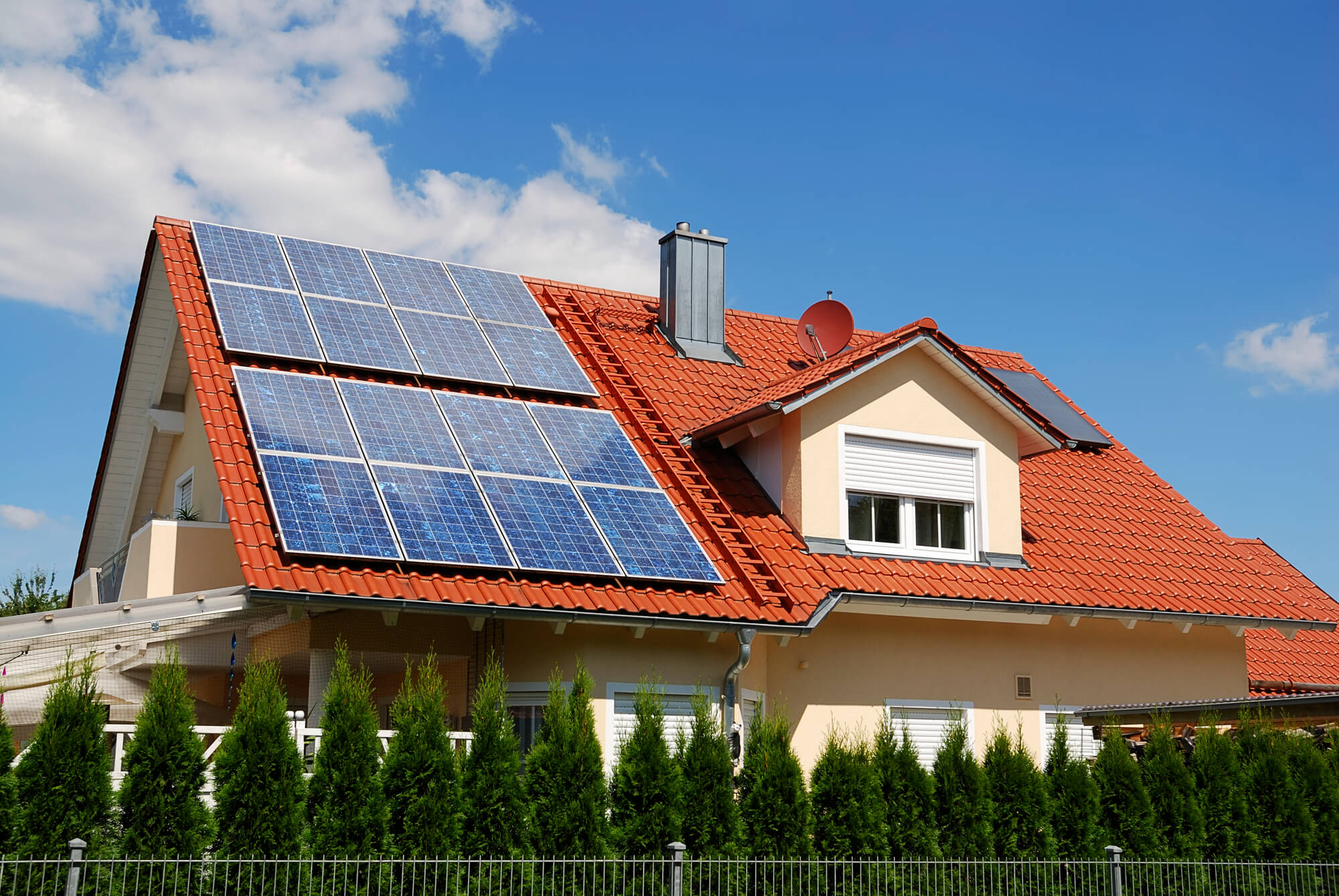
Solar air conditioning combines photovoltaic panels with AC systems to reduce or eliminate dependence on grid electricity for cooling. As climate change intensifies summer heat and energy costs rise, homeowners increasingly seek sustainable ways to keep their homes cool without excessive energy bills. Solar AC systems leverage abundant daytime sunlight to power air conditioning units, creating a synergy between peak cooling demand and peak solar production.
The technology has advanced dramatically over the past decade, with solar thermal cooling, photovoltaic-powered inverter-driven units, and hybrid systems now available at competitive prices. Combined with the 30% federal Investment Tax Credit (ITC) available through 2032, solar air conditioning has become financially viable for many homes.
Contents
- 1 How Solar Air Conditioning Works
- 2 Types of Solar Air Conditioning Systems
- 3 Solar Panel Requirements for Air Conditioning
- 4 Cost and Financial Incentives
- 5 Installation and Permitting Considerations
- 6 Solar AC Performance in Different Climates
- 7 Comparison: Solar AC vs. Heat Pumps vs. Traditional AC
- 8 Integration with Home Energy Management
- 9 Maintenance and Long-Term Performance
- 10 Challenges and Limitations
- 11 Future of Solar Air Conditioning
- 12 Frequently Asked Questions
- 12.1 Can I power my entire home AC from solar panels?
- 12.2 What size solar system do I need for a 3-ton air conditioner?
- 12.3 Does solar AC work during cloudy weather?
- 12.4 How much does solar AC installation cost?
- 12.5 Does solar air conditioning increase home value?
- 12.6 What is the lifespan of a solar air conditioning system?
- 12.7 Can I add solar to my existing air conditioner?
- 13 Summing Up
How Solar Air Conditioning Works
Solar air conditioning systems operate through one of three primary mechanisms: solar photovoltaic (PV) power, solar thermal energy, or hybrid approaches combining both technologies.
Photovoltaic-Powered AC is the most common approach. Solar panels generate direct current (DC) electricity from sunlight. An inverter converts this to alternating current (AC), which powers a conventional air conditioning unit or a specialized solar-ready AC system. Modern variable-speed inverter compressors modulate cooling output to match available solar production, maximizing efficiency. This approach integrates seamlessly with existing AC infrastructure and requires no refrigerant modifications.
Solar Thermal Cooling uses concentrated solar collectors to heat a working fluid, which drives an absorption chiller. These chillers use heat energy rather than electricity to separate refrigerants and produce cold air. Thermal cooling is more efficient than PV in extremely hot climates but requires significantly more roof or ground space and higher upfront investment. Few residential systems use pure thermal cooling; most homeowners favor PV approaches.
Hybrid Systems combine PV panels with battery storage, allowing homeowners to shift cooling loads to peak solar hours or use stored energy during evening peak demand periods. Some hybrids pair solar PV with thermal storage tanks that pre-chill water during the day for use at night.
Types of Solar Air Conditioning Systems
Solar AC systems fall into several categories depending on system architecture and application:
Grid-Tied Solar AC connects solar panels to the grid and uses net metering to offset cooling costs. During summer peak production, excess solar energy feeds back to the grid (or powers AC), and during non-solar hours, the home draws grid power. This is the simplest and least expensive approach, requiring only solar panels and an inverter. Most homeowners choose this model because it eliminates battery costs and provides unlimited backup power via the grid.
Off-Grid Solar AC with Battery Storage relies entirely on solar production and battery banks. These systems require substantial solar array capacity and large lithium or lead-acid battery banks to cover nighttime cooling. Off-grid systems suit remote properties without grid access and are rare in urban/suburban residential settings due to cost and complexity. A typical off-grid AC setup requires 2–3x more solar capacity than grid-tied systems.
Hybrid Systems with Partial Battery Storage balance grid resilience with solar savings. Batteries store excess daytime solar energy to power AC during evening peak-rate hours or during grid outages. This approach is increasingly popular in states with time-of-use (TOU) electricity rates, where shifting cooling load from peak to off-peak hours saves 20–40% on electricity costs. Powerwall or similar systems store 10–15 kWh, enough for 4–6 hours of typical home cooling.
Window/Mini-Split Solar AC Units are standalone, portable, or window-mounted AC units powered directly by small solar arrays or solar generators. These suit renters, apartments, or homeowners reluctant to install permanent systems. Output is limited to 1–2 tons of cooling, and daytime-only operation is typical unless paired with battery storage.
Solar Panel Requirements for Air Conditioning
The number and size of solar panels needed depends on three factors: existing AC efficiency, local climate, and desired offset percentage.
AC System Size and Efficiency determine baseline electricity consumption. A 2-ton (24,000 BTU) air conditioner rated at SEER 16 (Seasonal Energy Efficiency Ratio) consumes roughly 1,500–2,000 W during operation. A 3-ton system uses 2,000–2,500 W. Modern inverter-driven heat pumps are 30–50% more efficient than older units and work better with solar because they modulate output to match available power.
Climate and Usage Patterns significantly impact solar requirements. Phoenix, Arizona, with 300+ days of sunshine and extreme summer cooling demand, benefits from solar AC because peak solar production aligns with peak cooling need. In cloudy climates like the Pacific Northwest, solar AC provides less value because clouds reduce summer output when cooling demand peaks. Seasonal usage also matters: homes with 6–8 months of heavy cooling (Southwest, South) see better ROI than temperate-climate homes with 3–4 months of moderate cooling.
System Sizing Rule of Thumb is 1 kW of solar capacity per 1.5–2 tons of AC cooling. A 3-ton air conditioner typically needs a 2–2.5 kW solar array for 50% offset, and 4–5 kW for 75–100% offset. To fully power AC from solar, most homes need 5–8 kW of capacity, which costs $10,000–$16,000 before incentives. Net metering reduces this significantly: a grid-tied system only needs enough panels to offset summer electricity bills, typically 3–4 kW.
Cost and Financial Incentives
Total installed cost for solar air conditioning varies widely by system configuration. A grid-tied 5 kW solar array costs $12,000–$16,000 before incentives ($2.40–$3.20/W installed). If your AC unit is new and SEER 16+, no additional AC hardware cost applies; the solar system simply feeds electricity to your existing air conditioner.
Federal Investment Tax Credit (ITC) covers 30% of system cost through 2032 under the Inflation Reduction Act. For a $14,000 solar system, the ITC provides a $4,200 tax credit, reducing net cost to $9,800. Solar air conditioning systems qualify for this credit as long as the installation is on residential property at your primary residence. Leased systems do not qualify; only owned systems do.
State and Local Incentives vary by location. Some states (California, Colorado, Massachusetts) offer additional rebates, tax credits, or performance-based incentives (SRECs). A few utility companies offer rebates for upgrading to high-efficiency heat pumps paired with solar. Typical state incentives range from $500–$3,000, reducing net cost further.
Payback Period depends on electricity rates, cooling usage, and solar production. In high-cost states (California, Hawaii, Massachusetts), payback ranges from 5–8 years. In moderate-cost states, expect 8–12 years. After payback, the system generates free cooling for 25–30 years of system life. Long-term savings over 25 years exceed $25,000 in high-cost areas.
Installation and Permitting Considerations
Installing solar air conditioning requires coordinating roof work, electrical upgrades, and HVAC integration. Most installers can integrate a new solar system with existing AC units without modifications. However, replacing an old AC unit with a new high-efficiency heat pump and adding solar is optimal: the new unit is more efficient (SEER 16+), integrates better with variable solar output, and qualifies for additional rebates.
Roof Assessment is critical. Solar panels require south-facing or near-south-facing roof space with minimal shading. Most homes need 200–300 square feet of roof space for a 5 kW system. Roof age matters: if your roof is near end-of-life (15+ years), replace it before installing solar. Some permitting authorities require proof of roof warranty valid for the system’s life.
Electrical Upgrades may be necessary if your service panel capacity is limited. Adding a 5 kW solar system requires a dedicated circuit breaker and potentially a service panel upgrade (cost: $500–$2,000). Most modern homes (built after 1990) have sufficient capacity without upgrades.
Permits and Interconnection are required in all U.S. jurisdictions. Solar APPs+ streamlines residential approval in many states. Typical permit costs range from $200–$500. Interconnection (formal approval from your utility to feed excess power to the grid) takes 2–8 weeks and is free in most states, though some utilities charge $100–$500.
Solar AC Performance in Different Climates
Solar air conditioning performance varies significantly by region. Climate, solar irradiance, summer cloudiness, and electricity rates all influence system output and financial return.
Southwest (Arizona, Nevada, Southern California, Texas) is ideal for solar AC. Average peak sun hours exceed 5.5 per day in summer, AC systems run 6–8 months annually, and electricity costs $0.14–$0.17/kWh. A 5 kW system produces 7,500–8,500 kWh annually, offsetting 100% of many homes’ AC costs. Payback periods are 5–7 years.
Southeast (Florida, Georgia, Carolinas, Tennessee) has high cooling demand but moderate solar production due to summer humidity and afternoon thunderstorms. Peak sun hours average 4.5–5 per day in summer. High humidity also forces AC systems to dehumidify, increasing energy use. Electricity rates ($0.12–$0.14/kWh) are moderate. Payback periods extend to 9–12 years but savings over 25 years still exceed $20,000.
California (Coastal and Central Valley) combines high electricity rates ($0.18–$0.22/kWh) and excellent solar production (5–5.5 peak sun hours). Time-of-use (TOU) rates heavily penalize peak-hour consumption (2–9 PM), making solar+ battery hybrid systems attractive. Payback periods drop to 5–7 years. Strong state incentives (SOMAH, Enhanced CEC programs) further reduce costs.
Northeast and Upper Midwest (New York, Massachusetts, Minnesota) have shorter cooling seasons (3–4 months) and moderate electricity rates ($0.14–$0.16/kWh). Solar production peaks in May–August, misaligning slightly with peak cooling (July–August). Payback periods are 10–15 years, but state incentives (NYSERDA, MassCEC) reduce net cost. These regions see better ROI from solar heating in winter.
Pacific Northwest (Washington, Oregon) has the longest payback periods (12–18 years) due to cloudy summers, low electricity rates ($0.11–$0.13/kWh), and short cooling seasons. Solar AC is less attractive; focused on summer cooling loads can work, but energy payoff is modest.
Comparison: Solar AC vs. Heat Pumps vs. Traditional AC
Solar AC (solar panels + efficient AC) has high upfront cost ($12,000–$16,000) but zero operational electricity cost. 25-year total cost (installed + no electricity): ~$13,000–$16,000 (after 30% ITC = $9,000–$11,000). Lifespan: panels 25–30 years, inverters 15–20 years, AC unit 12–15 years.
Heat Pump (Grid-Powered) has lower upfront cost ($3,000–$8,000 for high-efficiency units) but ongoing electricity costs. SEER 16 heat pumps use ~40% less energy than legacy AC units. 25-year total cost (equipment + electricity at $0.15/kWh, 1,500 annual cooling kWh): ~$10,000–$13,000. Qualifies for 30% ITC if installed as residential heat pump.
Traditional AC Unit (Non-Heat Pump) has lowest upfront cost ($2,000–$5,000) but highest operating costs. SEER 13 units consume ~20% more energy than SEER 16 models. 25-year total cost: ~$14,000–$19,000. No federal incentives apply to legacy AC units.
Best Choice depends on climate and electricity costs. In high-cost states (CA, MA, HI) or hot climates (AZ, TX, FL), solar AC or solar + heat pump offers best 25-year ROI. In temperate climates with moderate electricity costs, a high-efficiency grid-powered heat pump is more cost-effective unless you can use a heat pump for winter heating (much higher annual savings).
Integration with Home Energy Management
Smart integration of solar AC with home energy systems maximizes savings and grid resilience. Modern smart thermostats, battery systems, and solar monitoring allow homeowners to optimize cooling schedules around solar production and TOU rates.
Time-of-Use (TOU) Optimization shifts cooling load to off-peak hours. Many utilities charge 3–4x higher rates during evening peak (2–9 PM) compared to off-peak (9 PM–6 AM). Smart thermostats can pre-cool homes during sunny daytime hours, raising thermostat setpoint during peak-rate hours, and using battery-stored solar energy or shifting to grid cooling during off-peak low-rate hours. This reduces electricity cost by 20–40%.
Load-Shifting with Battery Storage pairs solar production with energy storage to power AC during peak-rate or non-solar hours. A 10 kWh battery system can store 4–6 hours of AC operation, enabling full daytime-to-evening load shift. Backup power during grid outages is an added benefit.
Demand Response Programs allow utilities to reduce customer AC loads during grid stress events in exchange for bill credits or rebates. Smart thermostats from Nest, Ecobee, or Sense integrate with many utility DR programs, providing $50–$200 annual savings for minimal customer inconvenience.
Maintenance and Long-Term Performance
Solar AC systems require minimal maintenance compared to traditional utility-only AC. Solar panels need annual cleaning (dust, pollen, bird droppings reduce output 5–15%) and occasional inspection for damage. Modern monitoring systems alert homeowners to performance drops.
Solar Panel Maintenance is simple: visual inspection quarterly, light cleaning (deionized water + soft brush) 1–2 times per year. Professional cleaning costs $200–$500 annually, or roughly $10–$20 per kW per year. Seasonal output tracking via monitoring app identifies shading issues, inverter faults, or panel degradation early.
AC Unit Maintenance is unchanged. Standard tune-ups (refrigerant level, condenser coil cleaning, electrical checks) apply to solar-powered and grid-powered units equally. Cost: $150–$300 annually. Inverter replacement (if needed after 15–20 years) costs $2,000–$3,500.
System Monitoring provides real-time visibility into solar production, inverter status, and AC energy consumption. Most installers provide web/mobile apps showing daily kWh generation, estimated savings, and performance degradation trends. Anomalies (sudden output drops, inverter faults) trigger alerts for rapid diagnosis.
Challenges and Limitations
Solar air conditioning is not without drawbacks. Limited daytime operation, high upfront cost, roof space constraints, and grid dependency (for most homeowners) present challenges.
Daytime-Only Operation without battery storage means solar AC runs best during peak sun hours (9 AM–3 PM) when cooling demand is strong but not peak. Evening cooling (6–11 PM) still relies on grid electricity or stored energy. In climates with extreme evening heat (Phoenix, Las Vegas), battery storage becomes necessary, increasing system cost by $10,000–$15,000.
Weather Variability impacts monthly output. Cloudy summers reduce production by 30–50% compared to sunny years. Grid-tied systems handle this naturally (grid provides backup); off-grid systems require oversized batteries or insufficient cooling on cloudy days.
Roof Space and Orientation limit system size. South-facing roofs are ideal; east/west-facing or shaded roofs reduce output 15–30%. Homes with heavily shaded roofs or limited south-facing space may not generate enough solar AC output to justify installation.
Utility Rate Structures affect ROI. In regions with low electricity rates ($0.10/kWh or less), payback periods extend beyond 12 years, making solar AC less attractive financially. Flat-rate (no time-of-use pricing) and low-cost electricity regions see lower solar AC returns.
Future of Solar Air Conditioning
Solar AC technology is advancing rapidly. Next-generation systems focus on efficiency, thermal storage, and AI-driven optimization.
Perovskite and Tandem Solar Cells promise 25–30% efficiency (vs. current 18–22% monocrystalline), reducing panel area and cost per watt. These are in pilot production; residential adoption may begin 2028–2030.
Thermal Storage Systems decouple solar production from cooling demand. Phase-change materials or chilled-water tanks store cold energy generated during peak sun, releasing it during evening cooling hours. These hybrid systems improve efficiency by 15–25% compared to real-time solar AC.
AI-Optimized Load Management uses machine learning to predict cooling demand, weather patterns, and electricity prices, automatically shifting AC loads to optimal times. Integration with smart grids and vehicle-to-home (V2H) systems enables further optimization.
Frequently Asked Questions
Can I power my entire home AC from solar panels?
Yes, but it requires substantial solar capacity. Most homes need 5–10 kW of panels to fully power AC during daytime hours. Without battery storage, nighttime cooling still relies on grid electricity. With battery storage (10–20 kWh), you can achieve 80–100% solar offset of AC costs, but upfront cost exceeds $25,000–$35,000 before incentives.
What size solar system do I need for a 3-ton air conditioner?
For 50% offset (grid-tied), 2–2.5 kW is typical. For 75–100% daytime offset, 3.5–4.5 kW is needed. Peak sun hours, season, and AC efficiency all influence sizing. A professional solar installer should perform a load analysis and design a system matched to your specific cooling needs and electricity bills.
Does solar AC work during cloudy weather?
Solar panels generate reduced output (30–50% of sunny-day output) during clouds, which is often when homes need cooling most. Grid-tied systems seamlessly draw from the grid to cover the deficit. Off-grid systems without battery backup cannot cool effectively on cloudy days. Hybrid systems with battery storage maintain AC operation during extended cloudy periods.
How much does solar AC installation cost?
A typical 5 kW grid-tied solar system costs $12,000–$16,000 installed. After the 30% federal tax credit, net cost is $8,400–$11,200. If you also replace an older AC unit with a new SEER 16 heat pump (cost: $3,000–$8,000), total installed cost can reach $20,000–$24,000, or $14,000–$17,000 after incentives. State incentives may reduce this further by $500–$3,000.
Does solar air conditioning increase home value?
Yes. Studies show solar systems increase home resale value by approximately $4 per watt, or roughly $20,000–$25,000 for a 5 kW system. Some buyers value energy independence and lower utility bills; others view solar as an attractive feature. Appraisers typically recognize the system’s economic benefit and include it in valuation. Leased systems (not owned) do not increase value and may complicate home sales.
What is the lifespan of a solar air conditioning system?
Solar panels last 25–30 years with minimal degradation (0.3–0.8% annually). Inverters last 15–20 years and may require replacement. AC units last 12–15 years. Total system lifespan is effectively 25–30 years if components are maintained and replaced as needed. Most systems are far beyond payback period at end-of-life.
Can I add solar to my existing air conditioner?
Absolutely. Solar panels can power virtually any existing AC unit. No modifications to the AC system are necessary; the solar array simply provides electricity that powers the unit via an inverter. If your AC is very old (15+ years), aging efficiency suggests replacing it with a new SEER 16+ heat pump for 30–50% greater efficiency, resulting in lower solar array requirements and faster payback.
Summing Up
Solar air conditioning is a practical, cost-effective way to reduce summer electricity costs and improve home resilience. Grid-tied systems offer the fastest payback (5–8 years in high-cost states), while hybrid systems with battery storage provide backup power and peak-rate optimization. The 30% federal ITC through 2032 makes this an opportune time to invest.
If you live in a hot climate with high electricity rates and south-facing roof space, solar AC merits serious consideration. Contact Solar Panels Network USA for a free quote and professional system design. Call (855) 427-0058 to speak with a solar specialist who can evaluate your cooling needs, roof capacity, and financial incentives.
Updated