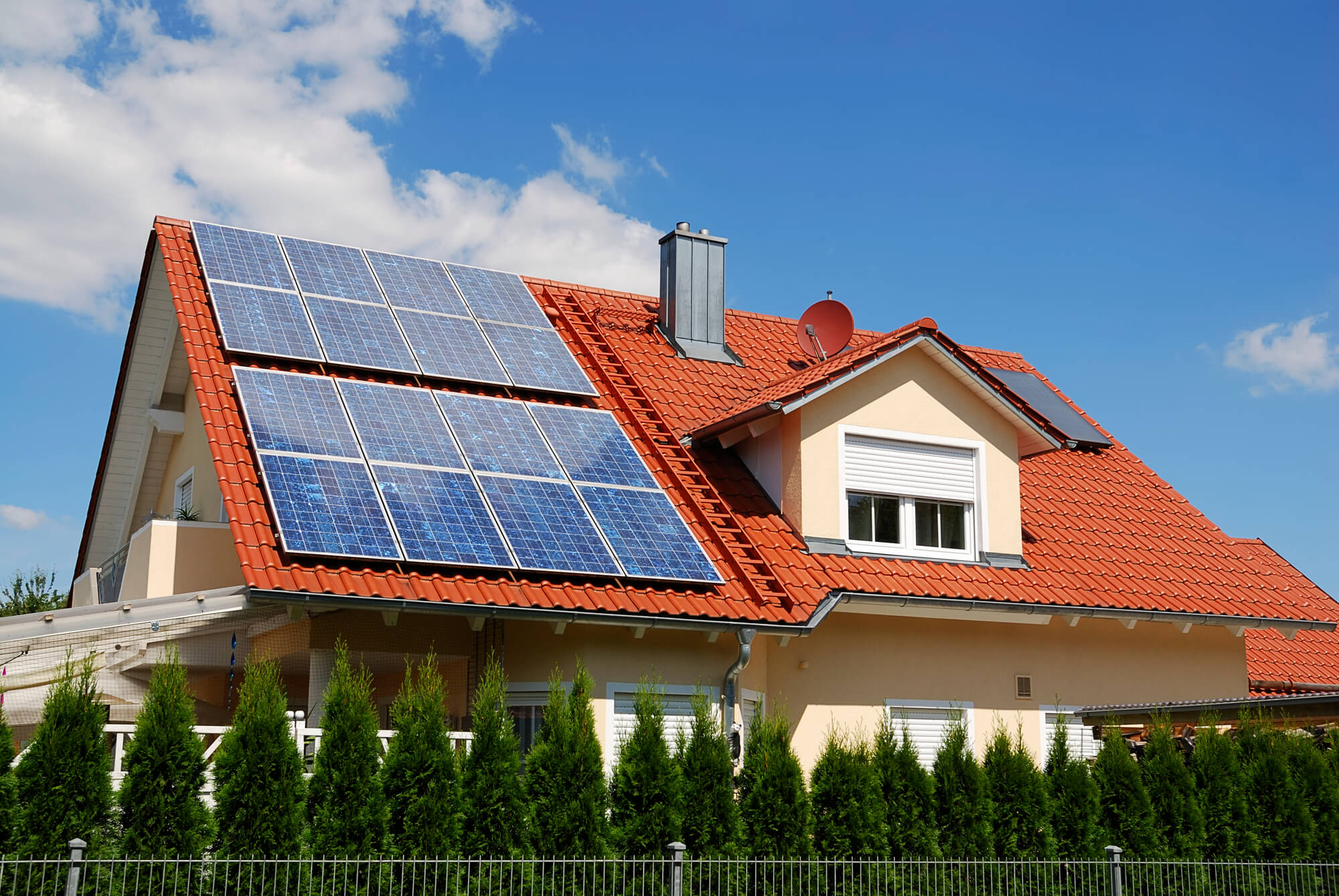
A solar easement is a legal agreement that protects your right to access unobstructed sunlight on your property for solar energy systems. It prevents neighbors from building structures or planting trees that would shade your solar panels and reduce their energy production. This legal tool ensures that your solar investment remains productive throughout its 25–30 year lifespan, protecting against future development, landscaping changes, or other obstructions on neighboring properties. This comprehensive guide explains what solar easements are, why they matter, how to establish them, state-by-state legal variations, and how they affect property rights and resale value.

In the US, property owners have no automatic “right to sunlight” for solar systems. A neighbor can legally build a tall structure, plant 60-foot trees, or install a billboard that completely shades your solar panels—even if that structure is entirely on their property. This legal reality creates a significant risk for solar owners: partial shading of 10–15% of an array can reduce output by 25–50% due to how solar panels are wired in series, making shading potentially catastrophic for your solar ROI. Solar easements fill this critical legal gap by creating binding, recorded agreements that guarantee sunlight access for specified time periods or indefinitely.

What Is a Solar Easement and How Does It Work?

A solar easement is a legal restriction on a property that prohibits structures, vegetation, or modifications that would block direct sunlight to solar panels on another property. Once recorded in county deed records, the easement runs with the land, binding not only current property owners but all future owners. Essentially, it grants one property owner (the beneficiary) the perpetual right to receive unobstructed sunlight from another property (the servient estate or burdened property).

Key characteristics of a solar easement: (1) Recorded in county deed records as a public legal document; (2) Binds current and future property owners—it’s not optional for new buyers; (3) Specifies exact hours and seasons of sunlight protection (e.g., 9 AM to 3 PM year-round, or broader protection); (4) Usually permanent or long-term (20–50 years or indefinitely); (5) Negotiated between property owners and documented by attorneys; (6) Enforceable through courts with legal remedies for violations; (7) May include financial compensation for the burdened property owner.

Mechanism of protection: A solar access analysis maps sun angles throughout the year (considering latitude, season, time of day, and panel orientation) and identifies a geographic area on neighboring properties that could cast shade on your system. The easement document defines this protected area (sometimes called a “solar envelope”) and prohibits all structures and vegetation above a certain height within that zone. Examples: “No structures exceeding 8 feet in height,” or “No deciduous trees exceeding 20 feet that would shade the panels between 9 AM and 3 PM.”

Legal Framework: State Law and the Uniform Solar Easement Act

Solar easements emerged from the Uniform Solar Easement Act (USEA), drafted in the 1970s and adopted in most US states. USEA provides standard legal language and mechanisms for creating solar easements without having to draft entirely custom legal documents. However, state implementation varies significantly, and some states have enhanced or modified USEA language.

States with strong, clear solar easement protections: California, Colorado, Arizona, Florida, Nevada, and Texas have explicit statutory language for solar easements and established, streamlined processes for creation and recording. In these states, you can reference the statute directly, making easement creation simpler and less expensive.

States with moderate protections: Many states adopted USEA but added modifications or limited scope. Examples include Illinois, New York, and Massachusetts, where solar easements are possible but require more attorney involvement.

States with limited easement law: Some northeastern and upper Midwest states (Maine, Vermont, New Hampshire, parts of Pennsylvania) lack explicit solar easement statutes, making easements possible but legally complex. These states may treat solar easements under traditional “conservation easement” or “protective covenant” frameworks, requiring more extensive legal documentation and attorney involvement, which increases costs.

States with no solar easement law: As of 2025, approximately 25% of states (Alabama, Oklahoma, Arkansas, parts of the Southeast) have never established solar easement statutes. In these states, solar easements are theoretically possible but rarely used because they require entirely custom legal frameworks and lack statutory clarity, making them risky and expensive.

Homeowners association restrictions: Many HOAs prohibit solar easements or impose strict limitations to preserve member autonomy and prevent one property owner from controlling another’s development rights. Check your CC&Rs (Covenants, Conditions & Restrictions) document before negotiating easements. Some states (California, Colorado) have laws preventing HOAs from banning solar installations entirely, but easement restrictions are often still allowed. Negotiating with an HOA to allow a solar easement may require multiple Board meetings and compromise on easement scope.

Why Solar Easements Matter: Protecting Your Solar ROI

The economics of solar depend entirely on sunlight access. Without a solar easement, your neighbor can legally build a 40-foot structure, grow 60-foot trees, or install a billboard that destroys your system’s production without any legal recourse. The financial impact is severe: shading 10–15% of an array can reduce annual output by 25–50% because solar panels are wired in series—shading one panel cascades to reduce the output of the entire string.

Real example: A homeowner installs a 7 kW system expected to produce 10,000 kWh annually and generate $150,000 in electricity savings over 25 years. A neighbor plants bamboo that grows 30 feet tall and shades 20% of the array from 1–3 PM daily. Annual production drops to 7,500 kWh (25% loss). Lifetime savings collapse to $112,500—a $37,500 loss. If the neighbor refuses to remove the bamboo, you have no legal recourse without a solar easement.

A solar easement prevents this nightmare by creating legal liability for shade-causing activities. If a neighbor violates the easement by building in the restricted area, you can seek legal remedies: demand letter (often effective), court injunction to remove the structure, or monetary damages. The mere existence of a recorded easement also deters neighbors from building or planting in the protected area—most property owners respect recorded restrictions.

Peace of mind: Beyond economics, a solar easement provides 25+ years of peace of mind. You know your solar investment is protected by law against future changes on neighboring properties.

Establishing a Solar Easement: Step-by-Step Process

Step 1: Conduct a professional solar access analysis. Hire a solar engineer, surveyor, or specialized solar analyst to map sun angles throughout the year (considering your latitude, seasonal sun path, time of day variations, and panel orientation and tilt). The analysis identifies areas on neighboring properties that could shade your system at any time during the year, or more typically, during peak production hours (roughly 9 AM to 3 PM). This analysis defines the geographic area and times protected by the easement. Cost: $500–$1,500 depending on complexity and location. This analysis is essential—without it, an easement may be too broad (unnecessary restrictions) or too narrow (insufficient protection).

Step 2: Approach neighbors with the solar easement concept. Present the idea diplomatically, explaining: (1) what a solar easement is; (2) that it only restricts shade-causing structures (not affecting most development); (3) that they receive a reciprocal benefit (you can’t sue if your system shades them); (4) whether you’re offering compensation. Many neighbors are amenable, especially if you offer a one-time payment ($500–$2,000), an ongoing easement fee, or reciprocal easement protecting their future solar rights. Approach during the initial solar design process before installation—neighbors are more likely to agree before your system is operational.

Step 3: Draft and record the easement with proper legal documentation. Work with a real estate attorney experienced in solar easements (ask your solar installer for referrals) to draft a document compliant with your state’s laws. The easement must specify: (1) protected solar area (geographic boundaries); (2) protected hours and seasons (e.g., 9 AM–3 PM year-round, or seasonal variations); (3) duration (25 years, 50 years, indefinitely, etc.); (4) exceptions (allowed structures within the easement—e.g., “structures under 6 feet, deciduous trees without year-round foliage”); (5) enforcement mechanisms (who can enforce, dispute resolution process); (6) financial terms (one-time payment, ongoing fees, reciprocal easement). Record the signed easement in your county recorder’s office. Recording makes it binding on future owners. Cost: $1,000–$3,000 in attorney fees, $100–$300 in recording fees.

Total cost to establish easement: $1,500–$5,000 including solar access analysis ($500–$1,500), attorney fees ($1,000–$3,000), recording fees ($100–$300), and possible neighbor compensation ($0–$5,000). If neighbors are cooperative, costs lean toward the lower end. If neighbors are reluctant and require significant compensation, costs climb toward $5,000+.

Types of Solar Easements

Unilateral easement: You grant a restriction to neighbors benefiting one party (protecting your solar access). Neighbors don’t grant reciprocal rights to you. This is a simple one-way protection. Unilateral easements are easier to negotiate (no reciprocal burden on neighbors) but less attractive to neighbors and sometimes viewed as unfair. Some HOAs prefer unilateral easements to keep restrictions asymmetrical.

Reciprocal easement: Both you and neighbors grant easements protecting each other’s solar access. Both properties have equivalent restrictions, creating fairness and mutual benefit. Reciprocal easements are more complex to negotiate and document but often more acceptable to neighbors because both parties have equal obligations. If you’re unlikely to install solar, neighbors may resist reciprocal easements. Reciprocal easements are ideal for communities planning multiple solar installations.

Fixed-term vs. indefinite duration: Easements can last 20 years, 50 years, or indefinitely (“in perpetuity,” binding all future owners forever). Longer duration increases protection but reduces neighbor flexibility for future development. Most solar easements run 25–50 years (matching solar panel design life of 25–30 years). Indefinite easements provide maximum security but are harder to negotiate and constrain future owners of the burdened property permanently. Consider the practical lifespan of your solar system when choosing duration.

Broad vs. restrictive scope: A broad easement prevents all shade-causing structures and vegetation, creating complete protection but is harder to negotiate. A restrictive easement might allow structures below a certain height (e.g., under 8 feet) or allow deciduous trees (which lose leaves in winter and don’t shade year-round). Broader easements provide stronger protection but limit neighbors’ development options. Restrictive easements are easier to negotiate but may leave vulnerabilities (e.g., allowing 8-foot structures that still cast afternoon shadows). Balance protection needs with negotiation feasibility.

Impact on Property Values and Real Estate Transactions

Impact on your property (beneficiary): A solar easement protecting your system can increase property value 4–6%, equivalent to owning solar panels. Buyers value guaranteed sunlight access for solar. Marketing a home with a recorded solar easement highlights long-term solar viability. Appraisers recognize solar easements as valuable assets protecting solar ROI. For homes in areas with development pressure or neighbors with high trees, the easement adds significant value.

Impact on neighbor’s property (burdened/servient estate): An easement restricting neighboring property can slightly decrease value (restricting future development potential). The impact is typically 1–3% unless the easement is very broad and restrictive. Neighbors selling their property must disclose the easement, and buyers will factor the restriction into their offer. Reciprocal easements minimize this negative impact—both properties have equivalent restrictions, so both are equally burdened. Financial compensation (one-time payment or ongoing fees) also mitigates the impact on neighbors.

Disclosure and title requirements: Solar easements must be recorded in deed records and appear on the property’s title. Real estate agents, title companies, and appraisers will identify them during property transactions. Buyers are informed and factor easements into purchase decisions. Easements do not prevent property sales—they simply become a disclosed condition of the property. In many real estate markets, an easement protecting solar is viewed favorably, not as an encumbrance.

Transferability upon home sale: Solar easements benefit the property (the land), not the individual owner. If you sell your home, the easement remains recorded and benefits the new owner. The new owner inherits the sunlight protection automatically. This is one of the primary advantages of recording an easement—it protects your investment across ownership changes.

Frequently Asked Questions

Can I force my neighbor to grant a solar easement?

No. A solar easement requires voluntary consent from the property owner. You cannot legally force a neighbor to grant one. However, some states have “right to sunlight” laws limiting what neighbors can do to shade solar installations—these differ from easements but provide some protection. Check your state solar laws. If your neighbor is uncooperative, explore alternative mounting strategies (ground mount, carport, pole mount) to access unshaded areas of your property, or reconsider solar feasibility.

How long does a solar easement last, and can it be terminated?

Duration is negotiable. Most run 25–50 years (matching solar system lifespan). Some are indefinite or “in perpetuity” (permanent, binding all future owners). Indefinite easements provide maximum security but are less likely neighbors will agree. A 25–30 year term is often a reasonable compromise matching solar panel design life. Termination is difficult—an indefinite easement may require mutual agreement of current owners or court action, which is expensive and time-consuming.

Do Homeowners Associations allow or permit solar easements?

Many HOAs restrict solar easements to preserve member autonomy and prevent one property owner from controlling another’s development rights. Check your CC&Rs before negotiating. Some states (California, Colorado, Nevada) have laws preventing HOAs from banning solar installations entirely, but easement restrictions are often still allowed. If your HOA is restrictive, negotiate for a limited easement with specific, narrow dimensions, or explore alternative solar locations (ground mount, carport) outside the common area.

What happens if a neighbor violates the easement by building or planting in the protected area?

You can pursue legal remedies: (1) written demand letter citing the easement violation (often effective—most neighbors comply when confronted); (2) court-ordered injunction requiring removal of the violating structure; (3) monetary damages for losses caused by shading (calculated from lost solar revenue). Legal action is expensive ($5,000–$20,000+), so most easements include negotiation processes before litigation is initiated. Easement language should specify dispute resolution steps (mediation, arbitration) to reduce conflict.

How much does it cost to establish a solar easement?

Typically $1,500–$5,000 including: solar access analysis ($500–$1,500), attorney fees ($1,000–$3,000), recording fees ($100–$300), and possible neighbor compensation ($0–$5,000). If your neighbor is cooperative and doesn’t require compensation, costs are lower (around $1,500–$2,000). Negotiating with resistant neighbors or those demanding substantial compensation increases overall costs toward $5,000+.

Can I sell my property if an easement restricts my neighbor’s rights, and will it reduce the sale price?

Yes, you can sell. The easement is recorded and disclosed during property transactions. Buyers will know about it. The easement protecting your solar access actually increases your property’s value (buyers value guaranteed sunlight for solar), while slightly reducing a neighbor’s resale value if they bear the restriction (typically 1–3%). Most buyers accept disclosed easements as part of the solar-friendly property feature and are willing to pay a premium for the solar protection.

What’s the difference between a solar easement and a solar access law?

Solar easements are voluntary, negotiated agreements between two property owners, recorded in deed records, binding on future owners. Solar access laws are written legislation (state or local) that restrict what neighbors can do to shade solar installations—they apply automatically without negotiation. Some states have both: a statutory solar easement framework AND broader solar access laws. Easements provide more certainty but require negotiation; access laws apply automatically but may provide weaker protection.

Summing Up

Solar easements are powerful legal protections ensuring unobstructed sunlight for your solar panels and guaranteeing your solar ROI for 25+ years. While not required for installation, they are prudent investments in areas with nearby neighbors, shade risk, or significant development pressure. Establishing an easement involves conducting a solar access analysis ($500–$1,500), negotiating with neighbors, and recording a legal document ($1,000–$3,000 in attorney and recording fees). Total cost typically ranges $1,500–$5,000. For properties with identified shade risks and neighbors amenable to negotiation, solar easements provide invaluable long-term protection. The upfront cost is small relative to the $15,000–$25,000 solar investment and the $150,000–$200,000 in electricity savings over 25 years. If shade risk exists, establishing a solar easement early—ideally during the solar design phase—is a worthwhile investment protecting your solar success.

Get a Free Solar Quote → (855) 427-0058

Updated