
Solar inverters are the shortest-lived major component in any solar system — most string inverters last 10–15 years while panels last 25–40 years, meaning a residential system will almost certainly need at least one inverter replacement during its life. String inverter replacement costs $1,500–$5,000 installed, while microinverters range from $300–$500 per unit to replace. Knowing what to expect in advance helps you budget for this expense and ensures you make the right choice when the time comes.
How Long Do Solar Inverters Last?
Inverter lifespan varies considerably by type:
String inverters: 10–15 years is the industry standard. Some brands achieve 15–20 years in favorable conditions (mild climates, good ventilation, clean power). Attic-mounted inverters often fail sooner due to heat stress. SMA, Fronius, and SolarEdge string inverters are generally regarded as the most reliable, with many lasting closer to the 15-year end.
Microinverters (Enphase, AP Systems): Enphase IQ series microinverters carry a 25-year warranty, and the company’s track record through prior-generation products suggests these can outlast string inverters significantly. In practice, individual microinverter failure rates are low — Enphase reports a field failure rate below 0.05% annually — but with 20–30 units per typical residential system, statistical failures over a 25-year system life are expected.
Hybrid/battery inverters (Enphase IQ Combiner, SolarEdge Energy Hub, Powerwall): 10–15 year typical lifespan, similar to string inverters. The additional complexity of battery management adds failure points versus a pure string inverter.
Power optimizers (SolarEdge): 25-year warranty from SolarEdge. Optimizers are simpler devices with no active switching at the inverter level per panel, which may contribute to their longer warranty. The SolarEdge hub inverter still requires replacement on a 10–15 year cycle.
String Inverter Replacement Cost
String inverter replacement is typically a 2–4 hour job. Cost breakdown:
Equipment: A replacement string inverter of equivalent capacity costs $800–$3,000 depending on brand and size. Entry-level brands (Growatt, Deye) run $800–$1,500 for a 5–10kW unit. Mid-range brands (SMA Sunny Boy, Fronius Primo) run $1,200–$2,500. SolarEdge hub inverters with optimizers cost $1,500–$3,000.
Labor: $300–$1,000 depending on installer and region. The job involves disconnecting the existing unit, mounting and wiring the replacement, commissioning/pairing with any monitoring system, and testing output.
Permits and inspections: Some jurisdictions require a permit and utility notification for inverter replacement (since it affects grid interconnection). Add $100–$500 if permits are required.
Typical total: $1,500–$5,000 installed for a residential string inverter replacement. Systems in the $2,000–$3,500 range are most common for a 6–8kW system with a mid-tier replacement inverter.
Upgrade considerations: If you’re replacing an aging inverter, it’s worth considering whether to upgrade to a higher-capacity inverter (if you plan to add panels), a hybrid inverter (if you might add battery storage), or a microinverter system (if shading has become a problem). Switching inverter types mid-system can require additional electrical work and may involve additional permits.

Microinverter Replacement Cost
Microinverter systems (Enphase IQ7, IQ8, AP Systems) replace inverters at the panel level. When one fails, only that panel goes down — the rest of the system continues operating normally. Monitoring systems flag the failure immediately.
Single microinverter replacement: $300–$500 per unit installed. Equipment is $150–$250 for an Enphase IQ8 series unit; labor covers panel removal, microinverter swap, panel reinstallation, and commissioning via the Envoy system. The job takes 1–2 hours on the roof.
Enphase warranty coverage: Enphase’s 25-year warranty is one of the best in the industry and covers both product defects and manufacturing failures. If a microinverter fails within its warranty period, Enphase covers the unit cost — you pay only labor for removal and reinstallation, typically $100–$200 per unit.
Volume failures: Older Enphase M190 or M215 microinverters (installed before 2014) are at or past their design life. Systems with these units may see increasing failure rates. If multiple units are failing, it may be more cost-effective to replace the entire microinverter string in a section rather than individual units one at a time. Full microinverter system replacement typically costs $3,000–$8,000 for a 20-panel system, primarily in labor (the panels themselves are reused).
Is Inverter Replacement Covered by Warranty?
Inverter warranties cover equipment failure within the warranty period but typically do not cover labor for removal and reinstallation.
Standard string inverter warranties: SMA offers 10 years standard, extendable to 15–20 years with an extended warranty purchase. Fronius offers 5 years standard, extendable to 10 years. SolarEdge offers 12 years standard, extendable to 20–25 years. If your inverter fails within the warranty period, the manufacturer provides a replacement unit at no cost — you cover labor only.
Extended warranty value: A 10-year extended warranty from SMA costs approximately $300–$500 at purchase. Given that inverter replacement labor runs $300–$1,000 and the probability of failure between years 10–15 is meaningful, extended warranties often pencil out — particularly if you’re in a climate that stresses inverters (hot attic installations, extreme temperature fluctuations).
What warranties don’t cover: Surges and lightning strikes (your homeowners insurance may cover this), physical damage, or failures caused by improper installation. Always document your installation with photos and keep your installer’s workmanship certificate.
Signs Your Inverter Needs Replacement
Monitoring shows zero or consistently low production: If your monitoring app (Enphase Enlighten, SolarEdge mySolarEdge, SMA Sunny Portal) shows zero production on a sunny day — and the panels and wiring are physically intact — the inverter is the prime suspect. Some inverters show a fault code at the unit itself.
Error codes on the inverter display: Most modern string inverters have an LED display or app-connected status indicator. Error codes like “Ground Fault,” “Arc Fault,” “Isolation Fault,” or “Grid Error” warrant immediate diagnosis. Some errors are transient (grid fluctuations trigger temporary shutdowns); persistent or repeating codes indicate component failure.
Age over 12–15 years: Even without a failure event, inverters in this age range are approaching end of life. If your panels were installed in 2010–2013, proactive inverter evaluation (and possibly replacement) is worth considering, particularly before an expected rate change or policy shift that affects your system’s economics.
Physical signs: Burn marks, bulging capacitors, corrosion at terminals, or a persistent burning smell near the inverter indicate internal failure. Do not operate an inverter with these signs — disconnect it and call your installer or an electrician.
Can You Replace the Inverter Yourself?
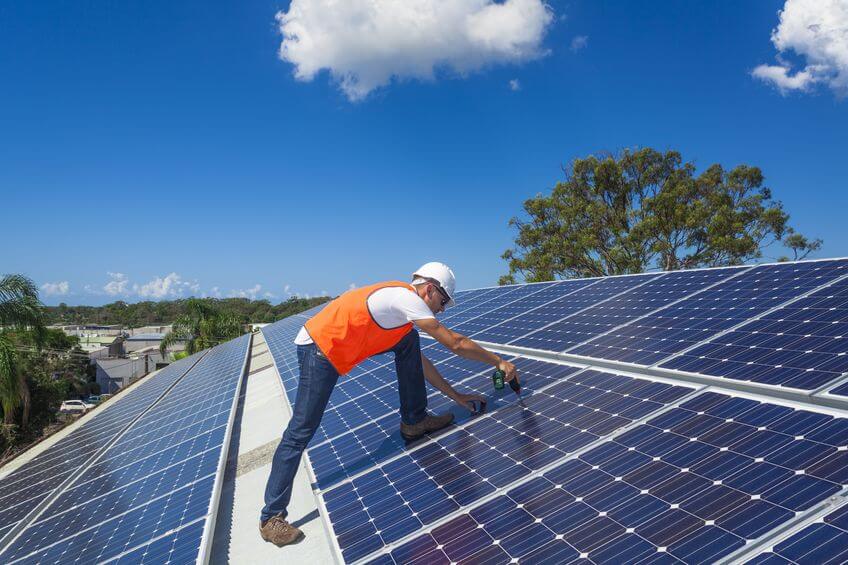
Inverter replacement involves working with high-voltage DC from your panels (200–600V) and AC grid connections. This is not a DIY job in most cases. State and local electrical codes typically require inverter replacement to be performed by a licensed electrician or licensed solar installer, and utilities may require notification and inspection since the inverter is your grid interconnection point.
If you have an electrical license and are comfortable with the work, the technical procedure is straightforward: disconnect AC and DC, remove mounting brackets, mount replacement unit, re-terminate wiring, commission the unit, and verify operation. The main risks are working with live DC (panels cannot be truly de-energized during daylight without opaque panel covers), and ensuring the replacement inverter’s settings match your utility’s interconnection requirements (anti-islanding settings, voltage/frequency ride-through parameters).
The practical answer for most homeowners: hire a licensed solar installer. Get quotes from multiple companies — prices vary considerably. Your original installer may not be the lowest cost option for replacement work.
Frequently Asked Questions
How much does it cost to replace a solar inverter?
String inverter replacement runs $1,500–$5,000 installed for a typical residential system, including equipment, labor, and permits. A mid-tier replacement (SMA Sunny Boy, Fronius Primo) for a 6–8kW system with standard labor typically costs $2,000–$3,500. Microinverter replacement is $300–$500 per unit, with Enphase covering unit cost under their 25-year warranty.
Does homeowners insurance cover solar inverter failure?
Standard homeowners insurance typically covers damage from specific perils like lightning strikes and power surges, which can cause inverter failure. Normal end-of-life failure or component degradation is not covered. If your inverter fails after a lightning strike or major surge event, file a claim — you may be covered for both the inverter and labor. Check your policy for equipment breakdown coverage as an endorsement, which provides broader coverage for mechanical failure.
Is it worth replacing an old inverter or replacing the whole solar system?
If your panels are in good condition (degradation within normal range, no physical damage), replacing only the inverter is almost always the right call. Panels from quality manufacturers installed 10–15 years ago still have 10–25 years of productive life. A $2,500–$3,500 inverter replacement extends a system’s life far more cost-effectively than a full system replacement. Consider a full system upgrade only if you want to significantly increase capacity, panels are severely degraded or damaged, or you’re switching from a legacy technology (old SMA Sunny Boys may not be compatible with modern battery storage products).
Summing Up
Solar inverter replacement is a normal, expected maintenance event for any system — plan for it at year 10–12 by setting aside $2,000–$3,500 for a string inverter system or confirming your Enphase warranty status if you have microinverters. Proactive monitoring via your system’s app catches failures quickly, minimizing lost production. If you’re planning a system upgrade alongside inverter replacement, use the opportunity to evaluate hybrid inverters for battery compatibility — many homeowners add storage at this point. For help evaluating your solar system or getting quotes on replacement work, call (855) 427-0058 or visit us.solarpanelsnetwork.com.
Updated