
Not every roof is equally suited for solar, but most roofs can support a solar installation with the right approach. The key roof requirements for solar are: structural integrity, adequate south-facing area free from shading, sufficient remaining roof life, and roof type compatibility with solar racking. This guide covers what installers actually check during a roof assessment and what to expect if your roof doesn’t meet ideal conditions.
Roof Structural Requirements for Solar
Solar panels and racking add a distributed load to your roof — typically 4–6 pounds per square foot. For most roofs built to standard residential building codes (which require roofs to support 20–40 lbs/sq ft live load for snow, workers, and equipment), this presents no structural problem. Properly engineered solar racking systems spread the panel weight across multiple rafter attachment points rather than concentrating load at a single point.
Structural concerns that warrant assessment before installation:
Roof age and condition: Installers perform a visual and sometimes physical inspection of your roof’s structural members (rafters, sheathing, ridge beam) for signs of damage, rot, or sagging. Rafters are load-bearing — if they show signs of moisture damage or structural compromise, they need repair before solar can be installed.
Roof sheathing (decking) condition: The plywood or OSB sheathing under your roofing material must be in sound condition. Soft spots in the sheathing indicate moisture damage and must be repaired. Solar lag bolts are screwed through the sheathing and into the rafters — they cannot achieve proper hold in deteriorated sheathing.
Rafter sizing and spacing: Standard residential roofs (rafters 2×6 or 2×8 at 16″ or 24″ spacing) are more than adequate for solar panel loads. Older homes built before standard codes may have smaller rafters. Installers verify rafter sizing to ensure lag bolts achieve required pullout strength (typically 250–450 lbs per attachment point per IBC standards).
Flat or low-slope roofs: Roofs with less than 2:12 pitch (about 9 degrees) require different mounting systems. Ballasted racking systems (using weighted blocks rather than roof penetrations) are common on flat commercial roofs. Residential flat roofs can use penetrating mounts with added flashing and sealant.
Roof Area and Space Requirements
How much south-facing roof area does solar require? A standard 400W panel measures approximately 6.6 feet × 3.3 feet = 21.8 square feet. Installation spacing (required setbacks and access pathways) typically means the effective roof area consumed per panel is 25–28 square feet when accounting for inter-panel gaps and edge setbacks.
For a typical 8 kW residential system (20 × 400W panels): 20 panels × 26 sq ft = approximately 520 square feet of usable mounting area.
Required setbacks: Most fire codes and local jurisdictions require setbacks from roof edges and ridgelines — typically 18 inches from roof edges, 36 inches for ridge access pathways, and setbacks from skylights, vents, and chimneys. These setbacks vary by jurisdiction and code version (2021 IFC vs. older versions). Your installer accounts for these in the system layout.
Minimum usable area: For any meaningful residential system, you generally need at least 200–300 square feet of unobstructed south, southwest, or southeast-facing roof area with good sun exposure.

Orientation and Shading
Best orientation: True south (azimuth 180°) maximizes annual production. South-facing panels in most US locations receive full-rated production. Southwest (225°) and Southeast (135°) orientations produce approximately 90–95% of south-facing output — still excellent.
Acceptable orientations: East (90°) and West (270°) produce 78–88% of south-facing output. Acceptable in locations with high electricity rates where every watt is valuable. East-facing arrays capture morning production; west-facing arrays align better with afternoon peak demand periods, which can have higher value under TOU pricing structures like California’s NEM 3.0.
Not recommended: North-facing roof sections produce only 40–55% of south-facing output and are generally not economical to install solar on. If your only available roof space faces north, consider a ground mount instead.
Shading assessment: Shading is one of the most common reasons for solar underperformance. Sources include nearby trees, chimneys, neighboring buildings, dormers, vent pipes, and satellite dishes. Installers typically use a Solar Pathfinder, Solmetric SurveyorPro, or satellite imagery with sun path modeling (Google’s Project Sunroof, EagleView) to quantify shading losses throughout the year.
A shading loss of less than 10% annually (measured as production loss compared to an unshaded system) is generally acceptable. Shading losses of 15–25%+ significantly impact economics and may mean solar isn’t viable on your roof — or that solutions like Enphase microinverters or SolarEdge power optimizers (which eliminate the “weakest link” effect of string inverters) are the right approach.
Trees and shading remediation: If nearby trees are causing shading, limbing or removing trees may be an option. Many states have Solar Access Laws that give homeowners the right to trim a neighbor’s trees that shade their solar panels (with limitations — check your state’s specific law). This is worth exploring before concluding that shading makes solar infeasible.
Roof Age and Remaining Life
This is one of the most critical pre-installation considerations. Solar panels have 25–30 year lifespans, and removing them for a roof replacement costs $1,500–$6,000 for the removal plus $1,500–$6,000 for reinstallation — adding $3,000–$12,000 to the cost of a mid-life roof replacement.
The industry rule of thumb: if your roof has fewer than 10 years of remaining life, replace it before going solar (or simultaneously). Here’s the expected lifespan by roofing material:
3-tab asphalt shingles: 15–20 year life. Often near or past end of life in older homes.
Architectural (dimensional) asphalt shingles: 25–30 year life. The most common material for solar installations — if the roof has 15+ years remaining, install solar directly.
Metal roofing (standing seam): 40–70 year life. Excellent for solar — almost never needs replacement during solar system life. Clamping solar mounts on standing seam roofing requires no penetrations at all.
Clay or concrete tile: 30–50 year life. Solar installation requires more care (tile hooks must be properly flashed) but is routinely done. Tile removal and reinstallation during solar installation adds $500–$1,500 to project cost.
Wood shakes: 20–25 year life. Technically can support solar but fire code restrictions in many Western US jurisdictions prohibit or complicate solar on wood shake roofs. Check local codes.
Slate: 75–150 year life. Installers must use specialized brackets to avoid cracking slate tiles. Premium installation cost but the roof will outlast the solar system.
What Happens If My Roof Doesn’t Meet Requirements?
Roofs that don’t meet ideal requirements have several alternative paths:
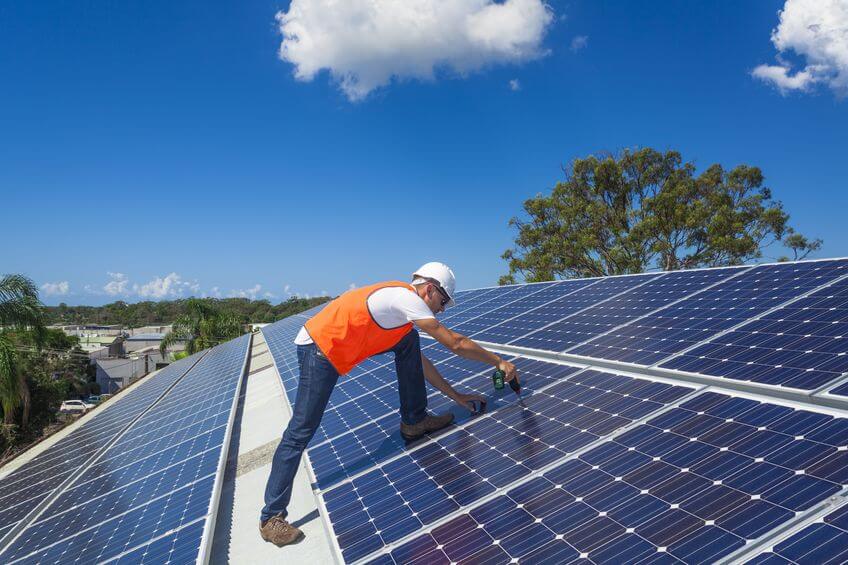
Replace the roof first: If your roof is old, replace it now and install solar immediately after. Many homeowners schedule both projects together — the roofer works on the bare roof while the solar contractor has the mounting hardware ready for immediate installation once roofing is complete, minimizing the period the home is without both.
Ground-mounted solar: If your roof has poor orientation, significant shading, or structural issues, a ground mount in your yard allows any orientation and tilt angle, no roof penetrations, easier future maintenance, and potentially better production. Ground mounts cost $2,000–$5,000 more than roof mounts for a typical system but are fully functional where roof mounting isn’t viable.
Carport solar: A solar carport structure over your driveway or parking area provides covered parking plus solar generation. Costs more than ground or roof mount but adds practical utility. Available from multiple specialty contractors.
Community solar subscription: If your roof truly isn’t viable and a ground mount isn’t possible, subscribing to a community solar project provides solar electricity benefits (typically 5–15% bill discount) without any rooftop installation. Community solar is available in about 20 states.
Frequently Asked Questions
How do I know if my roof can support solar panels?
A qualified solar installer will assess your roof’s structural integrity during the initial site visit. They look for rafter condition, sheathing soundness, roof age, and any signs of structural compromise. For roofs with any concerns, a structural engineer’s review may be required — some jurisdictions require a structural letter as part of the solar permit package.
Can solar panels be installed on a 20-year-old roof?
It depends on the roofing material. A 20-year-old architectural shingle roof may have 5–10 years of life remaining — approaching the point where roof replacement before solar installation becomes advisable. A 20-year-old metal roof likely has decades of life remaining and is excellent for solar. Have your roofer inspect and estimate remaining life before deciding.
Does my roof need to be reinforced for solar panels?
Rarely for standard US residential construction. Solar panels add approximately 4–6 lbs/sq ft of distributed load, well within the design loads of roofs built to modern building codes. Older homes, homes with undersized rafters, or homes with existing structural issues may need engineering assessment or minor reinforcement. Your installer will identify this if it’s a concern.
What roof pitch is needed for solar panels?
Solar panels can be installed on roofs with virtually any pitch from near-flat to steep. Optimal production typically occurs at a tilt angle equal to your latitude (about 30–40° for most US locations). Standard residential roof pitches of 4:12 to 8:12 (18–34 degrees) are in this range and work well. Flat roofs can use tilt-racking to achieve optimal angles. Very steep roofs (12:12 or greater) may see reduced summer production but improved winter production.
Summing Up
Most residential roofs can support solar panels — the critical checks are structural condition, sufficient south-facing area free from shading, and enough remaining roof life to justify installation without imminent reroof costs. The “10-year rule” (replace roofs with less than 10 years remaining before going solar) is a sound practical guideline. Roofs that don’t support rooftop solar have alternatives: ground mounts, carport systems, or community solar subscriptions. To get a professional assessment of your roof’s solar suitability and a system design customized for your specific conditions, call (855) 427-0058 or visit us.solarpanelsnetwork.com.
Updated