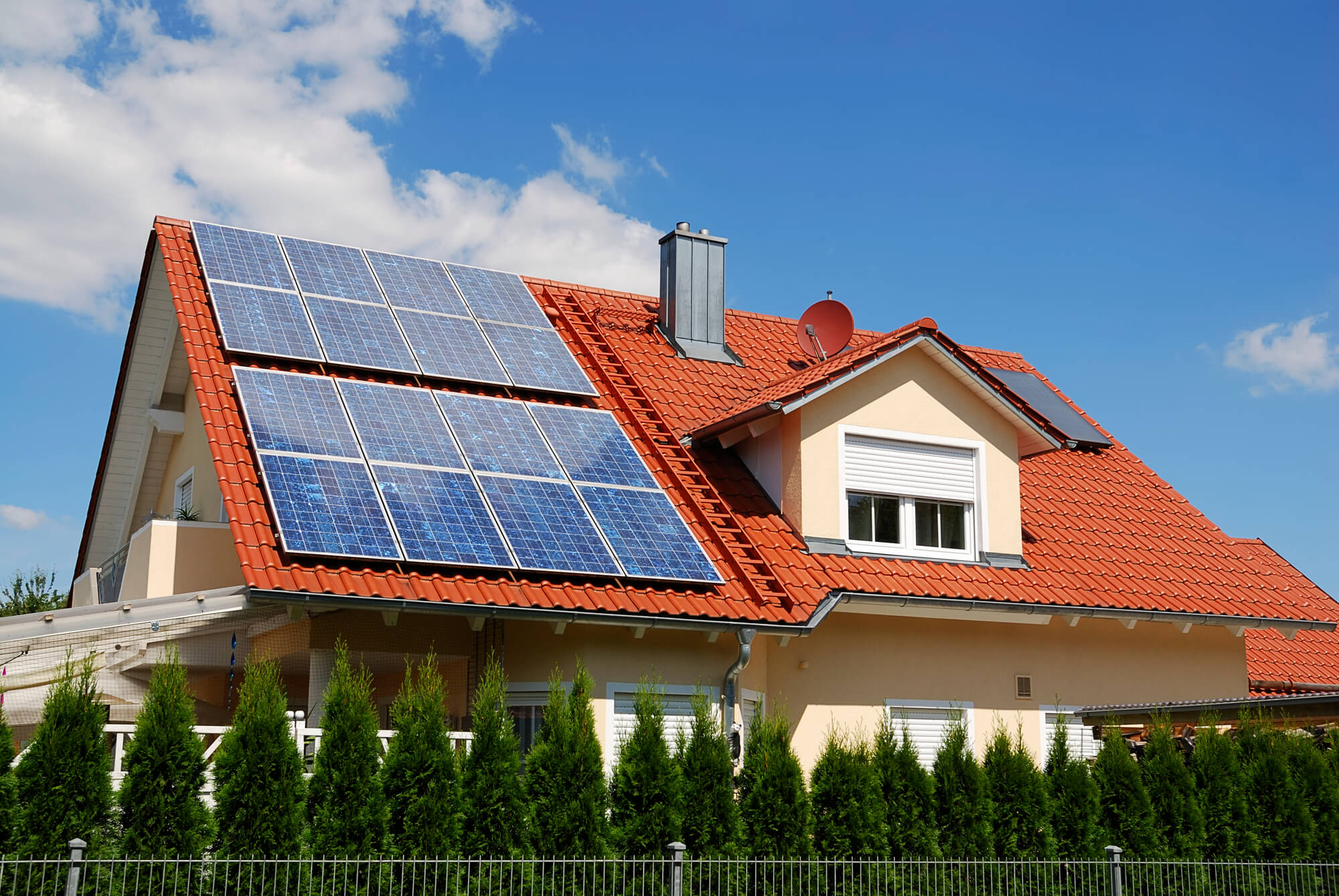
When grid power fails during natural disasters—hurricanes, wildfires, ice storms, floods—homes and communities become vulnerable. Hospitals lose life support power, water pumps stop, refrigeration fails, and communication systems go dark. Solar panels with battery backup can provide independent power, keeping essential systems running when the utility grid fails. For emergency preparedness, solar energy represents insurance against extended outages, enabling continuity of healthcare, communications, refrigeration, and lighting.

This guide explores how solar and battery systems function during emergencies, compares solar backup to traditional generators, examines real-world disaster resilience applications, and helps you assess whether solar disaster preparedness is appropriate for your situation. As climate change drives more frequent severe weather, solar-battery backup shifts from luxury to practical disaster insurance.

How Grid-Tied Solar Systems Fail During Outages (And Why)

Most residential solar systems are grid-tied: inverters convert DC power from panels into AC power, which flows both into the home and onto the utility grid. This design is efficient for daily operation but fails completely during power outages. Standard grid-tied inverters shut off automatically when grid power fails—this safety mechanism prevents backfeeding electricity onto utility lines where utility workers might be electrocuted during repairs. Without this shutdown, a grid-tied system becomes a hazard.

The consequence: even with bright sun shining on your panels, your home gets no power during an outage if you don’t have battery backup. Lights stay off, refrigerators stop, heating/cooling systems fail. You’re no better off than a home without solar. This is why battery backup is critical for disaster preparedness. With batteries, your solar system can seamlessly switch to island mode (disconnected from grid), powering your home independently as long as sun and battery capacity allow.

Battery Backup Systems: Enabling Independent Power

To use solar during emergencies, you need a battery system and specialized inverter. A hybrid inverter (or battery-aware inverter) manages solar input, battery charging, and loads dynamically. During normal grid operation, excess solar generation charges batteries; if batteries are full, surplus power exports to the grid. If grid power fails, the inverter detects the loss and switches to island mode, powering your home from solar during daytime and from batteries at night or during cloudy periods.

Battery options include lithium-ion (LiFePO4), which offer longer lifespan (10-15 years), faster charging, and deeper discharge cycles; and lead-acid (AGM or flooded), which cost less but degrade faster (5-8 years) and require more maintenance. A typical residential backup system includes 10-20 kWh of usable battery capacity, costing $10,000-$25,000 installed. This provides 24-48 hours of power for essential loads (refrigerator, lights, communications, some heating/cooling) depending on battery size and power consumption.

System design is critical: oversized batteries increase costs but provide more days of autonomy; undersized batteries require aggressive load management during outages. Smart system design identifies essential loads (critical circuits) and powers those selectively, extending battery runtime. A 10 kWh battery powering only essential circuits (500-1000W load) lasts 10+ hours; the same battery powering whole-home loads (3000W+) lasts 3-4 hours. For extended outages, solar recharges batteries during daytime, enabling continuous operation even multi-week outages if weather permits.

Portable Solar Systems: Immediate Emergency Power

For rapid deployment in emergencies, portable solar systems offer advantages. Portable systems include foldable solar panels (100W-400W), compact lithium battery packs (500Wh-5000Wh), and integrated inverters providing 110V AC outlet power. These systems can be purchased, deployed, and operational within hours. Two people can carry a 400W panel and 3000Wh battery pack, set up in 15 minutes, and provide emergency charging for phones, tablets, laptops, LED lights, and small medical devices.

Real-world disaster relief applications demonstrate portable system value. Emergency responders, search-and-rescue teams, and field hospitals use portable solar kits to power communication equipment, lighting, ventilation, and life support devices without relying on generators or fuel supply chains. A single portable system can keep critical medical equipment, communication radios, and lighting operational indefinitely if sun is available. Cost is modest: quality portable systems range $1,500-$5,000, far less than whole-home backup systems, and they remain useful year-round for camping, RVing, and backup power.

Whole-Home Battery Backup: Advantages and Limitations

Whole-home battery backup systems (Powerwall, LG Chem, Generac PWRcell, etc.) provide seamless automatic switching during outages. As soon as grid power fails, batteries power your home without requiring action—essential for families with elderly members, disabled individuals, or medical needs who can’t manage manual switching or emergency procedures. System sophistication enables load shedding: if battery charge drops, non-essential loads (EV chargers, water heaters) automatically disconnect, prioritizing lights, refrigeration, heating/cooling, and communications.

Limitations exist. Most residential battery systems have 10-20 kWh capacity, providing 24-48 hours of backup for typical homes. Multi-day outages require conservative load management or solar recharging daily. Additionally, winter outages create challenges: shorter days mean less solar generation and longer nighttime loads, draining batteries faster. A system sized for 48-hour summer backup might only provide 18-24 hours in winter. Whole-home systems cost $15,000-$30,000 installed, significant investment not everyone can justify. For moderate budgets, critical-circuit systems (backing up only essential circuits) cost less while providing core resilience.

Comparison: Solar-Battery Backup Versus Traditional Generators

Traditional backup generators (natural gas, propane, diesel) have been disaster preparedness standard for decades. Generators provide immediate, high-power output (10,000-20,000W) independent of weather, enabling whole-home operation indefinitely if fuel supply holds. Costs range $5,000-$15,000 installed, less than comprehensive battery systems. However, generators have significant limitations:

Fuel dependency is critical: generators run only as long as fuel lasts. Natural gas generators depend on utility gas supply, which often fails during disasters. Propane/diesel generators require fuel storage—5-gallon propane tank lasts roughly 20 hours at half-load; diesel tanks require 10-20 gallons for equivalent backup. Stored fuel degrades over time, requiring periodic maintenance. Social realities matter: during widespread outages, fuel becomes scarce; long lines form at gas stations, and supplies run out. Generators also produce noise (85-90 dB), emissions, and require ventilation to prevent carbon monoxide accumulation.

Solar-battery systems eliminate fuel dependency. Once installed, they operate indefinitely as long as sun is available (daily recharging). No fuel storage, no fuel supply chains, no emissions. Disadvantage: cloudy or extended-outage scenarios reduce solar generation; battery capacity limits without solar input. Optimal solutions often combine both: solar-battery backup for daily generation and extended-outage resilience, plus a modest generator for backup-to-backup in extreme scenarios (multi-week winter outage with heavy cloud cover).

Real-World Disaster Scenarios and Solar Resilience

Hurricane Maria devastated Puerto Rico in 2017, destroying utility infrastructure and leaving millions without power for months. Homes with rooftop solar systems partially retained power—not enough for whole-home operation, but sufficient for essential circuits, communications, refrigeration, and lighting. Community solar gardens (communal arrays with battery backup) provided charging stations where residents charged phones, devices, and small batteries, maintaining communication and coordination during recovery. This demonstrated solar’s disaster value in developed countries.

In less developed contexts, solar has proven even more critical. Kerala’s 2018 floods trapped communities without power; portable solar systems deployed via helicopter provided power for emergency communications, water purification, and medical equipment. Bangladesh uses solar microgrids to provide reliable backup power in communities subject to regular flooding and grid outages. These real-world applications show solar isn’t theoretical disaster resilience—it’s proven practical emergency infrastructure.

Domestically, California’s rolling blackouts (2020-2022) and Texas’s winter storm outages (2021) demonstrated vulnerability of grid-dependent systems. Homes with solar-battery backup maintained power; surrounding homes endured multi-day outages. As climate change drives more extreme weather, this pattern will repeat. Solar-battery systems aren’t luxury backup—they’re practical insurance against increasingly likely grid failures.

Load Management Strategies During Extended Outages

If outage duration exceeds your battery capacity, strategic load management extends your system’s endurance. Critical loads (refrigerator, medical equipment, communications, lighting) take priority. Non-essential loads (EV charging, water heater, dishwasher, pool pump, air conditioning if weather permits) turn off. Modern solar-battery systems enable load scheduling: water heating during peak solar generation (daytime) when excess panels power the load without draining batteries. EV charging stops until grid power returns.

Behavioral changes extend autonomy significantly. Taking shorter showers reduces hot water demand. Minimizing refrigerator openings reduces compressor cycling. Turning off unnecessary lights and using LED fixtures reduces lighting loads. Wearing layers rather than heating entire homes reduces thermal loads. Charging devices (phones, laptops) during peak solar hours rather than evening extends battery reserves. These individual changes compound: a 30% load reduction extends battery runtime by 40%, potentially spanning from 24-hour outage endurance to 34+ hours with solar recharge cycles.

Portable Solar and Community Resilience Applications

Beyond individual homes, portable solar systems build community resilience. Community centers, schools, and faith-based organizations can install portable or semi-permanent solar arrays with battery backup, creating charging stations and emergency power hubs during outages. These function as command centers, communication nodes, and resource distribution points. First responders access charging facilities for radios, mobile devices, and vehicle charging. Residents gather to charge devices and access information.

Some municipalities are formalizing this: San Francisco requires new buildings over 50,000 sq ft to include solar; several states incentivize community solar projects that include battery backup, explicitly citing disaster resilience. As infrastructure hardening becomes climate adaptation priority, solar-battery backup shifts from individual choice to public good and emergency preparedness standard.

Integrating Solar Backup Into Comprehensive Preparedness Plans

Disaster preparedness requires multiple strategies: solar-battery backup addresses power continuity; water storage addresses supply chain disruption; non-perishable food stockpiles address food security; communication devices address connectivity. Solar is one component of a resilient household, not comprehensive solution alone. A family with great solar backup but no water storage, food, or first aid supplies remains vulnerable.

Comprehensive preparedness for your household should include: 1-2 weeks of non-perishable food and water (1 gallon/person/day minimum); first aid and basic medical supplies; battery-powered or hand-crank flashlights and radios; backup power for phones (portable battery banks and solar chargers); water treatment (filters or boiling capacity); and cash for local transactions if power outages disable digital payment systems. Add solar-battery backup as power resilience component, portable solar as supplementary emergency power source, and ideally a small generator as backup-to-backup for extended cloudy outages.

Sizing and Cost-Benefit Analysis for Your Situation

Whether solar disaster preparedness makes sense depends on your situation. In grid-stable areas with minimal outage history, comprehensive solar-battery backup (cost: $20,000-$30,000+) may not be justifiable. In areas with frequent or extended outages (California, Florida, Texas, wildfire zones), backup systems become cost-effective insurance. To assess: calculate your typical monthly backup battery charge cost (kWh used x electricity cost), multiply by 12 to get annual cost. If outage-related losses (food spoilage, missed work, hotel costs, medical issues) approach annual backup system cost, the system becomes reasonable investment.

Phased approaches reduce upfront cost: start with portable solar system ($2,000-$5,000), install critical-circuit backup battery ($10,000-$15,000), then later expand to whole-home capacity if needs demand. Federal tax credits (30% ITC) apply to battery systems paired with solar, significantly improving economics. Additionally, many utilities offer time-of-use (TOU) rates where peak-hour electricity costs 3-5x base rates; batteries paired with solar enable charging during off-peak/solar hours and powering peak-hour loads from batteries, reducing utility bills 20-40% even without outages. System economics improve further when considering utility bill savings alongside disaster resilience benefits.

Key Installation and Maintenance Considerations

Solar backup systems require professional installation and permitting. Battery systems contain hazardous materials and operate at high electrical voltages; improper installation creates fire, electrocution, or explosion risks. Work only with licensed installers experienced in backup systems. Verify they understand your local electrical codes, utility interconnection requirements (especially anti-islanding rules), and backup system specifications.

Maintenance is minimal but essential: batteries require occasional monitoring (voltage/charge level), inverters require firmware updates from manufacturers, and panels require periodic cleaning (dust/debris reduces output). Many modern systems provide app-based monitoring enabling remote system status checks. Conduct annual inspections checking battery connections, inverter status indicators, and panel cleanliness. Have a qualified technician perform professional service every 3-5 years, checking internal connections, battery health, and inverter calibration.

Frequently Asked Questions

Will my solar system work during a power outage?

Standard grid-tied solar without batteries will not work during outages—the system automatically shuts off for safety. To use solar during outages, you need a hybrid inverter and battery backup system that allows island mode operation independent of the grid.

How long will a battery backup system power my home?

Typical 10-20 kWh residential batteries power essential loads (refrigerator, lights, communications) for 24-48 hours. Full home loads drain batteries in 3-6 hours. During daytime, solar recharges batteries, extending runtime indefinitely if sun is available. Winter outages are more challenging due to shorter daylight and reduced solar output.

Is solar backup more reliable than a generator?

Each has advantages: generators provide high power independent of weather but depend on fuel supply and maintenance. Solar-battery backup operates indefinitely without fuel but depends on sunlight and battery capacity. Optimal approach combines both—solar-battery for daily resilience and a modest generator for backup-to-backup during extended cloudy outages.

Can I add a battery to my existing solar system?

Yes, battery retrofit is possible but requires system upgrades: new hybrid inverter (if original is grid-tied only), battery unit(s), and rewiring. Retrofit costs $8,000-$15,000 depending on system size. New installations including both solar and batteries from the start are generally more cost-effective than retrofits.

How much does solar disaster preparedness cost?

Portable systems: $1,500-$5,000. Critical-circuit battery backup: $10,000-$15,000. Whole-home backup: $20,000-$30,000. Federal tax credit (30%) applies, reducing costs 30%. Phased approaches (start with portable, upgrade later) reduce upfront investment.

Does my utility bill go down if I install solar backup?

Yes, solar alone reduces bills 50-80% depending on system size. Battery backup provides additional savings by shifting consumption: charging batteries during off-peak/solar hours and using battery power during peak-rate hours. TOU rate savings typically add 10-20% to solar savings.

Summing Up

Solar energy with battery backup provides practical disaster preparedness, enabling independent power during grid outages. Unlike generators requiring fuel and maintenance, solar systems generate power indefinitely as long as sun is available. For grid-stable areas, whole-home backup may not be justified; for outage-prone regions, backup systems become cost-effective insurance against extended outages and associated costs.

Start with realistic assessment of your outage risk and budget. If budget is limited, portable solar ($2,000-$5,000) provides immediate emergency power and remains useful year-round. If outages are frequent or extended (your area), critical-circuit backup ($10,000-$15,000) provides core resilience without whole-home cost. If extreme weather is constant threat and you have medical dependencies, whole-home backup ($20,000-$30,000) justifies the investment. Pair solar with comprehensive preparedness—water, food, first aid, backup power—for household resilience beyond power alone.

Get a Free Solar Quote → (855) 427-0058

Updated