Before getting solar quotes, homeowners want to know whether their home is even a good candidate for solar. The Sun Number Score — sometimes called a SunScore — was designed to answer that question. Developed with funding from the Department of Energy and once prominently displayed on Zillow property listings, Sun Number Scores provide an at-a-glance rating of a property’s solar potential on a scale of 0 to 100. Understanding what your score means, how it is calculated, and what to do with the information can save you time and money in your solar evaluation process.

What Is a Sun Number Score?

A Sun Number Score is a 0–100 rating that estimates the solar energy potential of a specific property. A score of 100 represents ideal solar conditions; a score below 30 suggests solar is unlikely to be cost-effective. The tool was developed by Sun Number Inc. with ARPA-E and SETO funding through the DOE’s Incubator program and became widely known through a partnership with Zillow that displayed scores directly on property listings — making solar potential as visible as square footage or bedroom count.

Current availability: Zillow discontinued the Sun Number integration in 2020 as part of a broader reconfiguration of its listing data. Sun Number scores are still available through several platforms and directly from Sun Number Inc., though they are no longer universally visible on property listings. Alternatives like Google Project Sunroof, EnergySage Marketplace, and Aurora Solar perform similar analyses with greater technical depth.

How Sun Number Score Is Calculated

The Sun Number Score combines four weighted sub-scores:

1. Building Solar Score (largest weight, ~50–60% of total)

The Building Solar Score evaluates the structural suitability of the specific property for solar installation. Key inputs include:

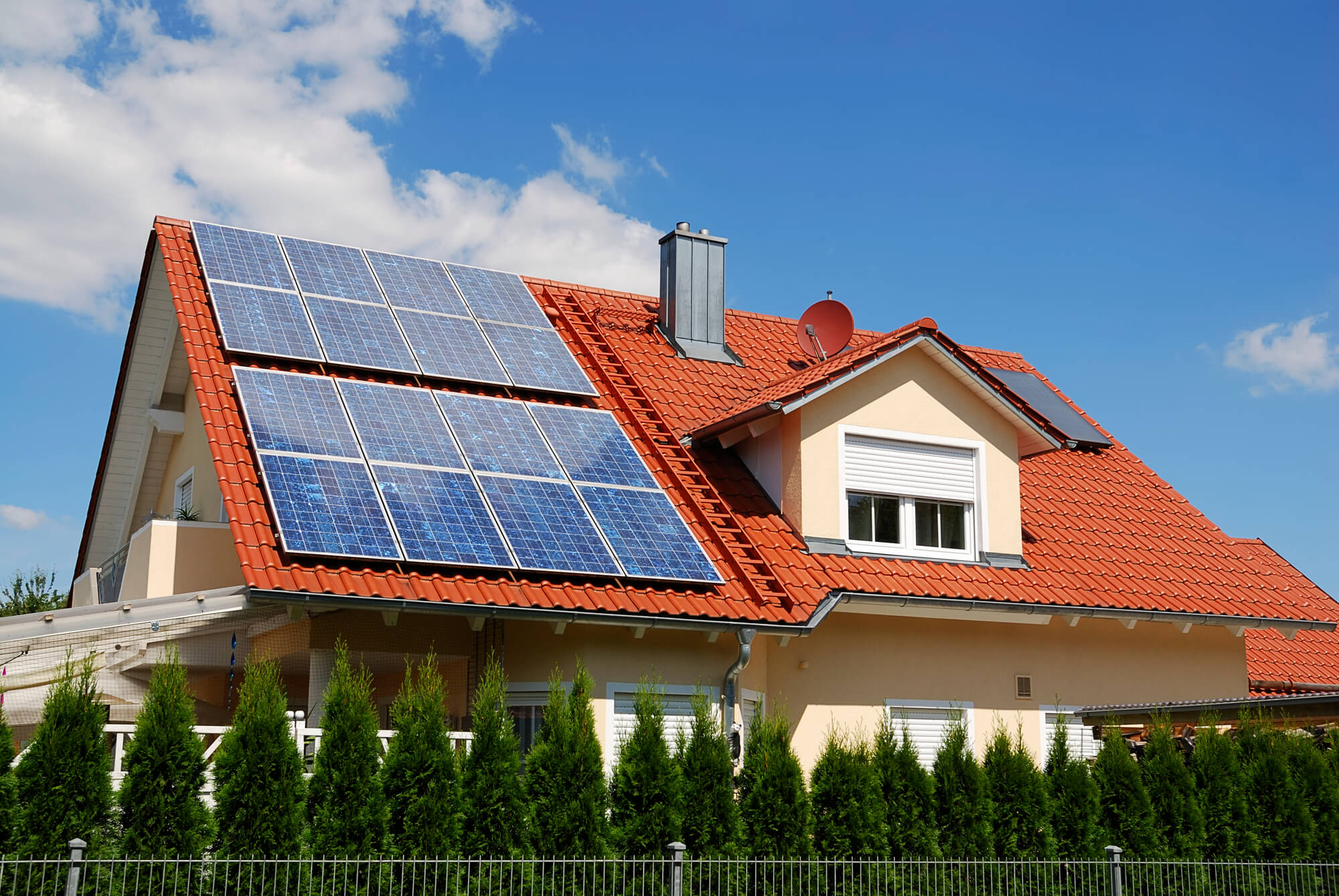
Roof characteristics: Area of usable roof space (south-, east-, and west-facing surfaces suitable for panels), roof pitch (optimal 15–40 degree tilt for US latitudes), and roof age/condition. Roofs nearing end-of-life reduce the score; a large, south-facing, well-angled roof surface produces the highest building scores.

Shading analysis: Trees, adjacent buildings, chimneys, and other obstructions that shade the roof reduce the score. The Sun Number system uses LiDAR data and satellite imagery to model shading throughout the day and across seasons. A heavily shaded urban property may score 30–40 on building suitability regardless of how favorable other factors are.

2. Regional Climate Score

Solar irradiance data from NREL’s National Solar Radiation Database (NSRDB) feeds the regional climate score. Locations with higher average peak sun hours score higher. Phoenix, AZ (5.5–6.0 peak sun hours/day) scores significantly higher than Seattle, WA (3.5–4.0 peak sun hours/day). The climate score reflects long-term solar resource potential, not just summer production.

3. Local Electricity Rate Score

Properties in areas with higher electricity rates generate more financial value from solar. California ($0.25–0.35/kWh), Hawaii ($0.35–0.45/kWh), and Massachusetts ($0.20–0.25/kWh) receive higher electricity rate scores than Oklahoma ($0.08–0.11/kWh) or Louisiana ($0.09–0.12/kWh). Because solar saves money by displacing grid electricity at retail rates, the local rate significantly influences the financial attractiveness of solar.

4. Solar Installation Cost Score (smallest weight)

Local installer pricing and market competition influence the installation cost score. Markets with many competing installers and lower labor costs have better scores. This factor carries the least weight in the total Sun Number, as national panel cost trends have equalized pricing across markets more than other factors.

How to Interpret Your Sun Number Score

Score RangeSolar PotentialInterpretation
80–100ExcellentIdeal solar candidate — act promptly and get multiple quotes
70–79GoodStrong solar potential — solar likely cost-effective with standard payback periods
50–69ModerateSolar may be viable — professional shading analysis recommended before deciding
30–49Below averageSolar may work but with longer payback — explore alternatives (ground mount, community solar)
Below 30PoorSignificant obstacles (severe shading, north-facing roof, very low rates) — community solar may be better option

A score above 70 is generally considered the threshold for recommending solar as a financially sound investment for that property. This does not mean scores below 70 cannot produce good solar investments — local conditions, personal energy goals, and available incentives matter too — but it provides a useful initial screen.

Limitations of the Sun Number Score

Sun Number Scores are a useful screening tool, not a detailed solar design. They have several important limitations:

Based on publicly available data: Sun Number uses satellite imagery and public LiDAR data, which may not capture recent changes to the property (new trees, additions, HVAC equipment on the roof). An on-site assessment by a professional installer is always more accurate.

Does not account for incentives: State rebates, utility incentives, net metering compensation rates, and local programs are not captured in the score, even though they significantly affect financial returns. A property in a state with no state solar incentive and a low net metering rate may be less attractive than its Sun Number suggests; a property with exceptional local incentives may be more attractive.

Cannot assess structural condition: Roof age, structural load capacity, and specific shading from trees that may be trimmed or removed are not captured. A property with a 12-year-old asphalt roof and an otherwise excellent Sun Number should plan to replace the roof before or during solar installation — a cost not reflected in the score.

Outdated data in some areas: The LiDAR datasets used vary in age and resolution by location. Urban areas with recent construction changes may have less accurate scores than suburban areas with stable building stock.

Alternatives to Sun Number Score

Several tools provide more detailed solar potential analysis:

Google Project Sunroof uses Google Maps 3D imagery and NREL solar data to estimate solar potential for individual addresses, showing usable roof area, shading analysis, estimated annual production, and basic financial modeling. Available at sunroof.google.com. Coverage includes most US zip codes.

EnergySage Marketplace combines an automated site assessment with a marketplace for comparing installer quotes. The platform generates a production estimate and connects homeowners with pre-screened local installers for free comparison quotes.

Aurora Solar and OpenSolar are professional design platforms used by installers to generate detailed shading analyses, 3D roof models, and accurate production estimates. You access these tools through your installer during the quote process.

NREL PVWatts Calculator (pvwatts.nrel.gov) allows direct input of system parameters (size, tilt, orientation) and calculates production estimates based on NREL irradiance data. It is less user-friendly than consumer tools but uses the same underlying data and is fully transparent about its methodology.

What to Do After Checking Your Score

If your Sun Number or equivalent tool shows a score above 70, the next steps are straightforward: get at least 3 quotes from qualified local installers. Each installer will conduct a more detailed assessment — often using satellite imagery, a site visit, and professional design software — to generate an accurate production estimate and system design tailored to your specific roof.

If your score is between 50 and 70, request quotes that include a specific shading analysis. Trees may be trimmable; some shading from chimneys or nearby buildings can be designed around with microinverters or power optimizers. The Sun Number’s moderate assessment may not account for these design solutions.

If your score is below 50, explore community solar subscriptions, which allow you to subscribe to a share of an off-site solar array and receive credits on your electricity bill without installing anything on your home. Community solar is available in many states and does not require any roof conditions.

Frequently Asked Questions

Where can I check my Sun Number Score?

Sun Number scores are available at sunnumber.com and through several partner platforms. Google Project Sunroof (sunroof.google.com) provides a similar service with detailed roof analysis. EnergySage also generates site-specific solar potential ratings. Zillow no longer displays Sun Number scores on property listings as of 2020.

Is a Sun Number Score of 70 good?

Yes. A score of 70 or above indicates that the property is a solid solar candidate with strong irradiance, suitable roof characteristics, and/or favorable electricity rates. The general rule of thumb is that any property scoring 70+ is worth pursuing with professional installer quotes. Many excellent solar installations come from properties scoring in the 70–80 range.

Does a low Sun Number Score mean I can’t go solar?

Not necessarily. A low score indicates one or more of the four factors (building suitability, climate, electricity rates, install costs) is unfavorable. If the low score is driven by high local electricity rates or modest climate, a site visit may reveal better production potential than the automated tool estimates. If shading is the issue, professional shading analysis and system design may find workable areas. If none of these resolve, community solar is an option that does not require any rooftop installation.

How accurate is the Sun Number Score?

Sun Number is a screening tool with moderate accuracy — useful for a first filter but not reliable enough to make final solar investment decisions. Studies comparing Sun Number scores to actual installer site assessments find meaningful variation, particularly in tree-shaded suburban properties where satellite imagery underestimates shading from broad tree canopies. Use it to decide whether to get installer quotes, not as a substitute for a professional assessment.

Summing Up

The Sun Number Score is a useful first step in evaluating a property’s solar potential — particularly for homeowners early in the research process or those considering a home purchase and wondering about solar compatibility. A score above 70 is a reliable signal to pursue installer quotes; a score below 50 warrants closer investigation before committing. No automated tool replaces an on-site professional assessment, and the Sun Number Score is best used to filter properties and guide early conversations with installers rather than as a definitive solar verdict.

Contact Solar Panels Network USA at (855) 427-0058 for a professional solar potential assessment for your home. Our specialists evaluate roof characteristics, shading, local incentives, and utility rate structures to give you an accurate picture of what solar can do for your specific property.

Updated