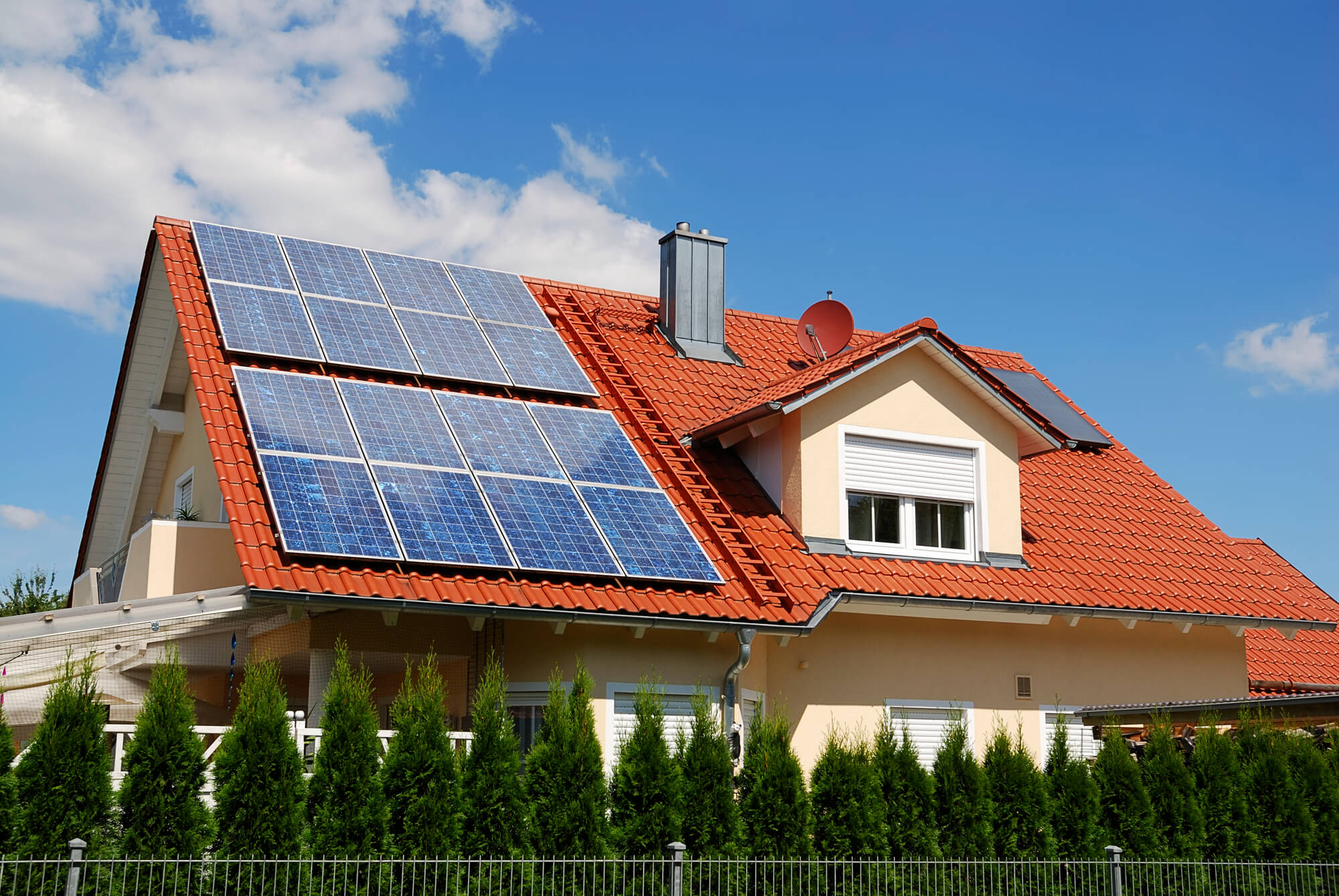
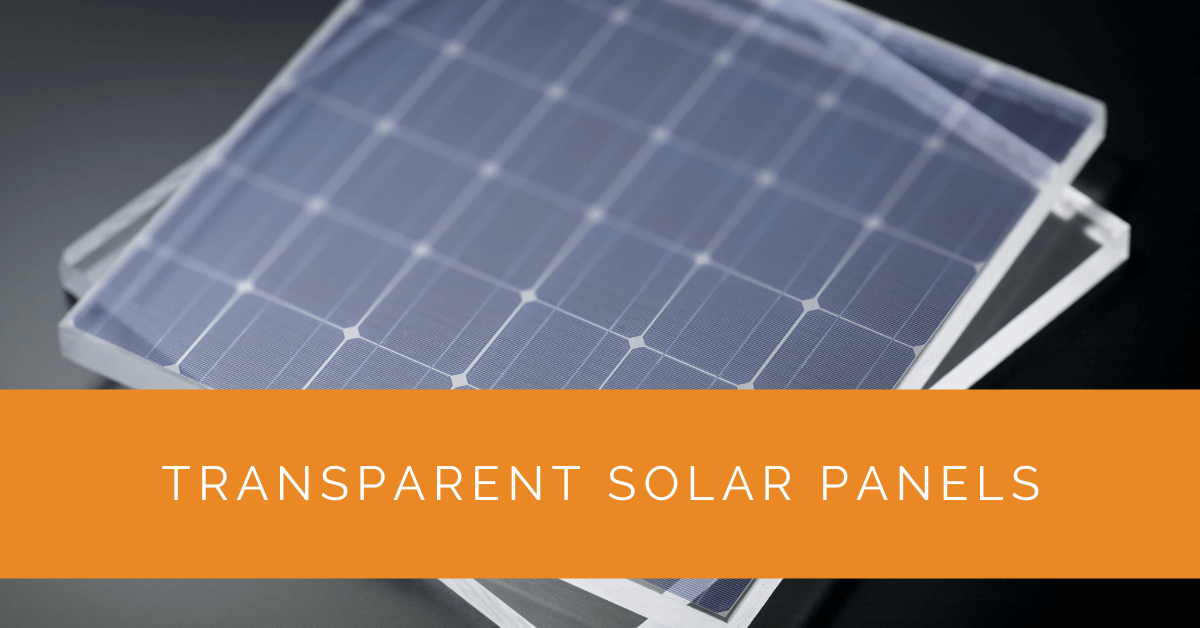
Conventional solar panels are opaque rectangles. They work well on rooftops and ground mounts, but they cannot replace windows, skylights, or facades where transparency is essential. Transparent solar panels — also called solar windows, semi-transparent photovoltaics, or building-integrated photovoltaics (BIPV) — generate electricity while allowing light to pass through, enabling surfaces that were previously unavailable for solar generation to contribute to a building’s energy needs.
This guide explains how transparent solar panels work, their current efficiency and commercial availability, where they make sense, and what to expect as the technology matures.
Contents
How Transparent Solar Panels Work
Conventional silicon solar cells capture energy from the full visible light spectrum, which is why they appear dark blue or black — they absorb nearly all visible photons. Transparent solar panels solve this by selectively absorbing wavelengths that are invisible to the human eye while allowing visible light to pass through.
The two primary approaches are:
Near-Infrared (NIR) Absorption: The most developed technology uses organic photovoltaic (OPV) materials or luminescent solar concentrators (LSCs) engineered to absorb ultraviolet and near-infrared wavelengths — together roughly 50% of solar energy — while transmitting most visible light. The human eye sees these panels as clear or slightly tinted glass. Research teams at MIT and the University of Michigan have published extensively on this approach, and several commercial products are now available.
Distributed Bragg Reflector Technology: Researchers in South Korea developed a system that combines a distributed Bragg reflector (which selectively redirects specific wavelengths) with bifacial silicon solar cells at window edges. The visible light passes through; selected infrared wavelengths are redirected to solar cells embedded in the window frame. This design allows the window center to remain fully transparent while generating power at the periphery. It can also operate using indoor lighting, enabling 24-hour generation in lit commercial spaces.
Perovskite Semitransparent Cells: Thin-film perovskite cells can be made semitransparent by controlling film thickness and composition. These are entering early commercialization and offer higher efficiency than organic PV for semitransparent applications, though long-term stability requirements for installed windows remain a development challenge.
Electrochromic Smart Glass Integration: Some products combine transparent solar generation with electrochromic dimming, allowing windows to generate power while also controlling solar heat gain and glare. These integrated systems are more expensive but serve dual building performance functions.
Efficiency: What to Expect
The fundamental trade-off in transparent solar technology is efficiency versus transparency. Every visible photon that passes through the panel is a photon that does not generate electricity.
| Technology | Visible Light Transmission | Efficiency (Module) | Commercial Status |
|---|---|---|---|
| Conventional silicon (opaque) | 0% | 20–23% | Mainstream |
| Semitransparent thin-film | 20–40% | 8–13% | Commercial BIPV |
| Organic PV (NIR absorbing) | 40–60% | 5–10% | Limited commercial |
| Fully transparent OPV | 70–90% | 2–5% | Research / early pilot |
| LSC windows | 30–70% | 3–8% (edge collectors) | Research |
For context: a south-facing skylight covering 10 m² with a 5% efficiency transparent solar module generates roughly 50–75 kWh annually at US average insolation — enough to offset a modest fraction of building electricity use, but orders of magnitude less than the same area of opaque silicon (generating 1,500–2,000 kWh annually). Transparent solar supplements conventional solar; it does not replace it.
Commercial Products Available in 2026
Onyx Solar (Spain) produces amorphous silicon and BIPV thin-film glazing used in commercial facades, skylights, and canopies. Their products range from 20–40% transparency with 6–9% module efficiency and have been installed in airports, corporate headquarters, and transit stations in Europe and the US. Onyx is among the most commercially established transparent solar manufacturers.
Brite Solar (Greece) manufactures semitransparent CIGS thin-film modules for atrium roofs and facades. Their products offer high aesthetic quality with color customization options and carry IEC 61215-compliant certifications.
SolarWindow Technologies develops organic photovoltaic coatings targeting commercial high-rise windows. The company has demonstrated the technology but has not yet scaled to volume commercial production.
Physee PowerWindow (Netherlands) uses luminescent solar concentrators — dyed glass panels that redirect absorbed light to edge-mounted solar cells. PowerWindow products achieve transparency comparable to conventional glass with low generation efficiency (typically 1–3% per panel area) and have been deployed in commercial office towers.
Heliatek (Germany) produces organic photovoltaic film that can be laminated to glass surfaces, with transparency options from 10–40%. Heliatek products target commercial facade and skylight applications and carry 10–15 year product warranties.
Best Applications for Transparent Solar
Transparent solar panels make sense where conventional opaque panels cannot be installed and where any solar generation — even at lower efficiency — adds value:
Commercial Building Facades: High-rise office buildings have vast south-facing glass surfaces that receive substantial solar irradiance. Replacing conventional glass with semi-transparent solar panels converts these surfaces into electricity generators without changing the building’s appearance significantly. A 50-story office tower might generate 200–500 MWh annually from facade solar — meaningful for a large building’s energy budget.
Skylights and Atrium Roofs: Overhead glazing that needs to admit daylight while generating power is the most technically straightforward application. The glass is structurally supported, panels are not visible from the street, and the overhead angle maximizes solar irradiance. Many airports, shopping centers, and corporate campuses have installed transparent solar skylights.
Agricultural Greenhouses: Agrivoltaic applications (combining solar and agriculture) using semitransparent panels over greenhouse roofs are an active research area. Panels that reduce light by 20–40% can benefit shade-tolerant crops while generating electricity. Optimizing panel transparency to specific crop light requirements is a design challenge that varies by crop type.
Transit Canopies and Bus Stops: Small-scale transparent solar applications in bus shelters and transit station canopies provide shelter, generate electricity for lighting and information displays, and demonstrate solar technology publicly. These are among the most widely deployed transparent solar applications globally.
Sound Barriers Along Highways: Transparent sound barrier panels along highways can generate electricity while allowing drivers on the other side to see through — an advantage over opaque noise barriers that can feel like tunnel walls. Germany, the Netherlands, and Switzerland have deployed solar sound barriers at scale.
Limitations and Realistic Expectations
Lower Efficiency Means Longer Payback: At 5–10% module efficiency vs. 22–23% for conventional silicon, transparent solar requires twice as much panel area to generate the same electricity. Since facade and skylight area is often fixed, the annual generation from transparent solar is substantially lower than equivalent rooftop area would produce.
Higher Cost Per Watt: Transparent solar modules cost $150–$400 per square meter installed — comparable in cost per area to premium architectural glazing, but generating far less electricity per dollar than conventional solar. Transparent solar is best evaluated as a premium glazing product that happens to generate some electricity, rather than as an alternative to conventional solar.
Limited Warranty Terms: Current commercial products typically carry 10–15 year performance warranties. Building glass is expected to last 30–50 years; the longevity gap between transparent solar modules and conventional building materials is a commercial challenge.
Not a Replacement for Rooftop Solar: If your building has available rooftop area, conventional solar remains the financially superior choice by a wide margin. Transparent solar supplements rooftop systems by capturing generation from surfaces where opaque panels are impractical.
Future Outlook
Perovskite-based semitransparent cells and improved organic photovoltaics are expected to push transparent solar efficiencies toward 15–20% while maintaining 30–50% visible light transmission — narrowing the gap with conventional silicon. The US Department of Energy‘s Agile BIPoV Initiative and European Horizon programs are funding both efficiency improvements and manufacturing scale-up. Building codes in California, the EU, and several other jurisdictions increasingly require or incentivize BIPV in new commercial construction, creating market pull for improved transparent solar products.
Frequently Asked Questions
Can transparent solar panels replace regular windows in my home?
Not yet, for most residential applications. Transparent solar glazing is primarily a commercial product due to high cost per watt. For a typical home, conventional rooftop solar generates 5–10x more electricity per dollar invested than equivalent area of transparent solar windows. The exception is homes where roof solar is not feasible (south-facing glass facades, historic buildings with roof restrictions) and where the aesthetic premium of solar glass has additional value.
What is the best commercially available transparent solar product?
For commercial facades and skylights, Onyx Solar and Brite Solar offer the most established products with the broadest track records. Both have IEC-certified modules, commercial warranty programs, and international installation experience. For niche applications (agricultural greenhouses, transit canopies), project-specific consultation with a BIPV specialist is recommended.
Do transparent solar panels qualify for the solar tax credit?
Yes. Building-integrated transparent solar panels qualify for the 30% federal ITC (residential) or the commercial Section 48 ITC when used in building construction or renovation. The ITC applies to the cost of the solar glazing component; the cost of conventional glazing that would have been used in the same location may need to be subtracted. Consult a tax professional for your specific project.
How much electricity does a transparent solar window generate?
A 1 m² transparent solar panel at 7% efficiency receiving 1,600 kWh/m²/year of solar irradiance (US average) generates approximately 112 kWh annually. The same 1 m² of conventional silicon (22% efficiency) generates approximately 352 kWh — about 3x more. Transparent solar’s value proposition rests on enabling generation from surfaces unavailable to opaque panels, not on matching silicon’s productivity.
Summing Up
Transparent solar panels are a real and commercially available technology that enables solar generation from windows, skylights, and building facades where conventional opaque panels cannot be used. Current efficiency of 5–13% is well below silicon’s 22–23%, but improving organic photovoltaic and perovskite technologies are expected to narrow this gap significantly by the late 2020s. For commercial building owners seeking to maximize on-site solar generation beyond rooftop capacity, transparent solar BIPV is a viable supplemental strategy. For residential applications, conventional rooftop solar remains the superior investment in virtually all circumstances.
Updated