Solar panels are photovoltaic devices that convert sunlight into electricity. While most people associate them with rooftop home installations, solar panels power an extraordinarily wide range of applications — from residential homes and commercial buildings to spacecraft, remote weather stations, portable chargers, and utility-scale power plants covering thousands of acres. Understanding the full scope of solar panel applications helps explain why photovoltaics have become one of the fastest-growing energy technologies in history.

Residential Solar: Powering Homes

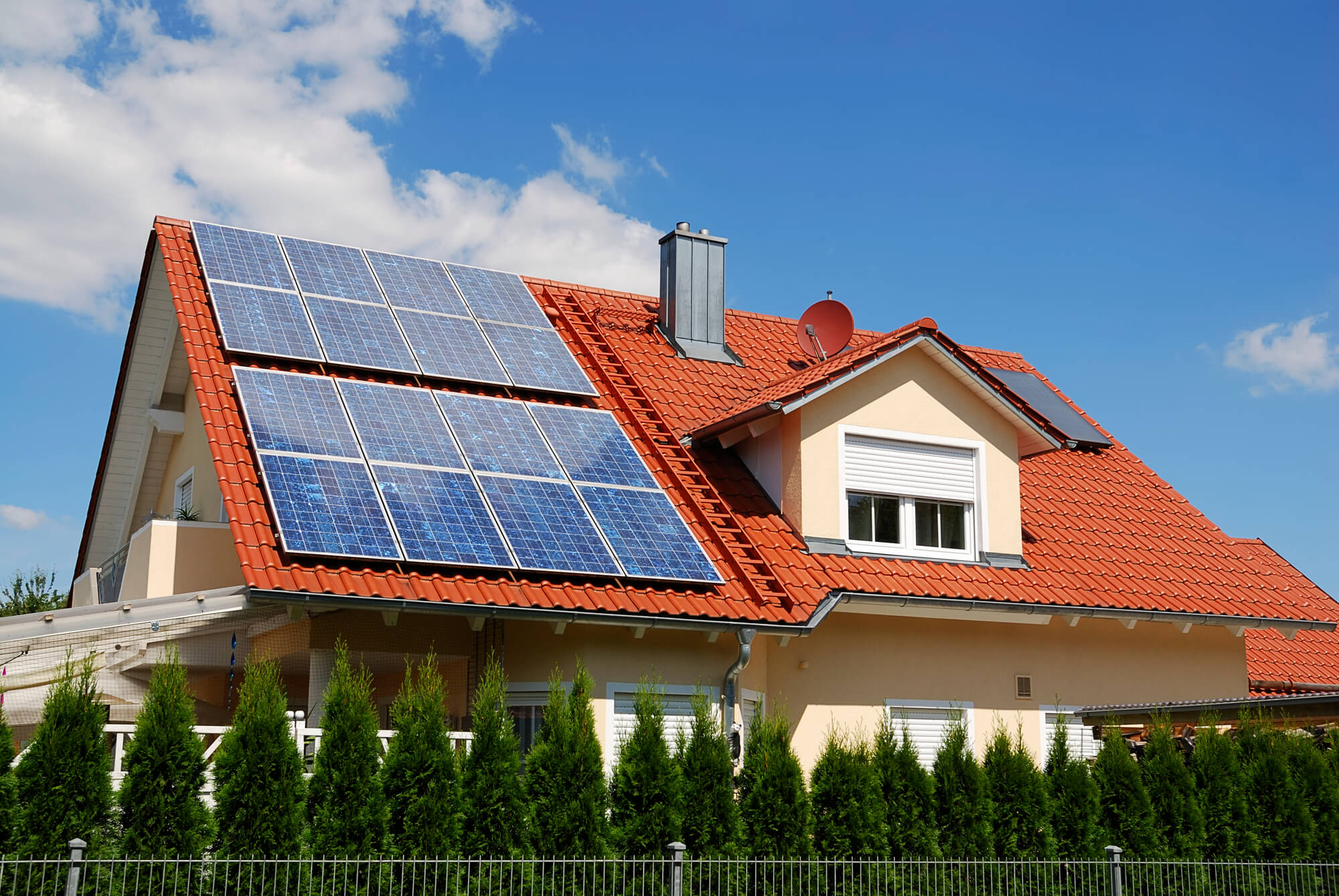
The most familiar use of solar panels is generating electricity for residential homes. A typical residential solar system ranges from 5 to 15 kW of installed capacity, covering 400–1,000 square feet of roof space and producing 6,000–20,000 kWh annually — enough to offset 50–100% of a household’s electricity consumption depending on system size, location, and usage.

Residential solar panels power everything a home runs from the grid: lighting, heating and cooling systems, kitchen appliances, water heaters, electric vehicle chargers, and electronics. Grid-tied systems export surplus power to the utility through net metering; off-grid systems store it in batteries. The 30% federal Investment Tax Credit (ITC) through 2032 has made residential solar one of the most financially attractive home improvements available to US homeowners.

Solar panels also power specific residential subsystems when whole-home installation is impractical: solar attic fans, solar water heaters (thermal or PV-powered heat pumps), solar pool heaters, and solar outdoor lighting operate independently of the main electrical system.

Commercial Solar: Businesses and Institutions

Commercial solar installations power office buildings, retail centers, warehouses, manufacturing facilities, schools, hospitals, and government buildings. Commercial systems typically range from 50 kW to several MW, sized to offset the facility’s electricity demand and reduce demand charges — the utility fees based on peak power draw that can represent 30–50% of a commercial electricity bill.

Common commercial solar configurations include rooftop arrays on flat commercial roofs, ground-mounted systems on adjacent land, and parking lot carport canopies that generate electricity while providing shade. The commercial ITC (Section 48) and MACRS 5-year accelerated depreciation make commercial solar particularly advantageous for taxable business owners, enabling first-year tax benefit recovery of 40–50% of system cost.

Schools, nonprofits, and municipalities that lack tax liability can now access the ITC as a direct cash payment under the IRA’s elective pay provisions, making institutional solar investment more accessible than ever before.

Utility-Scale Solar: Power Plants

Utility-scale solar power plants are among the largest energy installations ever built. The Bhadla Solar Park in India covers 57 square kilometers and generates 2,245 MW. In the US, facilities like the Solar Star complex in California (579 MW) and the Gemini Solar Project in Nevada (690 MW) illustrate the scale of modern photovoltaic power plants.

Utility-scale systems use the same photovoltaic panels as residential installations — just thousands of them. Single-axis tracking systems that follow the sun’s path east to west through the day increase output by 15–25% compared to fixed-tilt installations. Some utility projects pair solar with battery storage to provide dispatchable power after sundown. The levelized cost of energy (LCOE) from utility solar has fallen to $0.025–0.040/kWh — cheaper than any other new electricity source in most of the world.

Solar in Agriculture: Agrivoltaics

Agrivoltaics — combining solar panels with agricultural production on the same land — is one of the fastest-growing solar applications. Solar panels shade crops below, reducing water evaporation by 20–30% and providing partial shade that benefits heat-sensitive crops including lettuce, peppers, strawberries, and lavender. Farmers generate electricity lease income of $500–$2,000 per acre annually while maintaining agricultural production.

Solar-powered irrigation pumps are widely used in developing countries and remote US farmland where grid electricity is unavailable or unreliable. PV-powered water pumping systems replace diesel generators that previously consumed $3,000–$10,000 in fuel annually per installation. Solar greenhouse heating, automated ventilation, and LED grow lighting are additional agricultural applications.

Transportation: EVs, Boats, and Aircraft

Solar panels integrated into vehicle surfaces supplement battery range and reduce charging frequency. Production vehicles with solar roofs include the Hyundai Ioniq 5, Lightyear 0, and Sono Sion. Solar input is limited (100–400W on a car roof), adding only 3–15 miles of range per day, but in moderate climates can meaningfully reduce charging needs for short-commute drivers.

Solar-powered boats and sailboats use flexible or rigid panels to power navigation electronics, lighting, refrigeration, and electric motors. Fully solar-electric circumnavigation voyages have been completed by vessels like the PlanetSolar catamaran, demonstrating the endurance potential of solar marine applications.

Solar-powered aircraft — from small UAVs maintaining station at altitude for days or weeks (Airbus Zephyr, AeroVironment HALE) to Bertrand Piccard’s Solar Impulse 2, which completed the first solar-powered round-the-world flight in 2016 — illustrate the technology’s limits and possibilities in aviation. Commercial solar aircraft are not near-term, but unmanned solar surveillance and communications platforms are operational.

Off-Grid and Remote Power

Solar panels are the dominant technology for electrifying remote locations without grid access. Applications include:

Remote telecommunications: Cell towers, radio repeaters, and satellite uplinks in rural areas are commonly solar-powered. A solar-plus-battery system eliminates diesel fuel logistics that previously dominated remote telecom operating costs.

Remote monitoring stations: Weather stations, seismic monitors, environmental sensors, oil and gas pipeline monitors, and water quality stations routinely operate on solar power in locations where running power lines is impractical or impossible.

Cabins and rural homes: Off-grid homesteads, mountain cabins, and agricultural buildings that would require expensive utility line extensions instead install solar-plus-battery systems. A well-designed 3–5 kW off-grid system with 20–40 kWh of battery storage can reliably power a modest home in most US climates.

Emergency and disaster response: Portable solar generators (Jackery, EcoFlow, Bluetti, Goal Zero) power emergency communications, medical equipment, and lighting during natural disasters when grid power is unavailable. Military forward operating bases and FEMA disaster response units increasingly deploy solar microgrids for reliable power without fuel logistics.

Consumer Electronics and Portable Devices

Small solar panels power a growing range of consumer devices:

Solar chargers and power banks let outdoor enthusiasts charge smartphones, GPS devices, and cameras without access to outlets. Portable panels from 5W to 100W fold compactly for backpacking and camping.

Solar garden and security lighting are perhaps the most ubiquitous consumer solar application — hundreds of millions of units are sold annually worldwide. Small panels (1–5W) charge lithium or NiMH batteries during daylight; LED lights draw from storage at night.

Solar-powered wearables — watches (Garmin solar series, Casio Tough Solar), sunglasses with embedded cells, and GPS trackers — use tiny solar cells to extend battery life or eliminate battery replacement entirely.

Solar backpacks, tents, and shelters integrate small panels into everyday gear, powering devices during outdoor activities or emergency situations.

Space Applications

Solar panels have powered spacecraft since the Vanguard 1 satellite in 1958. The International Space Station operates on approximately 84 kW of solar power from eight arrays spanning 2,500 square meters. Mars rovers (Curiosity, Opportunity, Spirit, Zhurong) relied on solar panels for primary power until dust accumulation or orbital factors necessitated nuclear alternatives. The James Webb Space Telescope uses a 6.2 m × 0.6 m solar array generating 2 kW of power.

Space-grade solar cells use multi-junction III-V semiconductor materials (GaAs, InGaP, Ge layers) achieving 28–35% efficiency under AM0 (space) illumination — significantly higher than terrestrial silicon. The extreme cost of these cells is acceptable in space applications where weight and performance per area are paramount and cost per watt is secondary.

Building-Integrated Photovoltaics (BIPV)

Solar panels are increasingly integrated directly into building materials rather than added on top of them. Solar roof tiles (Tesla Solar Roof, GAF Timberline Solar, Certainteed Apollo), solar facade panels, solar skylights, and solar glass replace conventional building materials while generating electricity. BIPV is particularly valuable for new construction and renovation projects where aesthetic integration matters or where roof geometry makes traditional panel mounting difficult.

Frequently Asked Questions

Can solar panels power an entire house?

Yes. A properly sized solar system can offset 100% of a home’s electricity consumption on an annual net basis. Most grid-tied systems are sized to match annual electricity production to annual consumption — overproducing in summer months and importing from the grid in winter. With battery storage, a home can operate entirely on solar during the day and stored solar at night, achieving very high self-sufficiency. True off-grid operation requires oversized solar and large battery banks for cloudy periods.

What can’t solar panels power?

Solar panels can power any electrical load given sufficient capacity. The practical limits are cost and space: very large loads (commercial HVAC, industrial machinery, electric arc furnaces) require enormous solar arrays that are only cost-effective at industrial scale. Natural gas appliances (stoves, furnaces, water heaters) do not run on electricity directly; electrification with heat pumps or induction is a prerequisite for solar to power these functions. Solar panels themselves cannot generate power at night without battery storage.

How many solar panels does it take to power a home?

The average US home consuming 10,500 kWh annually needs approximately 7–10 kW of solar capacity, or 18–28 panels at 380–420W each. The exact number depends on location (peak sun hours), panel efficiency, roof orientation, and shading. A professional solar assessment uses your actual electricity bills and roof characteristics to determine the right system size for your home.

Are solar panels good for the environment?

Yes, on balance. Solar panels have a carbon payback period of 1–4 years (the time it takes to generate as much energy as was used to manufacture them) and then produce clean electricity for 25–30 years. Over a lifetime, a 6 kW residential solar system offsets approximately 100–150 tons of CO₂ compared to grid electricity. Manufacturing uses energy and materials (silicon, aluminum, glass, small amounts of silver), and recycling infrastructure is developing — but the net environmental benefit over the system’s lifetime is substantially positive.

Summing Up

Solar panels power homes, businesses, farms, vehicles, spacecraft, consumer electronics, and remote locations — the breadth of applications reflects photovoltaics’ fundamental advantage: they generate electricity from sunlight with no moving parts, no fuel, and minimal maintenance wherever the sun shines. The residential application — rooftop solar reducing your electricity bill and carbon footprint — remains the most financially compelling use for most Americans.

Contact Solar Panels Network USA at (855) 427-0058 for a free home solar assessment. Our specialists can determine how much of your electricity use solar can offset and model the financial return for your specific situation.

Updated