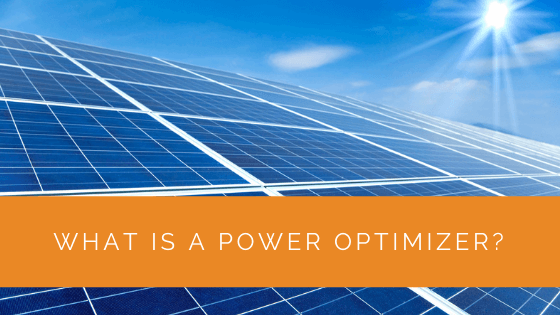
A solar power optimizer is a DC-to-DC converter mounted on the back of each solar panel that maximizes that panel’s individual output, independent of how other panels in the system are performing. Power optimizers are most commonly used in SolarEdge systems: each panel gets an optimizer, and the panel-level DC outputs feed into a single central inverter. This architecture solves the shading problem of standard string inverters while keeping costs lower than a full microinverter system.
How Power Optimizers Work
To understand power optimizers, it helps to understand the problem they solve in standard string inverter systems.
In a basic string inverter setup, solar panels are wired in series — positive to negative — creating a single chain where all panels share the same current. The string inverter tracks the maximum power point (the optimal combination of voltage and current to extract maximum power) for the entire string at once. The critical limitation: the string operates at the current of its weakest panel. One shaded panel producing 50% of rated current forces every panel in the string to produce at 50% current — cutting string output dramatically.
A power optimizer eliminates this weakness by adding a per-panel MPPT (Maximum Power Point Tracking) circuit. Each optimizer constantly adjusts its input to extract maximum power from its specific panel, regardless of what the other panels are doing. The optimizer outputs a regulated DC voltage to the string, and the string inverter sees a consistent, optimized DC input from every panel individually.
In SolarEdge’s architecture (the dominant power optimizer system): each optimizer communicates its panel’s status to the SolarEdge cloud platform, providing panel-level monitoring. The central SolarEdge HD-Wave string inverter handles the final DC-to-AC conversion. Because optimizers regulate voltage per panel, the string can tolerate significant panel-level variation — one shaded panel doesn’t drag down its neighbors.
Power Optimizers vs. Microinverters: Key Differences
Both power optimizers and microinverters solve the string shading problem and provide per-panel monitoring — but they achieve this differently.
Where conversion happens: A microinverter converts DC to AC at each panel on the roof. A power optimizer converts DC at each panel but outputs DC — the central string inverter handles AC conversion in one place, usually mounted indoors. This is the fundamental architectural difference.
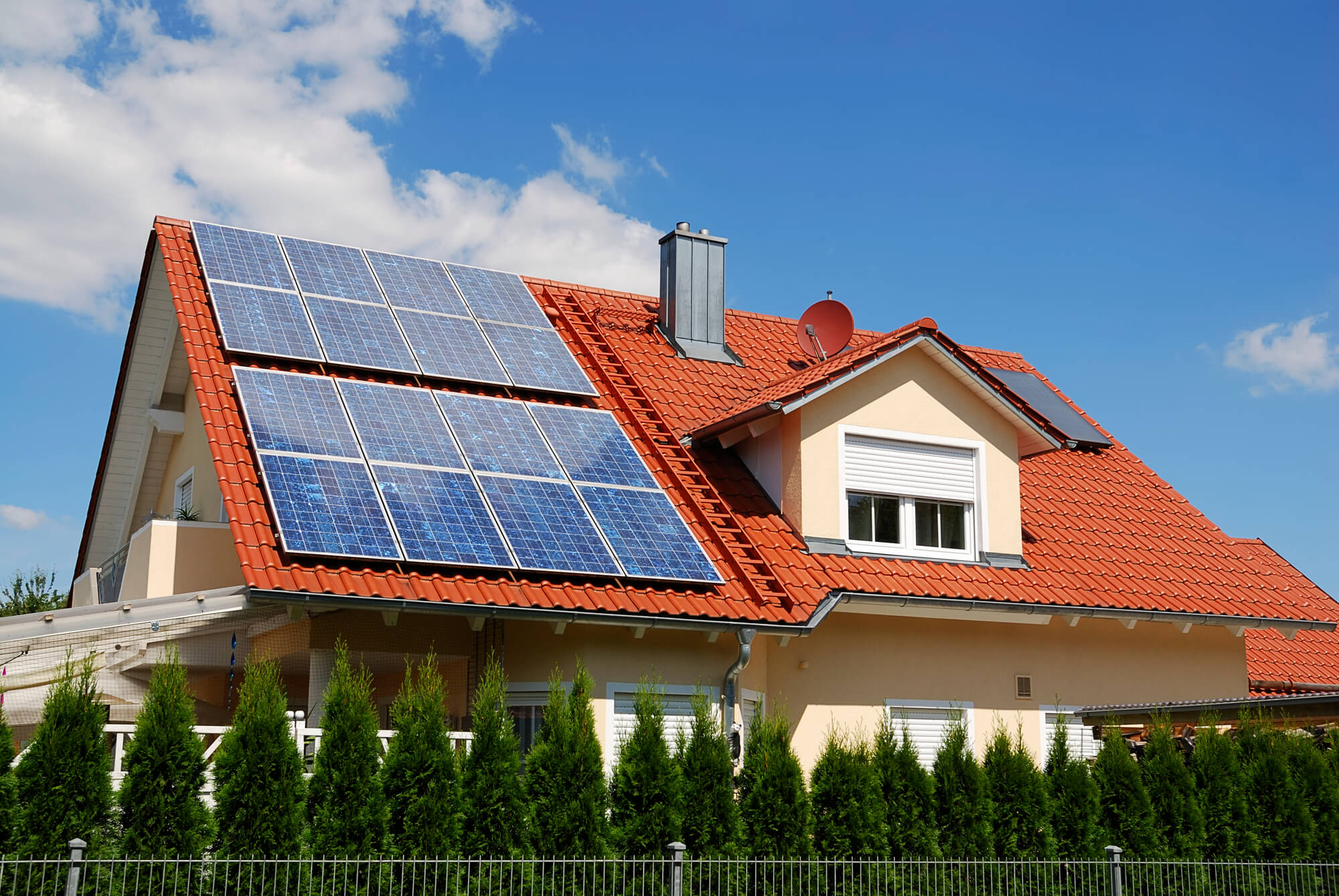
High-voltage DC wiring: Power optimizer systems still carry high-voltage DC (typically 300–500V) from the panel array to the string inverter indoors. Microinverter systems convert to AC at each panel, so only AC power runs from the roof — no high-voltage DC wiring on the roof or in the walls. For firefighter safety, microinverters are inherently safer; power optimizer systems require a separate rapid shutdown device (SolarEdge has this built into their ecosystem).
Cost: Power optimizers (P405, P505, P730 in the SolarEdge lineup) cost $50–$100 per panel, versus $150–$200 per panel for Enphase IQ8 microinverters. For a 20-panel system, the hardware premium over a basic string inverter is $1,000–$2,000 for optimizers versus $2,000–$3,500 for microinverters. The SolarEdge central inverter adds cost, but optimizers remain a middle-ground option between string and micro.
System efficiency: Both optimizers and microinverters add a conversion stage, which introduces small efficiency losses (2–4% combined in optimizer systems). High-quality string inverters (SMA, Fronius) running at 97–99% efficiency may slightly outperform optimizer systems (combined optimizer + inverter efficiency: 95–97%) on unshaded roofs. However, any shading makes the optimizer system more efficient in practice.
Reliability: Power optimizers add hardware per panel, creating more individual points of failure than a string inverter. However, one failed optimizer affects only one panel — unlike a failed string inverter that takes down the whole system. SolarEdge optimizers carry a 25-year warranty. The central inverter typically carries a 12-year base warranty (extendable to 20 or 25 years). Microinverters (Enphase IQ8) carry a 25-year warranty covering both functions.
Flexibility: Power optimizer systems can accommodate panels at different orientations (east/west roof, for example) by configuring independent MPPT inputs on the SolarEdge inverter. Microinverter systems handle mixed orientations equally well.
SolarEdge: The Dominant Power Optimizer System
SolarEdge is the dominant player in power optimizer systems, with the vast majority of residential power optimizer installations in the US using SolarEdge equipment. Their current product lineup:
SolarEdge HD-Wave string inverter: The central inverter in SolarEdge residential systems. Single-phase models: 3.8 kW to 7.6 kW. Three-phase models for commercial applications up to much larger sizes. The HD-Wave uses wave injection technology to achieve high efficiency (99% peak) and a smaller, lighter form factor than traditional string inverters. Includes WiFi monitoring connectivity, rapid shutdown compliance (via SafeDC technology in the optimizers), and an optional backup interface for pairing with SolarEdge Home Battery.
SolarEdge power optimizers (current generation):
P405 (400W panels): for standard residential panels, most common in residential installations
P505 (500W panels): for higher-wattage panel installations
P730 (730W panels): for large commercial panels in utility installations
All include SafeDC rapid shutdown, 25-year warranty, and 99.5% weighted efficiency
SolarEdge mySolarEdge app: Provides panel-level monitoring via the optimizer communication network. Each optimizer reports voltage, current, and power to the SolarEdge server. The app shows each panel’s production history, system health alerts, and automatic fault identification when a specific optimizer or panel underperforms.
When to Choose Power Optimizers
Power optimizers are the right choice when:
Your roof has moderate shade: Trees, chimneys, or vent pipes that shade a portion of your array make optimizers worthwhile. You’ll capture the output of unshaded panels fully, rather than having the whole string dragged down by shaded panels.
Your roof has multiple orientations: Panels on both a south-facing and west-facing section? Each section produces at different times and angles. With SolarEdge’s multiple MPPT inputs, each orientation group can be independently optimized.
You want panel-level monitoring but prefer a central inverter: Power optimizers provide the same panel-level visibility as microinverters but with a single central indoor inverter (easier to service or replace than roof-mounted microinverters).
Budget favors optimizers over microinverters: If the $1,000–$2,000 premium of optimizers over pure string inverters is acceptable but the $2,500–$4,000+ premium of microinverters over string inverters is not, optimizers hit the middle ground.
Frequently Asked Questions
Do I need power optimizers if my roof has no shade?
For a completely unshaded, single-orientation roof: probably not. A quality string inverter (SMA, Fronius, Sungrow) running at 97–99% efficiency and costing $1,500–$2,500 will perform nearly equivalently to an optimizer system at the same system cost. The savings on inverter hardware can be used for better panels or other system components. For rooftops with any shade from trees, chimneys, or neighboring structures, optimizers deliver meaningfully better annual production.
Can power optimizers be added to an existing string inverter system?
Not easily. SolarEdge optimizers are specifically designed for SolarEdge inverters and use proprietary communication protocols. You can’t add SolarEdge optimizers to a Fronius or SMA string inverter. If you want to retrofit a shaded string inverter system, the typical options are: add microinverters to specific shaded panels (some Enphase IQ8 models can be used as AC panel additions), or replace the inverter and add optimizers as part of a full inverter upgrade.
What’s the lifespan of a power optimizer?
SolarEdge optimizers carry a 25-year warranty — matching or exceeding the panel warranty. The optimizer is mounted outdoors under the panel and must withstand the same temperature cycling, humidity, and UV exposure as the panel itself. SolarEdge rates their optimizers for outdoor installation per UL and IEC standards. In practice, the central inverter (12–25 year warranty) is more likely to need replacement before the optimizers do.
Are power optimizers the same as MPPT charge controllers?
They both use MPPT algorithms, but they serve different purposes. An MPPT charge controller (common in off-grid systems) is a separate component between the solar array and battery bank that steps down voltage to match the battery charging voltage while extracting maximum power. A power optimizer is a per-panel device that regulates each panel’s DC output within a grid-tied system, feeding an inverter rather than a battery. They’re related in principle (both track maximum power points) but used in different system architectures.
What is SafeDC in SolarEdge systems?
SafeDC is SolarEdge’s rapid shutdown technology built into each power optimizer. Under NEC 2014 and later, all rooftop solar systems must have rapid shutdown capability — bringing DC voltage in the array below 30V within 30 seconds when the AC disconnect is opened. In SolarEdge systems, SafeDC achieves this automatically: when the inverter shuts off (or the AC disconnect is opened), the optimizers reduce their output voltage to 1V per optimizer (safe for firefighters to work around). This is incorporated into SolarEdge systems without requiring a separate rapid shutdown controller.
Summing Up
Power optimizers — most commonly used in SolarEdge systems — add per-panel MPPT optimization to what remains a central string inverter architecture. They solve string shading sensitivity and provide panel-level monitoring at a lower cost than full microinverter systems. The SolarEdge P405/P505 optimizer + HD-Wave inverter is the dominant power optimizer residential system in the US, with 25-year optimizer warranty, built-in rapid shutdown, and comprehensive monitoring through the mySolarEdge app. For roofs with any shade, multiple orientations, or where panel-level monitoring is important but microinverter pricing is a barrier, power optimizers represent the best middle ground between a basic string inverter and a full microinverter installation.
Updated