
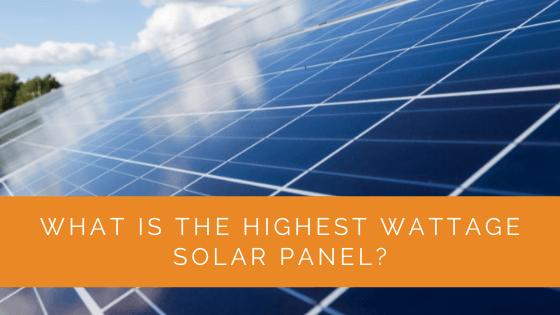
As of 2026, the highest-wattage residential solar panels available commercially reach 700W per panel in the largest monocrystalline formats. However, the practical upper limit for standard residential installations is 450–500W per panel — larger panels exist but are primarily designed for commercial and utility-scale applications where larger mounting surfaces are available. Most residential installations in 2026 use 400–440W panels as the standard unit size.
Highest Wattage Solar Panels Available in 2026
Panel wattage has increased dramatically over the past decade. In 2015, a 300W panel was considered high-output; in 2020, 400W panels became standard; in 2026, 500W+ panels are commercially available and increasingly common for commercial installations.
Residential-scale high-wattage panels (400–500W):
REC Alpha Pure series: 430–470W, uses IBC back-contact cells, one of the highest-efficiency residential panels at 22–24% efficiency. Premium pricing but strong performance and 25-year product warranty.
SunPower Maxeon 7: 470–500W, uses SunPower’s proprietary Maxeon cell technology (IBC back-contact), industry-leading 22.8% efficiency, rated at 40-year panel life. Flagship premium residential panel.
Panasonic EverVolt HK Black series: 430–450W, heterojunction (HJT) cell technology, 21–22% efficiency. Strong low-light and high-temperature performance. 25-year warranty covering both product and power output.
Canadian Solar HiHero: 430–460W, HJT cells, 22.5% efficiency. Good balance of performance and pricing relative to Maxeon.
Jinko Tiger Neo N-Type: 410–440W, TOPCon n-type cells, 22–23% efficiency. High-volume manufacturer offering good value at premium efficiency. Widely available through installers.
QCells Q.TRON BLK M-G3+: 410–440W, PERC+ cells with improved low-light response. Popular in the US residential market, distributed through major solar distributors.
Commercial/utility-scale high-wattage panels (500–700W+):
Canadian Solar BiHiKu7: 600–665W, bifacial glass-glass construction, designed for ground-mounted utility projects. Requires commercial-grade racking and handling equipment — not suitable for residential rooftops.
JA Solar DeepBlue 4.0X: 610–700W, large-format bifacial utility panels, 210mm silicon wafer format. Achieves high wattage through both larger cell size and bifacial rear-side capture. Standard on utility solar farms.
Jinko Tiger Pro 78HC: 580–650W, TOPCon bifacial, another utility-scale panel from the dominant manufacturer in global panel shipments.
Why Wattage Alone Doesn’t Tell the Full Story
Two panels with different wattage ratings may produce the same amount of electricity if one is more efficient than the other. What matters for a rooftop installation is efficiency (output per square foot) and total system wattage — not the wattage per panel.
Example: A 400W panel at 20% efficiency requires about 22 square feet of panel area. A 400W panel at 22.5% efficiency requires about 19.5 square feet — the same power output in less space. If roof space is limited, higher efficiency (not just higher wattage) is what matters.
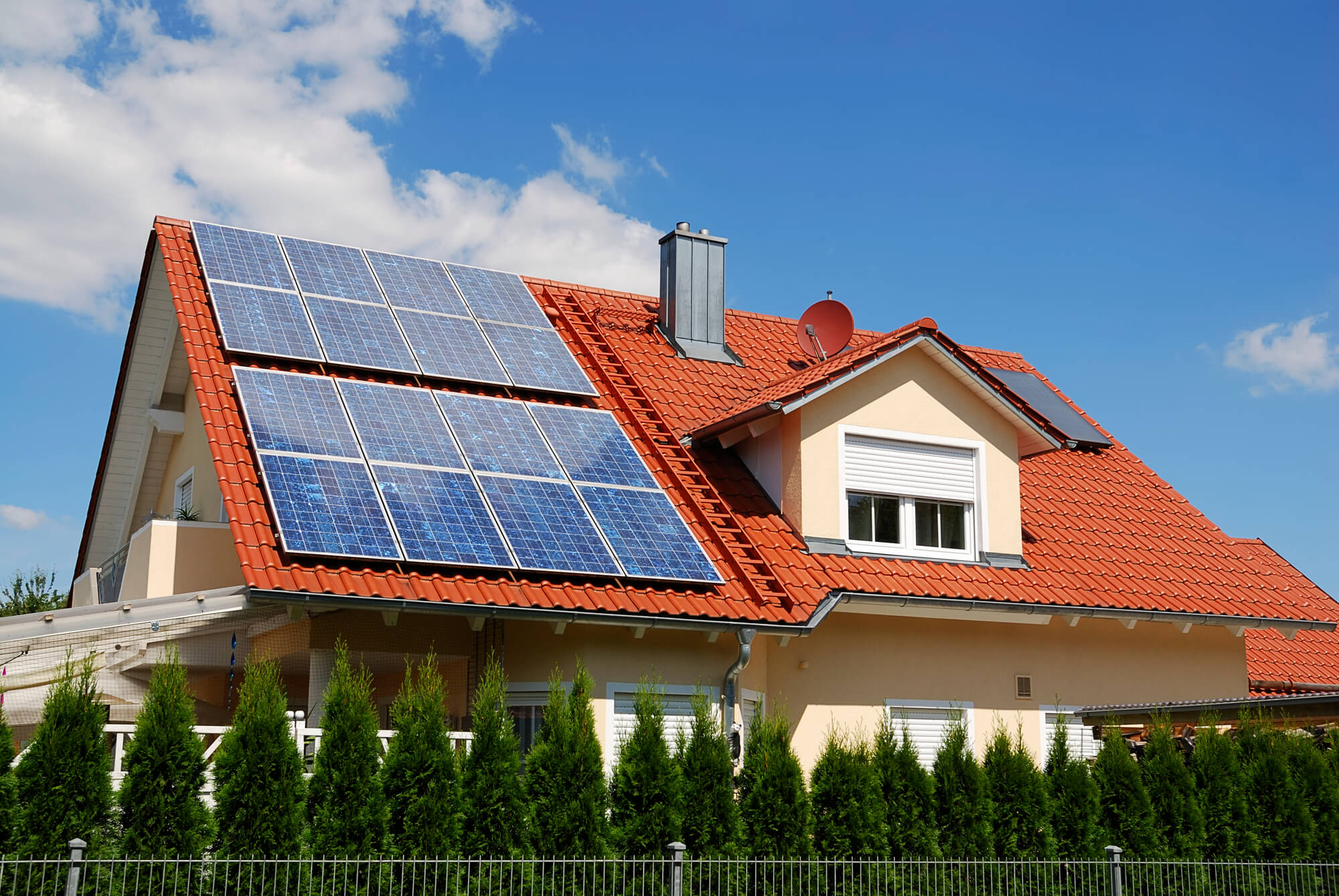
Higher wattage residential panels (430–500W vs. 380–400W) achieve their higher output through a combination of larger panel area and higher cell efficiency. The SunPower Maxeon 7 at 470W is physically a similar size to a standard 400W panel but packs more electricity out of the same area through superior cell technology. A 700W utility panel is simply a much larger panel — approximately 2.4m × 1.3m versus a standard residential panel at about 1.75m × 1.05m.
Practical limits for residential rooftops: Most residential inverters and racking systems are designed for panels up to 400–500W with standard dimensions. Larger utility-format panels (600W+) may not fit standard residential racking, and their combined string voltages may exceed residential-grade inverter specifications. Installers generally recommend 380–460W panels for typical residential systems.
Does Higher Wattage Mean Better Performance?
Higher wattage typically correlates with better performance metrics, but not in all cases. The key performance parameters to examine alongside wattage:
Temperature coefficient: The rate at which panel output decreases as temperature increases above 25°C. Measured in %/°C. IBC panels (SunPower Maxeon): -0.27%/°C. HJT panels (Panasonic, Canadian Solar HiHero): -0.24% to -0.26%/°C. TOPCon panels: -0.30% to -0.35%/°C. PERC panels: -0.35% to -0.45%/°C. In hot climates like Arizona, Texas, or Florida, panels with a lower temperature coefficient (IBC and HJT) can significantly outperform their wattage rating advantage over PERC panels during summer months.
Degradation rate: How quickly output declines over 25 years. IBC panels: 0.25%/year. HJT panels: 0.25–0.30%/year. TOPCon panels: 0.30–0.40%/year. PERC panels: 0.40–0.55%/year. A 500W PERC panel degrading at 0.50%/year produces less than a 450W IBC panel degrading at 0.25%/year by year 20.
Bifacial gain: Bifacial panels capture light on both the front and rear surfaces, with rear-side capture adding 5–15% additional output depending on albedo (ground reflectance) and installation height. Many high-wattage commercial panels are bifacial; most residential panels are monofacial (single-sided).
Cell Technologies Behind High-Wattage Panels
The highest-wattage residential panels use advanced cell technologies that squeeze more electricity from the same silicon area:
IBC (Interdigitated Back Contact): All electrical contacts are on the rear of the cell, eliminating shading from front-side busbars. Achieves 22–24% efficiency. Used by SunPower Maxeon and REC Alpha. Highest production per square foot of any commercially available residential panel. Also the most expensive.
HJT (Heterojunction Technology): Combines amorphous silicon layers with crystalline silicon for excellent low-light performance and the industry’s lowest temperature coefficient. Achieves 22–23% efficiency. Used by Panasonic EverVolt and Canadian Solar HiHero. Mid-to-high premium pricing.
TOPCon (Tunnel Oxide Passivated Contact): The mainstream high-efficiency technology for 2025–2026. Achieves 22–23% efficiency at lower manufacturing cost than IBC or HJT. Used by Jinko Tiger Neo, LONGi Hi-MO 7, and many other major manufacturers. Becoming the new standard in mid-premium pricing.
PERC (Passivated Emitter and Rear Cell): The previous generation mainstream technology. Still widely produced and sold, achieving 20–21.5% efficiency. Lower cost per watt than HJT or TOPCon. Suitable for most residential applications where roof space is not a constraint.
Frequently Asked Questions
Are 500W solar panels worth it for a home?
It depends on roof space constraints. If you have ample roof space for a standard installation, a 25-panel system at 400W (10 kW total) and a 20-panel system at 500W (10 kW total) produce the same electricity — you’re just covering the same area with fewer, larger panels. If your roof space is limited, higher-wattage panels let you install more capacity in the same area. The premium price of 500W+ panels is typically only justifiable when efficiency is genuinely constrained by roof space.
What is the most efficient residential solar panel available in 2026?
SunPower Maxeon 7 leads residential panel efficiency at approximately 22.8%, followed by REC Alpha Pure (22–23%), Panasonic EverVolt HK (21.7–22.2%), and Canadian Solar HiHero (22–22.5%). These IBC and HJT panels command 15–40% price premiums over standard PERC and TOPCon panels — the premium is justified when roof space is limited or in high-temperature climates where their better temperature coefficients provide a significant advantage.
How many 400W panels do I need for an average home?
The average US home consumes about 10,500 kWh per year. A 400W panel in a typical US location produces approximately 500–600 kWh per year (using a production ratio of 1.3–1.5). This suggests 18–22 panels for an average home. For a 10 kW system (the most common residential size), that’s 25 × 400W panels or 20 × 500W panels.
What’s the largest solar panel I can put on a residential roof?
Physically, most residential racking systems and shipping/handling logistics are designed for panels up to approximately 84 × 45 inches (about 2.1m × 1.15m). Most panels in the 400–500W residential range fall within these dimensions. Very large commercial-format panels (600W+) are 2.4m × 1.3m or larger — too large for standard residential racking and difficult to handle safely on a rooftop.
Do higher wattage panels have better warranties?
Not necessarily by wattage, but the manufacturers who make the highest-efficiency, highest-wattage panels typically offer the best warranties. SunPower Maxeon: 40-year life warranty. REC Alpha: 25-year product and power warranty. Panasonic EverVolt: 25-year product and 25-year linear power warranty. This compares to standard commodity panels at 10–12 year product warranties with 25-year linear power guarantees.
Summing Up
The highest-wattage residential solar panels in 2026 reach 470–500W using IBC and HJT cell technology from brands like SunPower, REC, and Panasonic. Utility-scale panels reach 600–700W+ but are too large for residential rooftops. For most homes, 400–440W panels using TOPCon or PERC technology offer the best balance of performance and cost per watt. When roof space is limited, higher-wattage IBC or HJT panels justify their premium pricing through more output per square foot. When choosing panels, look beyond wattage alone — evaluate temperature coefficient, 25-year degradation rate, and warranty terms to assess true long-term value. For a personalized panel recommendation and free installation quote, call (855) 427-0058.
Updated