Where to Install Solar Panels
Choosing the right location for solar panels is fundamental to system performance, cost-effectiveness, and long-term satisfaction. Whether you’re considering roof, ground, carport, or pole mounting, understanding the advantages and constraints of each location helps you maximize energy production and ROI. The optimal location depends on your property layout, roof condition, shading patterns, local building codes, and aesthetic preferences. This guide walks through the decision-making process and key factors determining ideal panel placement.
This article covers roof mounting options, ground-mounted systems, carport and pergola mounting, shading analysis, orientation and tilt optimization, permit requirements, and how location choices affect installation cost and performance. By understanding your options, you’ll make an informed decision that balances energy production, property use, and investment returns.
Contents
- 1 Roof-Mounted Solar Panels
- 2 Ground-Mounted Solar Systems
- 3 Carport and Shade Structure Mounting
- 4 Pole and Elevated Mounting
- 5 Roof Aspect and Orientation Analysis
- 6 Shading Analysis and Obstruction Identification
- 7 Building Codes and Permit Requirements
- 8 Installation Cost Variations by Location
- 9 Frequently Asked Questions
- 9.1 What is the best place to install solar panels on my house?
- 9.2 Can solar panels be mounted on the ground instead of the roof?
- 9.3 How much shade can solar panels tolerate?
- 9.4 What direction should solar panels face?
- 9.5 What tilt angle is best for solar panels?
- 9.6 Do I need a permit to install solar panels?
- 9.7 What is a solar carport and should I consider one?
- 10 Summing Up
Roof-Mounted Solar Panels
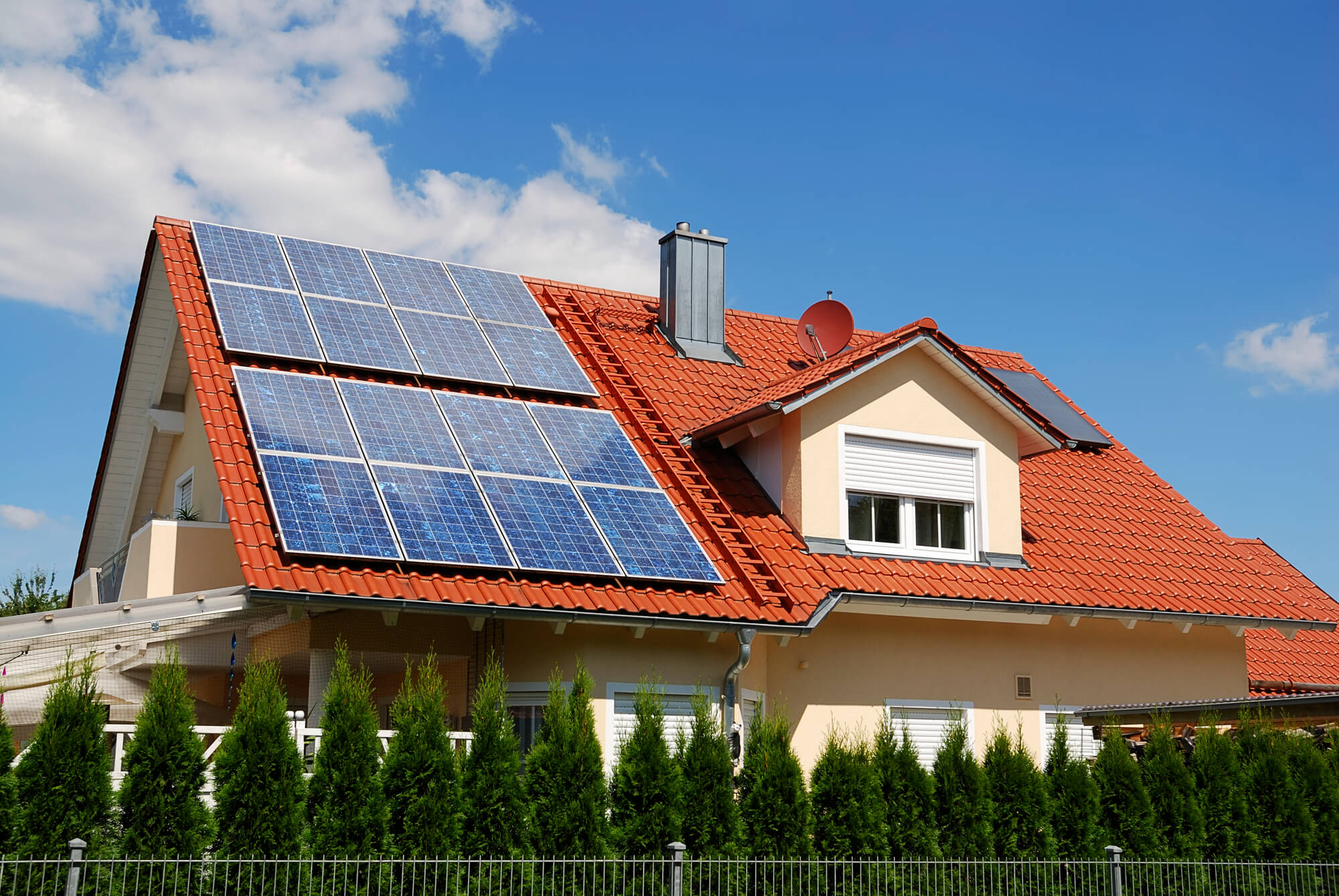
Roof mounting is the most common residential option, utilizing existing structure and requiring no additional land. Advantages include space efficiency (no yard impact), simplified installation (roofers can handle roof penetrations), and direct integration with the home’s electrical system.
Ideal Roof Conditions
South-facing roofs (between 140-220 degrees azimuth in Northern Hemisphere) receive the most sunlight and are ideal. East or west-facing roofs work but produce 10-20% less than south-facing. North-facing roofs are unsuitable for solar in the Northern Hemisphere (opposite in Southern Hemisphere).
Roof pitch influences installation: shallow roofs (3:12 to 5:12) are ideal and require minimal additional tilting hardware. Steep roofs (7:12 to 12:12) exceed the optimal angle for solar and require tilting frames to adjust angle (adding cost and complexity). Flat roofs are excellent—racking feet set optimal tilt angles easily.
Roof Age and Condition
Your roof should have 5+ years of remaining life before solar installation. Reroofing after solar installation is expensive and disruptive—panels must be removed, stored, roof replaced, then panels reinstalled (adding $5,000-10,000 labor costs). If your roof is nearing end-of-life, reroofing before solar saves money and hassle.
Roof structural capacity must support panel weight: 10-15 pounds per square foot (typical for modern systems). Most residential roofs support this easily, but older homes with light framing may need reinforcement. A structural engineer assesses capacity during solar design.
Roof Penetration Risks
Roof mounting requires penetrations for bolts, creating potential leak points. Professional installers use roofing-grade flashing and sealants appropriate for your roof material (asphalt shingles, metal, tile, etc.). Proper installation prevents leaks throughout the system’s 25+ year lifespan. Poor installation causes leaks years later, damaging insulation and interior spaces.
Roof Orientation Limitations
If your roof faces unfavorable directions (north in Northern Hemisphere, or heavily shaded), roof mounting may not be ideal. In such cases, ground or pole mounting on a better-oriented area improves output significantly.
Ground-Mounted Solar Systems
Ground mounting places panels on a dedicated frame on your property, ideal for homes with open land and excellent southern exposure. Ground systems avoid roof penetrations and allow full control over orientation and tilt angle. They’re easier to clean and maintain (no ladder/roof access required) and can include tracking systems for enhanced output.
Land Requirements
A residential 6 kW array requires approximately 350-450 square feet of land. This accounts for the array footprint plus space between rows to prevent back-row shading and allow access for cleaning/maintenance. In dense suburban neighborhoods, this may not be available. Rural properties typically have ample space.
Orientation and Shading
Ground systems should be positioned to face true south (Northern Hemisphere) with full sun exposure from morning through afternoon (roughly 9 AM to 3 PM minimum). Trees, buildings, or terrain features that shade panels in winter significantly reduce annual output. A professional shading analysis determines if shade-free installation is possible.
Foundation and Frost Line
Ground systems require concrete footings anchored below the frost line (typically 3-4 feet deep in northern regions) to prevent frost heave in winter. Poor foundation allows shifting and structural failure. A structural engineer designs footings for your location and soil conditions.
Drainage and Water Management
Ground-mounted arrays should be elevated 3-10 feet above ground surface (depending on snow load and flood risk). This prevents water pooling and allows water drainage beneath panels. In flood-prone areas or regions with heavy snow, higher elevation prevents snow accumulation and flood damage.
Access for Maintenance
Position ground arrays where they’re accessible for cleaning, inspection, and maintenance. Surrounded by dense vegetation or fencing may make access difficult. Ensure clear sightlines for equipment access (installer vehicles, maintenance workers).
Carport and Shade Structure Mounting
Solar carports and pergolas combine parking or shade structures with solar panels, maximizing dual-use of land. This is increasingly popular in commercial parking lots and upscale residential applications.
Solar Carports
A carport with integrated solar panels provides shade and protection for vehicles while generating electricity. A single-vehicle carport is 12 feet x 20 feet (240 sq ft), accommodating 3-5 kW of panels. Double carports are 20 feet x 20 feet, hosting 8-12 kW. This dual-use approach appeals to EV owners who can park and charge simultaneously (especially when paired with battery storage).
Advantages: maximizes land use, no additional land requirement, enhanced aesthetics compared to ground arrays, direct integration with EV charging. Disadvantages: higher cost than ground racking (structural engineering for vehicle loading), maintenance requires working at height, snow accumulation can block underside parking.
Solar Pergolas and Shade Structures
Pergolas with integrated solar panels provide shade for patios, gardens, or outdoor spaces while generating power. Output is somewhat reduced compared to roof-mounted because semi-transparent panels allow some light through (if aesthetics call for transparency). Solid panel pergolas perform like roof systems but block all light (useful for heat mitigation in sunny climates).
Residential and Commercial Applications
These structures are increasingly popular for luxury homes, parking lots, and commercial campuses. They address “land use” criticism of solar by proving solar can enhance usable space rather than consuming it.
Pole and Elevated Mounting
Pole-mounted systems raise panels 10-30 feet above ground on a single or multiple poles. This approach maximizes ground-level space use (parking, gardens beneath array) while achieving good sun exposure.
Advantages:
- Minimal ground footprint—parking or gardens use space beneath array
- Elevated positioning improves air circulation, cooling panels and improving efficiency
- Full control over orientation and tilt angle
- Easier maintenance access than roof-mounted (still elevated, but on stable platform)
- Tracking systems can be integrated for enhanced output
Disadvantages:
- Higher structural cost than ground mounting (requires taller, stronger posts)
- Wind exposure at elevation increases structural demands (thicker posts, deeper footings)
- Lightning risk is higher for elevated structures (requires grounding)
- Aesthetically prominent compared to roof or ground arrays
Foundation Requirements: Deeper footings required (4-5 feet) to handle wind loads at elevation. Posts are typically 4×4 or larger lumber (pressure-treated) or steel with galvanized coating.
Roof Aspect and Orientation Analysis
Azimuth (Compass Direction)
In Northern Hemisphere, true south (180 degrees azimuth) is optimal. Most roofs don’t face precisely south—east-facing, southeast, southwest, or west-facing roofs are common. The impact of orientation variation:
- 150-210 degrees azimuth: Nearly optimal (95-100% of south-facing output)
- 130-230 degrees azimuth: Good (85-95% of output)
- 110-250 degrees azimuth: Acceptable (70-85% of output)
- 90-270 degrees azimuth: Marginal (50-70% of output)
- Below 90 or above 270 degrees: Poor, barely worth considering
If your roof faces unfavorably (north, east, or west), ground or pole mounting facing south is worth considering.
Tilt Angle Optimization
Solar irradiance varies with seasonal sun angle. Optimal year-round tilt approximately equals your latitude (40°N = 40° tilt). However, seasonal optimization shows:
- Winter (low sun): 50-60° tilt captures maximum winter production
- Summer (high sun): 20-30° tilt optimizes summer output
- Year-round compromise: Latitude minus 10-15° works well
Fixed systems choose one angle as a compromise. Adjustable systems allow seasonal changes (manual or motorized). Tracking systems automatically follow sun position (single-axis or dual-axis) for 25-45% output increase but at significant cost.
Shading Analysis and Obstruction Identification
Shading Impact on Performance
Shade is the enemy of solar performance. A shadow covering just 10% of a series-connected string of panels can reduce the entire string’s output by 10-30% (depending on shade pattern and panel type). This phenomenon is called the “shading multiplier” and explains why detailed shading analysis is critical.
Shading Analysis Methods
Solar Pathfinder Tool: A fisheye camera tool measures surrounding obstructions throughout the day and year. Solar Pathfinder software plots the sun’s path and calculates how much of the sun’s annual trajectory is blocked by trees, buildings, etc. This provides precise annual shading loss (usually 5-20%).
Google Earth / Satellite Analysis: Online tools allow analysis of your roof and surroundings in 3D. Sun simulators show how shade moves throughout the day and year. Less precise than Solar Pathfinder but faster and free.
Visual Inspection: A basic approach—walk around your property at morning, midday, and afternoon, noting where shadows fall. Early morning (7-8 AM) and late afternoon shadows are less important (lower sun angle, lower irradiance). Midday (10 AM-2 PM) shadows are critical.
Seasonal Shade Variation:
Summer shade (deciduous trees in leaf) is less critical than winter shade (bare trees cast minimal shade). Winter shade during peak solar hours (10 AM-2 PM) significantly reduces annual output. However, winter sun angle is low, so tree shadows may be longer but thinner (covering less panel area).
Shade Mitigation:
If shade is unavoidable:
- Trim trees: Remove branches shading panels. This may mean significant pruning of valuable mature trees.
- Relocate panels: Move to a better-oriented, shade-free location (ground mounting, different roof slope).
- Microinverters or Power Optimizers: Individual inverters on each panel or electronic optimizers reduce shading loss by allowing each panel to operate independently. Cost: $0.15-0.30/watt additional.
- Accept reduced output: If shade loss is modest (5-10%), system may still make financial sense despite underperformance.
Building Codes and Permit Requirements
Solar installations require building permits and electrical permits in most jurisdictions. Permit requirements vary:
Structural Permits: Roof or ground-mounted systems require structural design certification and permit approval. Engineers verify wind/snow load capacity and foundation adequacy.
Electrical Permits: All systems require electrical inspection of wiring, disconnects, grounding, and equipment ratings.
Zoning and Setback Requirements: Ground-mounted systems must comply with setback requirements (minimum distance from property lines). Setbacks are typically 5-10 feet depending on municipal code. HOA restrictions may limit system size, placement, or visibility.
Height Restrictions: Some municipalities cap structure height. Pole-mounted systems exceeding height limits require variance or alternative location.
Aesthetic Reviews: Coastal areas and historic districts may require aesthetic design review, ensuring panels don’t dominate the visual environment.
Professional solar installers handle permitting—it’s included in your quote. Permit costs are typically $200-500 and processing takes 2-6 weeks.
Installation Cost Variations by Location
Roof Mounting: $0.20-0.35/watt for installation (labor, racking, hardware).
Ground Mounting: $0.25-0.50/watt—higher due to foundation, structural engineering, and land preparation.
Pole Mounting: $0.30-0.60/watt—highest cost due to tall, strong structural requirements.
Carport/Shade Structure: $0.40-0.80/watt—significant structural engineering for vehicle load.
These are material and labor costs only. Total system cost (panels, inverters, wiring, monitoring) runs $2.50-3.50/watt installed.
Frequently Asked Questions
What is the best place to install solar panels on my house?
South-facing roofs (Northern Hemisphere) receiving 6+ hours of direct sunlight are ideal. Verify no significant shade from trees or buildings during peak solar hours (10 AM-2 PM). If your roof faces unfavorably or has extensive shade, ground mounting facing south is an alternative. Your roof should have 5+ years of remaining life to avoid expensive reroofing shortly after solar installation.
Can solar panels be mounted on the ground instead of the roof?
Yes. Ground mounting works well if you have available land (350-450 sq ft for residential system) and south-facing exposure. Advantages: no roof penetration, adjustable angle, easier cleaning. Disadvantages: requires foundation, uses yard space, costs 20-40% more than roof mounting. Ground mounting makes sense if roof space is insufficient or your roof faces unfavorably.
How much shade can solar panels tolerate?
Shade covering 10% of a series-connected string can reduce the entire string’s output by 10-30%. This “shading multiplier” means even small shadows have outsized impact. Avoid systems with direct shade during peak solar hours (10 AM-2 PM). Winter shade is less critical than summer shade due to lower winter irradiance. If shade cannot be avoided, consider microinverters to mitigate shade loss.
What direction should solar panels face?
South (Northern Hemisphere) at 180 degrees azimuth is optimal. Panels facing 150-210 degrees perform at 95-100% of south-facing. East or west-facing panels (90-270 degrees) perform at 70-85% of south-facing output. North-facing is unsuitable. If your roof faces unfavorably, ground or pole mounting facing south is worth considering.
What tilt angle is best for solar panels?
Optimal tilt angle approximates your latitude (e.g., 40°N = 40° tilt). Adjusting 5-15 degrees lower (latitude minus 10-15 degrees) often improves year-round output by capturing more summer sun when irradiance is peak. In winter-heavy climates, tilting steeper (latitude plus 10-15 degrees) optimizes winter production. A solar designer calculates your specific optimal angle based on your location and climate patterns.
Do I need a permit to install solar panels?
Yes, most jurisdictions require building and electrical permits for solar installation. Permits verify structural safety (wind/snow load capacity) and electrical code compliance. Professional installers handle permitting, included in your quote. Permits cost $200-500 and typically take 2-6 weeks to approve. Unpermitted work may void warranties and create insurance/resale issues.
What is a solar carport and should I consider one?
A solar carport combines an elevated solar array with parking or shade structure, providing dual functionality. A single-car carport (12×20 feet) hosts 3-5 kW of panels. Advantages: maximizes land use, provides vehicle shade, ideal for EV owners who can charge while parked. Disadvantages: higher cost than ground racking (vehicle load structural requirements), maintenance is more complex. Worth considering if you need both parking and solar generation space.
Summing Up
The ideal location for your solar panels balances sun exposure, structural feasibility, property constraints, and cost. Most homes are best served by south-facing roof mounting, but ground, pole, and innovative carport mounting provide alternatives for properties with space and favorable orientation. A detailed shading analysis and structural assessment determine the optimal configuration for your specific home and landscape. Professional solar designers evaluate your options and recommend the best approach.
If you’re deciding where to install solar on your property or want expert guidance on your specific roof and land layout, our team can help. Call (855) 427-0058 or visit https://us.solarpanelsnetwork.com/ for a free site assessment and recommendation. The 30% federal Investment Tax Credit through 2032 applies to all mounting configurations, making this a great time to invest in solar infrastructure tailored to your property.
Updated