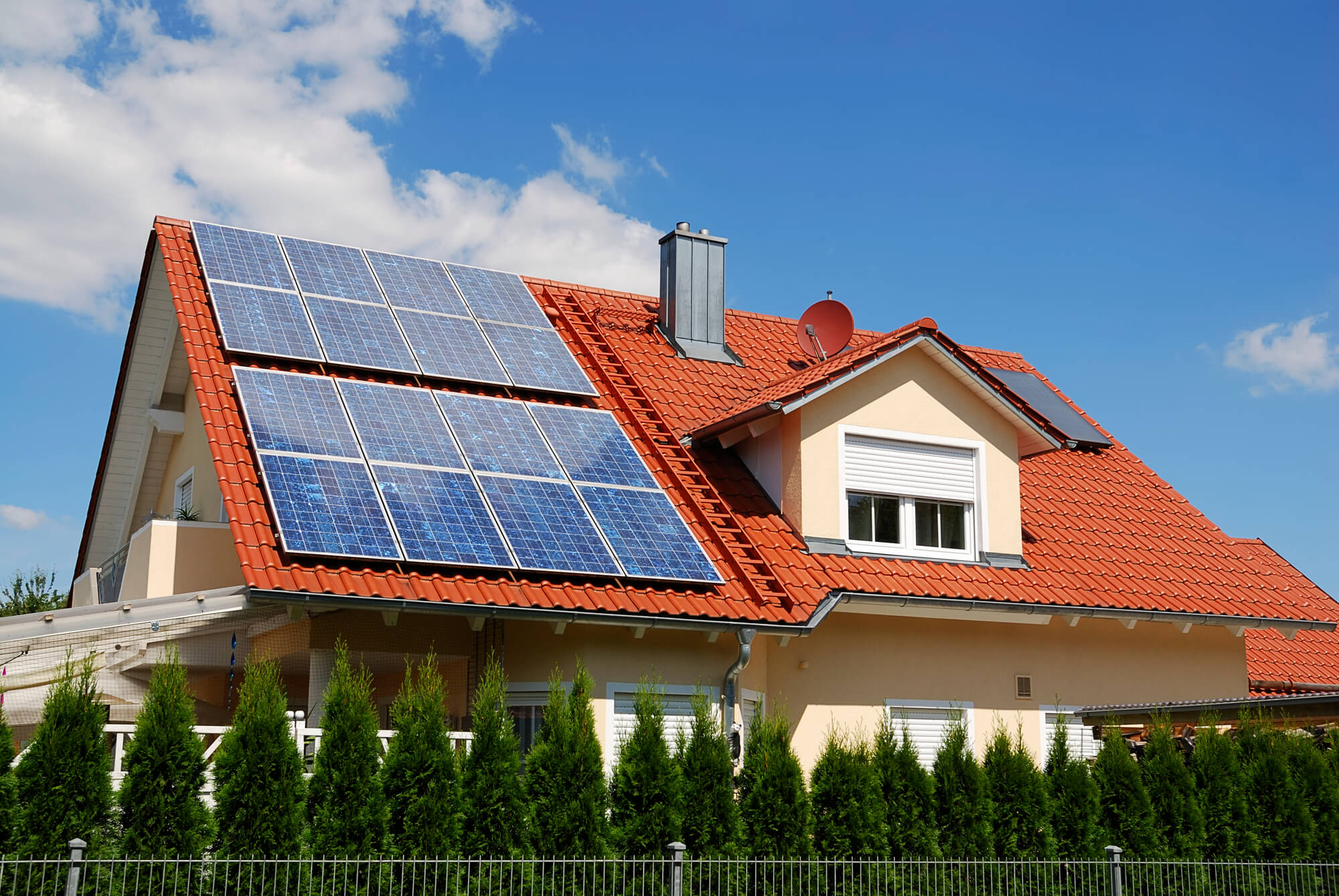
Solar panels cover less than 5% of suitable rooftops in the United States, despite being cost-competitive with grid electricity in most states, qualifying for a 30% federal tax credit, and paying back within 6–10 years in most markets. If solar is such a good deal, why isn’t it everywhere? The honest answer is that several real barriers slow adoption — some financial, some practical, some rooted in policy and market structure, and some simply in awareness and inertia. Understanding these barriers clarifies what it actually takes to go solar and what the legitimate reasons are for waiting or not proceeding at all.

Upfront Cost and Access to Capital

The most frequently cited barrier to solar adoption is the upfront cost. A 10 kW residential solar system costs $25,000–$35,000 before the 30% federal Investment Tax Credit — $17,500–$24,500 after it. While the system pays back in electricity savings over 6–10 years in most markets, the upfront capital requirement is not accessible to all households.

Approximately 35% of US households rent rather than own their homes. Renters cannot install rooftop solar and do not benefit from incentives that require home ownership. Low-income homeowners may not have access to financing and may not have sufficient federal tax liability to fully benefit from the ITC (the credit is non-refundable — it reduces tax owed but cannot generate a refund). For these households, solar remains financially out of reach under current market structures.

Solar loans, leases, and power purchase agreements (PPAs) have reduced the capital barrier significantly. Zero-down solar loans and PPAs allow homeowners to go solar with no upfront cost, though with reduced long-term savings compared to cash purchases. Community solar subscriptions provide a no-installation alternative for renters and households with unsuitable rooftops.

Roof Constraints

A meaningful percentage of US homes have roofs that are unsuitable for solar due to one or more physical constraints:

Orientation: Homes with north-facing roof planes — or no south-, east-, or west-facing surfaces with adequate area — produce significantly less solar output. While east-west arrays can work, the optimal south-facing orientation is not available on all homes.

Shading: Trees, neighboring buildings, chimneys, and other obstructions shade roof surfaces and reduce solar output. In older, tree-heavy suburban neighborhoods, shading can reduce solar output by 30–60% from unshaded potential, making the economics unfavorable. Professional shading analysis determines whether shading is severe enough to prevent viable solar installation.

Roof condition and age: A 20-year-old asphalt shingle roof with 5–7 years of remaining life should be replaced before or during solar installation. Roof replacement adds $8,000–$20,000 to the project cost and may push the economics beyond what some homeowners can finance.

Structural limitations: Some older homes with insufficient rafter depth or deteriorated sheathing cannot support the additional dead load of a solar array without structural upgrades. HOA restrictions can also effectively prohibit solar installation in communities without solar rights protection, though most US states now limit HOA authority over solar.

Complexity of the Purchase Process

Purchasing solar is significantly more complex than purchasing most home appliances or services. The process involves: multiple installer quotes, assessing equipment quality across dozens of panel and inverter manufacturers, evaluating financing structures with different tax implications, understanding net metering policies that vary by utility, navigating permit applications, coordinating utility interconnection approval, and scheduling multiple site visits and inspections.

For many homeowners, this complexity creates a decision burden that delays action indefinitely. Research shows that solar adoption rates are significantly higher in neighborhoods where a neighbor has already installed solar — the “peer effect” reduces perceived complexity by providing a local reference point. Solar adoption is also higher in areas with active community solar programs, where the purchase decision is simplified to a subscription rather than a complete system design and installation project.

Grid Reliability and Net Metering Policy

Grid-tied solar without battery storage leaves homeowners without power during grid outages — one of the most common misconceptions about solar, but a real limitation that reduces appeal for homeowners who prioritize backup power. During a grid outage, standard grid-tied inverters automatically shut down to prevent feeding electricity into the grid where utility workers may be working on the lines (anti-islanding protection). Without battery storage, solar panels produce power that cannot be used during an outage.

Battery storage addresses this limitation but adds $8,000–$20,000 to the project cost. For homeowners whose primary interest in solar is energy independence or backup power, the full solar + storage system cost may not pencil out without careful analysis.

Net metering policy changes — particularly California’s NEM 3.0 (effective April 2023), which reduced compensation for excess solar exports to near-wholesale rates — have reduced the financial attractiveness of solar in some markets and created uncertainty about future policy stability in others. This uncertainty has contributed to slower solar adoption in California despite that state’s strong solar resources and historically large solar market.

Grid Electricity Costs — The Savings Gap

Solar makes financial sense primarily because it displaces electricity you would otherwise purchase from the utility at retail rates. In states with low electricity rates — Oklahoma ($0.08–0.11/kWh), Louisiana ($0.09–0.12/kWh), Idaho ($0.09–0.11/kWh) — the annual savings from solar are modest, extending payback periods to 15–20 years or more. At those payback periods, solar is still a reasonable investment for some homeowners, but it lacks the compelling 6–8 year payback that drives adoption in high-rate states like California, Hawaii, Massachusetts, and Connecticut.

Rural electric cooperatives often have lower rates than investor-owned utilities and may have less favorable net metering policies, creating a double disadvantage for rural solar adoption in some regions.

Misinformation and Awareness Barriers

Persistent myths about solar continue to slow adoption among interested homeowners:

The belief that solar doesn’t work in cold or cloudy climates leads many homeowners in New England, the Midwest, and the Pacific Northwest to dismiss solar without analysis. Germany — with less solar irradiance than 48 of the 50 US states — leads the world in per-capita solar deployment, demonstrating that solar is viable well beyond sunny climates.

Concerns about predatory solar installers, based on legitimate reports of aggressive sales tactics and contract terms, create warranted caution that sometimes extends to all solar purchases. Resources like the NABCEP certification directory, EnergySage Marketplace comparison shopping, and state consumer protection offices help homeowners identify reputable installers.

The belief that solar technology will improve enough to justify waiting (the “wait for better panels” fallacy) misunderstands the economics: panel efficiency improvements of 1–2% per year do not meaningfully change payback periods or long-term savings, while every year of waiting means another year of foregone savings and delayed ITC benefit.

Frequently Asked Questions

What percentage of US homes have solar panels?

Approximately 4–5% of US single-family homes had solar panels as of 2025, representing approximately 5–6 million residential systems. Despite rapid annual growth rates (15–25% per year in recent years), penetration remains low because the installed base is relatively small compared to the total housing stock of approximately 100 million homes. Lawrence Berkeley National Laboratory‘s Tracking the Sun database is the authoritative source for US solar adoption data.

Is solar worth it in all US states?

Solar is financially viable in most US states but with varying payback periods. States with high electricity rates and strong solar resources (California, Hawaii, Massachusetts, Connecticut, New Jersey, New York) typically show payback periods of 5–8 years. States with low electricity rates (Louisiana, Oklahoma, Idaho, Montana) may show payback periods of 15–20 years. The 30% federal ITC improves the economics across all states. State-specific incentives — rebates, sales tax exemptions, property tax exemptions — further improve economics in participating states.

Why don’t apartment buildings have solar panels?

Multifamily buildings face additional solar adoption barriers: split incentives between building owners (who pay for installation) and tenants (who pay electricity bills and would receive most of the financial benefit), limited roof area relative to total electricity consumption across many units, and complex HOA or condo governance structures. Community solar and virtual net metering programs are designed specifically for multifamily buildings and their residents as an alternative to rooftop installation.

Summing Up

Solar panels aren’t used everywhere because real barriers exist: upfront cost and financing access, roof physical constraints, purchase process complexity, grid policy uncertainty, low electricity rates in some regions, and persistent misinformation. These barriers are shrinking — solar loans and PPAs address capital constraints, community solar addresses renters and poor-roof situations, streamlined permitting programs like SolarAPP+ reduce complexity, and the 30% ITC through 2032 improves economics across all markets. But meaningful adoption barriers remain for a substantial portion of the housing stock, particularly for low-income households, renters, and owners with heavily shaded or structurally limited rooftops.

Contact Solar Panels Network USA at (855) 427-0058 to find out whether your home is a good solar candidate. Our specialists assess your roof, shading, electricity usage, and local incentives to give you an honest picture of what solar can deliver for your situation.

Updated