

Solar panels have become increasingly common in residential real estate, and an emerging body of data suggests they significantly impact home sales speed and price. Homes with solar panels sell faster than homes without them, sometimes dramatically so. Understanding these market dynamics helps both sellers and buyers make informed decisions about solar’s value in the housing market.
This guide explores the data behind solar home sales, the economic factors driving faster sales, and strategies for maximizing value when selling a solar home.
Do Homes With Solar Actually Sell Faster?
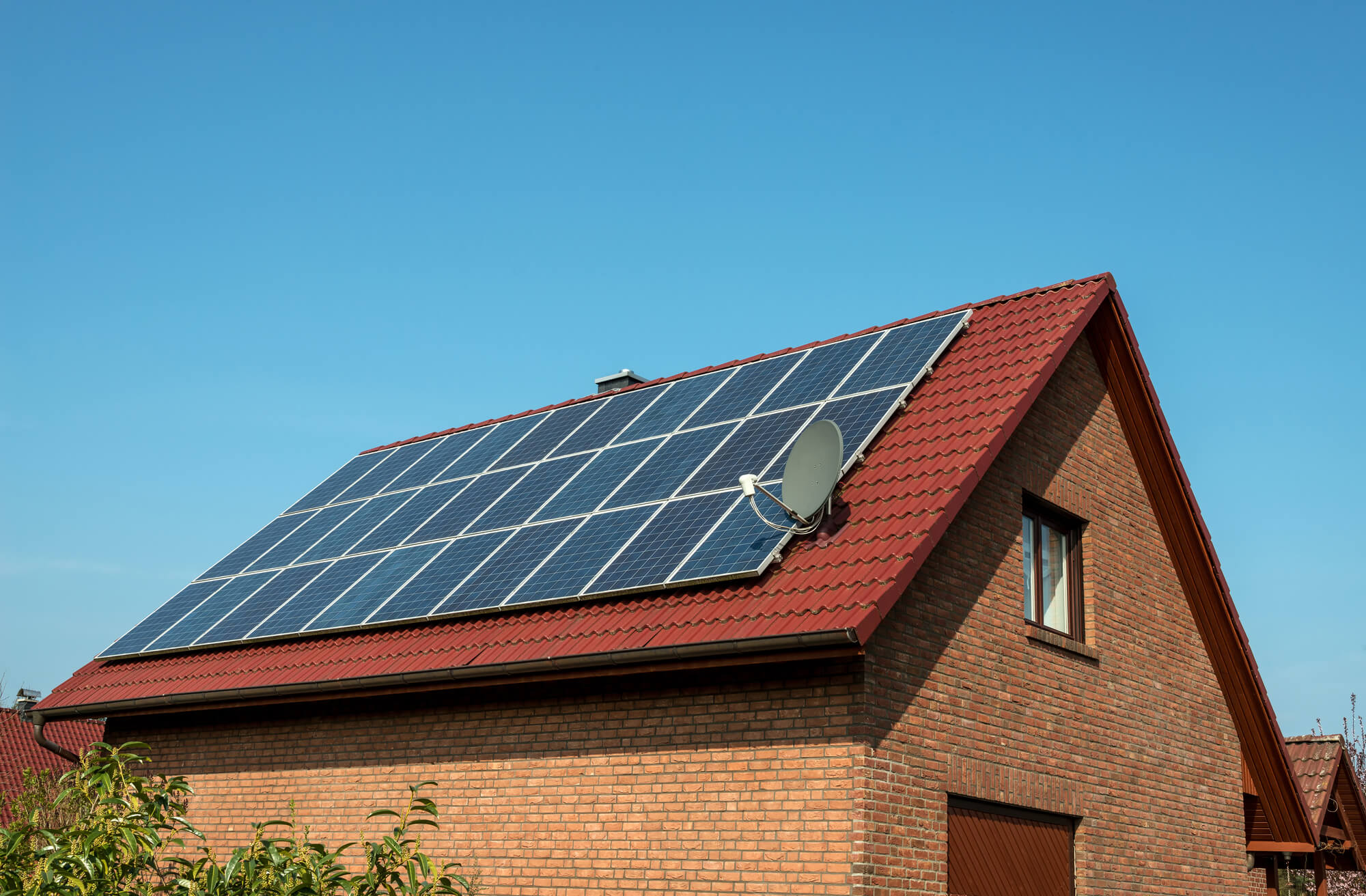
Yes. Multiple studies confirm that homes with solar panels sell faster than comparable homes without solar. Zillow data analysis found that homes with solar sell approximately 4% faster on average nationally, with regional variation from 2-8% depending on market conditions. In high-electricity-cost regions (California, Hawaii, Northeast) where solar savings are most compelling, homes with solar sell 6-8% faster. In low-cost-electricity regions (Texas, Louisiana), the advantage is smaller (2-4%) but still measurable.
Real estate transaction data from the National Association of Realtors mirrors these findings. Days-on-market (DOM) statistics show solar homes averaging 10-25 fewer days to close compared to non-solar homes, depending on local market dynamics. This faster sale speed accumulates to meaningful value for sellers, particularly in markets where property values are rising. A 3-week faster sale in an appreciating market can mean tens of thousands of dollars in captured equity.
The faster sales speed likely reflects two dynamics. First, solar homes appeal to a broader buyer demographic. Environmentally conscious buyers specifically seek solar homes. Energy-conscious buyers seeking lower utility bills prioritize solar. Wealth-conscious buyers recognize solar’s investment returns. This broader appeal pool creates faster buyer-seller matching. Second, solar homes literally stand out. A distinctive feature like a prominent rooftop solar array makes a property memorable in a buyer’s mind during house-hunting, potentially accelerating buyer decisions compared to visually indistinct properties.
The Dollar Impact: How Much Value Does Solar Add?
The Zillow analysis found that homes with solar panels sell for a premium averaging $4 per watt of installed capacity. A 7 kW system (typical residential size) adds approximately $28,000 to home value. A 10 kW system adds approximately $40,000. This premium is remarkably consistent across markets, suggesting solar value is recognized nationwide despite regional electricity cost differences.
The $4/watt valuation reflects the economic value of solar from a buyer’s perspective. A 7 kW system in a moderate-cost area generates about $1,000-1,200 in annual savings (depending on electricity rates, sunlight, and consumption). Capitalized at a 3% discount rate (standard for real estate valuations), $1,000 annual savings equals approximately $33,000 in present value. The $28,000 ($4/watt) valuation is slightly conservative, reflecting buyer skepticism about sustainability of savings and actual system performance.
Regional variation in solar valuation is modest. High-electricity-cost regions (California, Hawaii) where solar savings exceed $2,000 annually might see $4.50-5.00/watt valuations. Low-cost regions see $3.00-3.50/watt. This variation is smaller than might be expected, suggesting solar value is driven more by buyer demand and perceived reliability than by raw electricity savings.
The solar premium applies primarily to owned systems. Leased systems typically add zero to $1/watt premium because buyers inherit the lease obligation, viewing it similarly to a property tax or HOA assessment. Some buyers specifically discount leased-system homes, factoring in the possibility of lease buyout or assumption complications affecting eventual home sale.
Why Buyers Value Solar: The Economics Driving Price Premiums
Buyers are willing to pay premium prices for solar homes because they recognize the investment returns. A $40,000 solar premium on a home generating $1,200 annual savings represents a 3% annual return—competitive with stock market returns, but with the advantage of being attached to an essential asset (shelter) that buyers must acquire regardless.
Additionally, solar’s returns are growing. As electricity rates increase (typically 2-3% annually), system savings grow automatically. A system generating $1,200 in annual savings this year will generate $1,240 next year (accounting for rate increases), $1,283 the year after, and so on. This compounding effect is particularly attractive in high-rate-growth regions like California, where electricity rates increase 3-5% annually due to grid modernization investments.
Solar also provides hedge against electricity rate volatility. Utility rates are subject to regulatory decisions and fuel cost fluctuations beyond any homeowner’s control. A solar home’s electricity costs are substantially fixed (inverter replacement is the only major expense), while non-solar homes face uncertain, potentially dramatic rate increases. This stability in costs is particularly valuable in regions with regulatory or natural resource challenges.
Federal tax incentives enhance buyer value perception. The 30% federal Investment Tax Credit (available through 2032) applies to solar system cost. A buyer purchasing a solar home might be able to claim this credit if the system qualifies, potentially recovering $12,000 on a $40,000 system. This tax benefit further justifies premium valuations.
Home Value Impact: Does Solar Add Appraisal Value?
Real estate appraisers increasingly recognize solar’s value and incorporate it into home appraisals. The Appraisal Institute and National Association of Realtors have both issued guidance encouraging appraisers to use comparable sales data to value solar systems. When comparable recent sales in a neighborhood show $4/watt valuations, appraisers apply this standard to new appraisals.
However, appraisal lags market data. Many appraisers in regions without established solar market history treat solar as an unknown amenity, valuing it conservatively (if at all) until sufficient comparable sales data accumulates. This means sellers in emerging solar markets might not realize full $4/watt valuation in formal appraisals, even if market value exceeds appraisals.
The gap between market value and formal appraisal value creates risk for buyers. If a solar home lists at $400,000 with a $40,000 solar premium, but the appraisal comes in at $395,000 (excluding solar premium), the buyer’s mortgage lender might decline to finance at the listing price. This appraisal risk can delay closings or force price renegotiations.
Forward-thinking sellers address this by providing documentation supporting solar valuation. Copies of recent comparable sales in the area, LBNL (Lawrence Berkeley National Laboratory) valuation research, Zillow analysis, and professional solar system appraisals all support seller valuations and can influence appraiser decisions.
The Federal Investment Tax Credit and Home Valuation
The 30% federal Investment Tax Credit is a critical but often misunderstood factor in solar home value. The ITC is a tax credit (not a rebate) available to taxpayers who own a solar system. The credit is not transferable to subsequent owners in most cases, meaning a buyer who purchases a solar home cannot claim the ITC that applied when the original owner installed the system.
This matters for valuation. A seller who installed a $40,000 system and claimed a $12,000 ITC recovered their net cost to $28,000. A buyer purchasing the home doesn’t get the ITC, meaning they’re paying $40,000 for a system that only cost the seller $28,000 after credits. This appears unfair until you recognize that the buyer captures 25 years of future savings—savings the original seller will never realize because they’re moving.
The $4/watt valuation implicitly accounts for this ITC dynamic. It represents the residual value of the system from a buyer’s perspective: the present value of 25 years of future electricity savings, minus the energy company’s cost to service the system, minus buyer’s cost of capital. This is less than the original system cost but appropriate given the buyer’s access to future benefits the original owner will forfeit.
Buyers in states with additional solar incentives (beyond the federal ITC) sometimes benefit from transferable rebates or state tax credits. Understanding your specific state’s incentive structure helps align expectations about solar’s value contribution to a home.
Impact of System Ownership Status: Owned vs. Leased
System ownership status dramatically affects home value and sales speed. Owned systems (purchased outright or financed through loans) add full $4/watt value. Leased systems add little or no value because buyers inherit the lease obligation—a monthly payment obligation that remains even if electricity costs drop or a buyer’s circumstances change.
Lease buyers perceive additional risk. Lease terms typically include rate escalation clauses (payments increase 2-3% annually), meaning buyers face rising electricity costs even though the underlying electricity cost (wholesale rate) might be stable or declining. Additionally, if a buyer wants to terminate the lease early, they might face early termination penalties. If a buyer sells the home, the lease assumption might be complicated or the new buyer might be unable to assume it, complicating sale negotiations.
Some buyers in strong markets are willing to purchase homes with solar leases, accepting the lease as equivalent to HOA fees or property taxes—a permanent obligation. But the preference is overwhelmingly for owned systems. Sellers with leased systems might face slower sale speeds and lower valuations unless lease terms are exceptional (low payments, no escalation clauses, simple transfer provisions).
For sellers with leased systems contemplating home sales, buyout options exist. Some lease companies will sell the system to the homeowner at a discount to book value, typically 50-70% of the system’s original cost. A $40,000 system might be buyable for $20,000-28,000. Investing in buyout before sale often yields excellent returns if it converts a problematic lease into an attractive owned system that commands $4/watt premium and accelerates sale.
In some markets, lease-to-own refinancing is available where lease companies partner with solar lenders to convert leases to term loans, allowing buyers to own the system while maintaining manageable monthly payments. This option benefits both sellers (higher home valuations) and buyers (ownership benefits).
System Age and Remaining Lifespan Impact on Value

Solar panels degrade at approximately 0.3-0.5% annually, meaning a 10-year-old system retains 96-98% of its original capacity. This minimal degradation means older systems still provide substantial electricity savings, supporting valuations close to newer systems. A 10-year-old 8 kW system still deserves approximately $32,000 valuation ($4/watt), only modestly discounted for age.
However, buyer perception sometimes differs from technical reality. Younger systems (0-5 years) often support full $4/watt valuation, while older systems (15+ years) might support only 85-90% of that valuation as buyers worry about approaching 25-year equipment lifespan. This perception gap is rational from an investor standpoint; a system with 10 remaining warranty years carries lower long-term value than a system with 20 remaining years.
Warranty documentation and inverter condition significantly affect valuation of older systems. Inverters typically last 10-15 years; a 12-year-old system with an original inverter nearing end-of-life might face buyer concerns about imminent $3,000-5,000 replacement costs. Sellers who have already replaced inverters benefit from this fact in sales marketing, as the system has effectively been refreshed.
Seller Strategy: Timing Installation Before Sale
Some sellers contemplate installing solar specifically to accelerate home sales. The economics depend on local incentives, electricity costs, and planned sale timeline. A seller planning a 3-year sale in a high-incentive area (California, Massachusetts) might see installation costs recover through faster sale and price premium within 5-7 years, breaking even on the installation cost.
However, if a seller plans to move within 1-2 years, installation might not make financial sense unless substantial state or utility rebates reduce costs below $2/watt. In this scenario, the ITC and other incentives benefit the buyer more than the seller, and the seller bears installation cost with limited payback before sale.
Strategic installation timing also matters. Installing 1-2 years before sale allows the system to demonstrate consistent performance, building buyer confidence. Last-minute installations (weeks or months before sale) can raise buyer suspicion: is the seller trying to hide problems? Proper timing also allows solar permits and inspections to be complete, eliminating documentation uncertainties that can slow sales.
Marketing and Disclosure Best Practices
Sellers with solar should highlight the system prominently in marketing materials. Photos of the solar array, energy production data, and estimated annual savings should appear in online listings. Listing descriptions should include system size, age, ownership status, warranty details, and average annual electricity savings in dollars.
Providing this documentation upfront reduces buyer uncertainty and inspection delays. A listing with complete solar information attracts serious buyers immediately, accelerating showings and offers. Conversely, incomplete disclosure or missing system documentation raises red flags, potentially creating negotiation delays even if the system is actually excellent.
Third-party verification supports marketing credibility. System performance records from monitoring apps demonstrating consistent multi-year generation support buyer confidence. Professional inspection reports from solar companies certify system condition and remaining lifespan. These documents, provided proactively by sellers, differentiate listings and accelerate sales.
Buyer’s Perspective: What to Check When Buying a Solar Home
Buyers evaluating homes with solar should verify: system ownership (owned vs. leased), age and remaining warranty, annual electricity generation and production data, total cost paid or monthly lease payment, presence of permits and electrical inspection completion, and inverter type and age. These factors collectively determine whether the system will deliver promised savings post-purchase.
Buyers should also understand that solar systems don’t add value in high-risk scenarios. If a roof requires replacement within 5 years, solar system removal and reinstallation costs $3,000-5,000, offsetting the $4/watt valuation advantage. Roof age documentation becomes critical; systems on recently replaced roofs command stronger valuations than systems on aging roofs.
For buyers contemplating installation after purchase, negotiating solar installation as part of the purchase deal sometimes makes sense. Seller financing or discounts on solar installation can be more tax-advantaged than post-purchase purchase, particularly if both parties understand the buyer’s specific incentive eligibility.
Frequently Asked Questions
How much value does a solar system add to a home?
On average, $4 per watt of installed capacity. A 7 kW system adds approximately $28,000. This premium reflects the present value of 25 years of electricity savings. Premium varies slightly by region, with high-electricity-cost areas (California, Hawaii) seeing higher premiums.
Do leased solar panels add home value?
Minimally or not at all. Leased systems remain the property of the lessor; buyers inherit the lease obligation as a monthly payment commitment. Many buyers view leases negatively, potentially slowing sales. Owned systems are strongly preferred.
Will a home with solar sell faster?
Yes, on average 4-6% faster depending on region. Solar homes sell in 10-25 fewer days than comparable non-solar homes. This speed advantage is even more pronounced in high-electricity-cost regions.
Should I install solar before selling my home?
It depends on your timeline. If you’re selling within 1-2 years, installation is unlikely to pay back before sale. If you’re planning 3+ years before sale and your area has strong incentives, installation could pay for itself through faster sales and price premiums.
How old can a solar system be and still add value?
Very old systems still add value if maintained. A 20-year-old system at 90% capacity still generates substantial electricity. However, buyers discount older systems slightly (5-15%) due to warranty age and approaching equipment replacement costs. Warranty documentation becomes important for older systems.
Does the appraisal include solar value?
Increasingly yes, but implementation varies. Appraisers in markets with established solar history incorporate $4/watt valuations. In emerging solar markets, appraisers might undervalue solar until comparable sales data accumulates. Sellers should provide appraisal support documentation.
Summing Up
Data consistently shows that homes with solar panels sell faster and command price premiums, averaging $4 per watt of installed capacity. This premium reflects buyers’ recognition of 25+ years of electricity savings and attractive returns on the solar investment. The premium is strongest for owned systems in high-electricity-cost regions with favorable incentive environments. Sellers with owned solar systems should emphasize this value advantage in marketing materials, providing documentation of system performance and remaining lifespan. Buyers considering solar homes should verify ownership status and system condition to ensure promised savings materialize post-purchase.
Ready to explore the home value advantage of solar? Call (855) 427-0058 for a free consultation about installing solar to enhance your home’s value and salability, or visit https://us.solarpanelsnetwork.com/ to learn more about solar installation and home value in your state.
Updated