Despite the clear environmental and financial benefits of solar energy, many homeowners still hesitate to install panels. Understanding the real barriers to solar adoption—from upfront costs to roof constraints—can help you decide whether solar is right for your home. This comprehensive guide breaks down the top reasons people avoid solar panels and what solutions exist for each concern.
Solar adoption has grown significantly in recent years, yet fewer than 4% of US homes have solar installations. The gap between potential adopters and actual customers reveals a complex landscape of obstacles that extend beyond simple cost concerns. Whether you’re on the fence about solar or looking to understand market adoption rates, this article explores the genuine challenges preventing millions of Americans from going solar.
Contents
- 1 High Upfront Installation Costs
- 2 Misconceptions About Maintenance and Durability
- 3 Roof Structural and Orientation Challenges
- 4 Concerns About Reliability and Grid Independence
- 5 Limited Knowledge and Consumer Awareness
- 6 Concerns About Home Value and Resale
- 7 Financing and Credit Challenges
- 8 Homeowners Association and Permitting Obstacles
- 9 Uncertainty About Energy Savings and Payback Timelines
- 10 Risk Aversion and Preference for Known Solutions
- 11 Geographic and Demographic Inequities
- 12 Evolving Technology and “Wait-and-See” Mentality
- 13 Frequently Asked Questions
- 14 Summing Up
High Upfront Installation Costs
The single largest barrier to solar adoption is the initial investment. A typical 6 kW residential solar system costs $12,000–$18,000 before incentives. Even with the 30% federal Investment Tax Credit (ITC) reducing the net cost to $8,400–$12,600, this remains a significant capital expenditure for most households.
The ITC, which runs through 2032 under the Inflation Reduction Act, substantially improves solar economics. However, not all homeowners can claim the credit immediately—some must carry it forward to future tax years if they lack sufficient tax liability. Additionally, low-income households may struggle to finance the remaining balance even after applying the credit.
Financing options help bridge this gap but introduce complexity. Solar loans often carry 5–7% interest rates, effectively adding $2,000–$3,500 to the total system cost over a 10-year loan term. Leases and power purchase agreements (PPAs) require no upfront cost but limit financial returns, making them less attractive for homeowners seeking maximum long-term savings.
Misconceptions About Maintenance and Durability
Many homeowners overestimate the maintenance burden and underestimate the durability of solar panels. Survey data shows roughly half of non-adopters worry about high maintenance costs, despite solar systems requiring minimal upkeep.
In reality, solar panels need occasional cleaning—roughly 2–4 times per year depending on climate—which costs $100–$300 annually or can be done yourself with a hose. Most panels carry 25-year manufacturer warranties covering defects, and inverters (which convert DC electricity to AC) typically last 15–20 years before replacement. The total maintenance and inverter replacement cost over 25 years is far less than the energy savings generated.
Another misconception: roof damage from solar installation. Properly installed systems use flashing and don’t penetrate through the roof deck—they’re secured to the roof structure itself. Standing-seam metal roofs and some tile roofs require specialized mounting but still maintain warranty integrity when installed by qualified electricians.
Roof Structural and Orientation Challenges
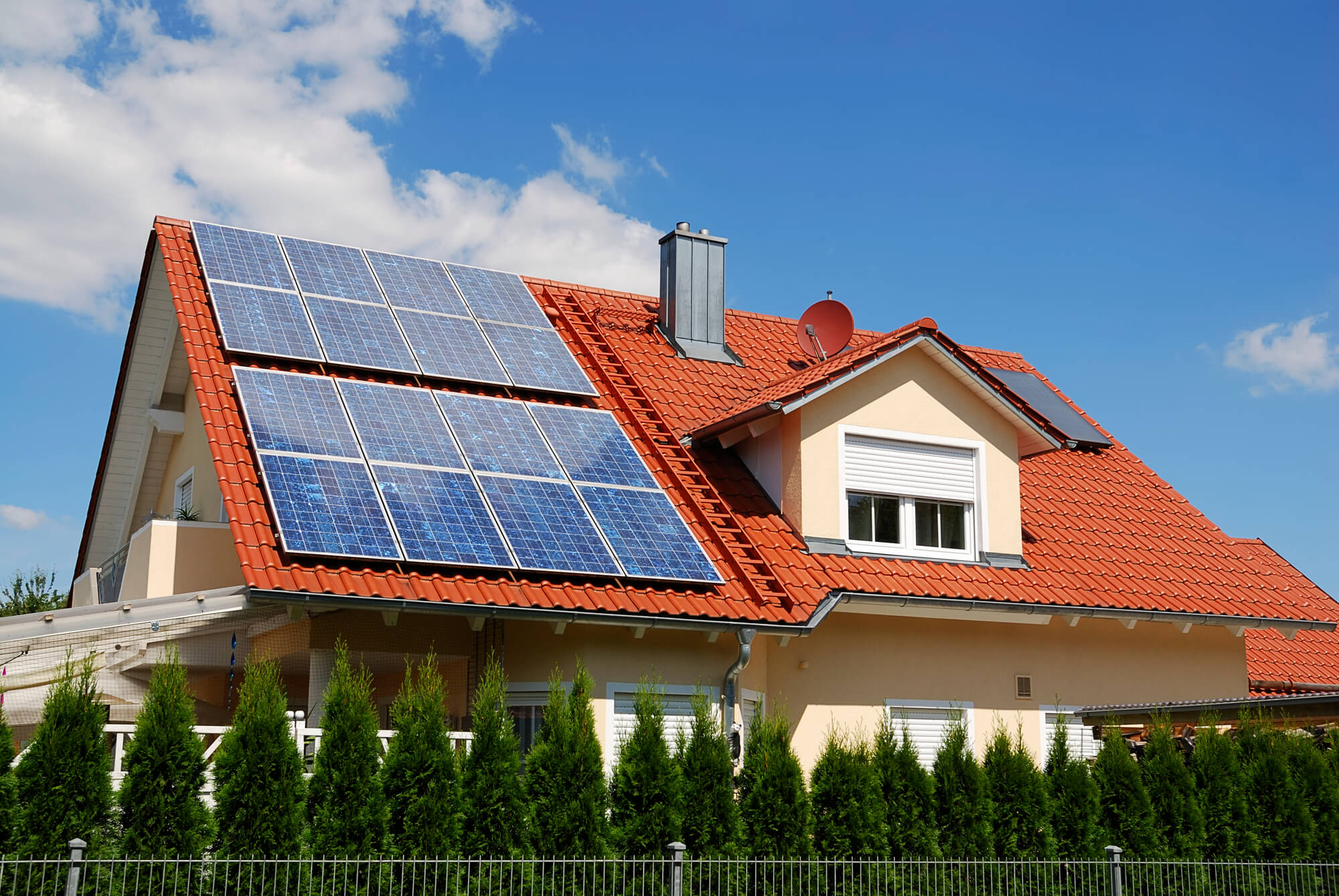
Not all roofs are suitable for solar, and this legitimate constraint prevents roughly 15–20% of homeowners from installing panels. Key structural factors include roof age, load capacity, slope, and obstructions.
Roof age: If your roof needs replacement within 5–10 years, solar installation should be timed with roof work to avoid removal and reinstallation costs. Newer roofs (10 years or younger) are ideal for solar.
Orientation and shade: South-facing roofs receive maximum solar irradiance in the Northern Hemisphere. East or west-facing roofs work but produce 15–20% less energy. North-facing roofs are generally unsuitable. Tree shade, nearby buildings, and chimneys reduce production by 10–50% depending on timing and duration.
Roof slope and load: Roofs with steep slopes (above 45 degrees) or very shallow angles (below 15 degrees) may not accommodate standard racking. Older homes with load-bearing concerns may require structural reinforcement, adding $1,000–$5,000 to installation costs.
Solutions exist: ground mounts for properties with suitable land, carport canopies, and pole-mounted arrays can work where roof installation fails. Battery storage paired with solar can also offset daytime-only production limitations.
Concerns About Reliability and Grid Independence
Skepticism about solar reliability persists despite decades of proven performance. Many people worry that solar panels won’t generate enough power to meet their needs, particularly during cloudy weather or winter months.
The reality: modern grid-tied systems automatically draw grid power when solar production falls short. Cloud cover reduces—but doesn’t eliminate—solar generation. Even on overcast days, panels produce 50–75% of their rated output. Winter production is lower than summer, but with proper system sizing, annual production meets 80–120% of typical household consumption.
Real concerns exist for those seeking energy independence. Off-grid systems require battery storage and careful load management, making them suitable only for locations where grid connection is impractical. Grid-tied systems offer reliability without these complications.
Limited Knowledge and Consumer Awareness
A significant portion of the population lacks basic information about how solar works, available incentives, and true payback timelines. This knowledge gap is particularly acute in rural areas and lower-income communities where solar installers are less visible and information sources are limited.
Without knowledge, homeowners can’t accurately assess whether solar makes sense for their situation. Questions go unanswered: “How much does solar cost?” “How long until payback?” “Is my home suitable?” “What happens if I move?” When information gaps exist, risk-averse consumers default to the status quo.
Efforts to address this include online solar calculators, educational content, and installer outreach. However, the solar industry’s fragmentation means information quality varies widely. Peer reviews and trusted resources become critical in decision-making.
Concerns About Home Value and Resale
Many homeowners worry that solar panels will reduce home value or complicate selling. This misconception stems from outdated assumptions about panel aesthetics and confusion about ownership models (owned vs. leased).
Research shows the opposite: homes with owned solar panels sell 4–6% faster and command a $4-per-watt premium. A 6 kW owned system adds roughly $24,000 in home value—closely matching the net cost after the ITC. Leased systems, however, can complicate sales since the lease transfers to the new owner, potentially deterring buyers.
Modern panels are sleeker and less visually intrusive than legacy designs. Black frames and dark backsheets blend with most roof colors. Still, homeowner associations (HOAs) may have aesthetic requirements, and some neighbors view panels negatively—though these concerns are diminishing as solar becomes more common.
Financing and Credit Challenges
Even when homeowners want solar, access to financing creates barriers. Solar loans require good credit (typically 650+ credit score), and APRs vary from 3–12% depending on creditworthiness. People with fair or poor credit may face loan denial or rates so high that payback periods exceed 20 years.
Leases and PPAs avoid credit requirements but reduce long-term financial benefit. Property-assessed clean energy (PACE) financing offers alternative terms but carries its own complications, including risks of foreclosure in some cases.
Low-income communities face compounded challenges: higher credit risk, lower home equity for collateral, and less access to quality installer options. Federal and state programs (like LIHEAP and state solar rebates) are expanding to address this gap, but awareness and access remain uneven.
Homeowners Association and Permitting Obstacles
HOAs in some jurisdictions maintain restrictive rules that block or severely delay solar installation. While “right to solar” laws in many states have limited HOA authority, enforcement varies. Homeowners in restrictive HOAs may face months-long approval delays or excessive aesthetic requirements.
City and county permits also introduce variability. Progressive jurisdictions streamline solar permitting (e.g., California’s SolarAPP+, which enables same-day digital approvals). Others impose lengthy timelines, inconsistent code requirements, and high permit fees ($300–$1,000+), adding cost and delays.
International examples show impact: Germany’s simplified permitting helped achieve 10% solar penetration; bureaucratic obstacles in other regions slow adoption to 1–2%.
Uncertainty About Energy Savings and Payback Timelines
Homeowners often lack clarity on how much they’ll actually save. Payback periods vary dramatically by state (from 5 years in high-sun, high-rate areas to 12+ years in low-sun regions). This uncertainty causes analysis paralysis—people delay while they try to perfect their decision.
Factors affecting savings include utility electricity rates, local solar irradiance, system size, production efficiency, and financing terms. A $12,000 net system cost might yield $1,200/year in a sunny, high-rate area (9-year payback) or $600/year elsewhere (20-year payback). The wide range creates confusion and hesitation.
Compounding the problem: aggressive solar sales tactics have eroded trust. Homeowners who’ve encountered inflated savings claims or poor installers become skeptical of the entire industry.
Risk Aversion and Preference for Known Solutions
Many people prefer familiar, established solutions over newer technology, even if newer solutions offer superior long-term economics. Solar remains relatively new to most homeowners, and the commitment to a 25-year system creates psychological resistance.
This “status quo bias” is particularly strong for older homeowners who may not expect to recoup a 20-year payback before selling or downsizing. For retirees, the risk of contractor failure, equipment malfunction, or unexpected costs feels more salient than the upside of long-term energy savings.
Building confidence requires transparency, warranty assurance, and clear communication of long-term benefits. Installer reputation, third-party certifications (NABCEP), and insurance backing all help overcome this psychological barrier.
Geographic and Demographic Inequities
Solar adoption is highly unequal across regions and demographics. Urban solar penetration rates exceed rural rates by 3–4x due to denser installer networks, higher electricity costs, and better financing access. Communities of color and low-income areas lag in adoption despite potentially higher energy burden.
Causes include: fewer installers in underserved areas, language barriers, distrust of contractors (due to historical patterns of predatory lending), lower homeownership rates, and less access to capital. Federal and state initiatives are addressing these gaps through targeted incentives and workforce development, but progress remains slow.
Evolving Technology and “Wait-and-See” Mentality
Some potential adopters delay purchases expecting panel efficiency to improve and costs to drop further. While this logic has merit—solar costs have fallen 90% in the past 15 years—it can trap people in endless analysis. Current panel efficiency improvements are slowing (85% of 2% annual gains come from racking and wiring), and cost declines have plateaued as manufacturing reaches efficiency limits.
Waiting 5 years hoping for a 10% price drop means missing 5 years of energy savings and production credits. At typical 6–8% annual savings, the opportunity cost often exceeds any hardware savings from waiting. The economics strongly favor installing now rather than delaying for marginal future discounts.
Frequently Asked Questions
What’s the biggest barrier to going solar?
Upfront cost is the primary barrier for most homeowners. While the 30% federal ITC significantly reduces the net cost, the initial $12,000–$18,000 investment remains prohibitive for many families, especially those without access to low-interest financing or home equity.
Do solar panels damage my roof?
Properly installed solar systems do not damage roofs. Installers use flashing to seal mounting penetrations and secure panels to the roof structure without breaching the weathertight envelope. Roof age is a more important consideration—if your roof needs replacement within 10 years, schedule solar after roof work to avoid reinstallation costs.
Will solar panels reduce my home’s resale value?
Homes with owned solar panels sell 4–6% faster and command a $4-per-watt premium. A 6 kW system adds approximately $24,000 in home value. However, leased systems can complicate sales since the lease transfers to the new owner, potentially deterring buyers. Owned systems are far better for resale.
Can I get solar if I have bad credit?
Traditional solar loans require good credit (usually 650+), but leases and power purchase agreements (PPAs) don’t require credit checks. However, leases yield lower long-term savings than owned systems. Some states offer financing programs for low-income households. Community solar programs may also be available in your area.
How much power do solar panels generate on cloudy days?
Solar panels generate 50–75% of their rated output even on overcast days. Cloud cover reduces—but doesn’t eliminate—production. Grid-tied systems automatically draw power from the grid when solar production is insufficient, ensuring reliable electricity regardless of weather.
Should I wait for solar prices to drop further?
While solar costs have fallen dramatically (90% over 15 years), further reductions are likely small (2–3% annually). Missing years of energy savings while waiting is often more costly than any hardware price decline. At typical 6–8% annual savings, the opportunity cost of waiting usually exceeds future discounts.
Summing Up
The barriers preventing people from going solar are real but largely addressable. High upfront costs can be managed with financing and the 30% federal ITC. Roof constraints affect roughly 15–20% of homes but have workarounds through ground mounts and carports. Misconceptions about maintenance, reliability, and home value can be overcome with accurate information and installer vetting.
The biggest factor separating solar adopters from non-adopters isn’t access to technology—it’s access to capital, information, and trusted contractors. As the solar industry matures and financing options expand, adoption barriers are gradually lowering. If you’ve been hesitant about solar, reassessing your situation with current data and a qualified installer may reveal that the obstacles are smaller than they seemed.
For homeowners ready to move forward, the next step is getting a professional energy audit and solar quote to understand the specific economics of your situation. This personalized analysis will clarify your potential savings, payback timeline, and roof suitability far better than general information.
Get a Free Solar Quote → (855) 427-0058
Updated